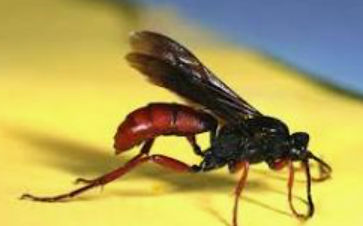
The Braconid Wasp belongs to the family Braconidae, one of the largest groups of parasitic wasps in the world. These insects play a vital role in natural pest control because they parasitize many agricultural and garden pests.
The “Internal Saboteurs”: Braconid Wasps
Braconid Wasps (family Braconidae) are among the most effective biological control agents in the United States. For Pestipedia.com users, these wasps are the ultimate “hidden” allies. They do not build large nests or defend territory; instead, they exist to find and neutralize garden pests like Hornworms, Aphids, and Beetles. By acting as parasitoids, they stop pest damage before the insects reach maturity.
Technical Identification: Diagnostic Markers
- Phenotype (Adult): Characterized by slender bodies (2mm to 15mm) ranging in color from stark black to translucent orange or red. A primary diagnostic key for Pestipedia.com users is the wing venation: Braconids lack the second recurrent vein found in their cousins, the Ichneumonid wasps.
- Ovipositor: Females possess a needle-like egg-laying organ (ovipositor) that can be longer than their body, used to pierce host insects or drill through bark.
- Evidence of Presence: The most recognizable diagnostic marker is the “Rice-Grain” Cocoon. If you see a caterpillar covered in dozens of small, white, upright silken sacs, it has been parasitized by Braconids.
Ecological Impact: Host Population Collapse
The primary impact of Braconid Wasps is the internal biological consumption of pest larvae, effectively stopping plant damage before the host completes its life cycle.
- Parasitoid Lifecycle: The female injects eggs directly into the host. The resulting larvae eat the host from the inside out, carefully avoiding vital organs to keep the pest alive (and fresh) until the wasps are ready to pupate.
- The “Zombie” Effect: Parasitized U.S. caterpillars stop feeding almost immediately, even though they remain alive for several days. For Pestipedia.com users, this means the defoliation of your garden stops the moment the wasp strikes.
- Polydnaviruses: Some species inject a virus along with their eggs to disable the host’s immune system. This is a highly specialized evolutionary weapon used to ensure the survival of the wasp offspring.
Management & Conservation Strategies
Management of Braconid Wasps in the United States focuses on nectar provision and the avoidance of broad-spectrum chemicals.
| Strategy | Technical Specification | Operational Benefit |
|---|---|---|
| Floral Fueling | Planting Alyssum, Dill, and Yarrow | Provides the shallow nectar sources required for the small mouthparts of adult Braconids. |
| Host Tolerance | Leaving cocoon-covered caterpillars in place | Ensures a new generation of beneficial wasps; one hornworm can produce 50+ wasps to patrol the U.S. garden. |
| Chemical Restraint | Eliminating Malathion and Sevin | Prevents the accidental extermination of beneficial parasitoids; prevents pest rebounds. |
- Monitoring: Look for tiny, hovering insects over aphid colonies or garden foliage. For Pestipedia.com users, spotting “mummy” aphids (puffy, bronze, hollowed-out shells) confirms Braconid activity.
- Safety Profile: These wasps are harmless to humans. Most are too small to sting, and they have zero interest in humans or picnic food.
Identification
Braconid wasps are typically small, slender insects measuring between 1/8 and 1/2 inch long. They often have narrow bodies, long antennae, and transparent wings. Many species possess a long ovipositor used to lay eggs inside host insects.
Distribution and Habitat
Braconid wasps occur worldwide and can be found in forests, gardens, farms, and urban environments.
Life Cycle and Behavior
Female braconid wasps lay eggs inside host insects such as caterpillars. The developing larvae consume the host from within, eventually killing it.
Pest Status
Braconid wasps are beneficial insects because they naturally control populations of harmful pests.
Prevention
No prevention is necessary because these insects are beneficial.
Control
Control is not recommended. Gardeners often encourage braconid wasps as part of integrated pest management programs.