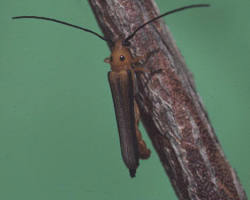
The Blueberry Stem Borer Beetle is a wood-boring insect associated with blueberry plants and other berry-producing shrubs. These beetles belong to the family Cerambycidae, commonly referred to as longhorn beetles because of their extremely long antennae. The larvae are the destructive stage of the insect and tunnel through blueberry stems where they feed on internal plant tissues. Heavy infestations can weaken plants, reduce fruit production, and in severe cases kill individual canes or entire bushes.
Stem-boring insects are particularly problematic for commercial berry growers because damage often occurs internally before symptoms become visible. Early detection and proper plant management are essential for reducing losses caused by blueberry stem borers.
Quick Facts
- Order: Coleoptera
- Family: Cerambycidae
- Common Group: Longhorn Beetles
- Habitat: Blueberry fields and berry-producing shrubs
- Diet: Wood and plant tissue
- Status: Agricultural pest
Identification
Adult blueberry stem borer beetles are slender insects that typically measure:
- Approximately 1/2 inch long
Adults usually possess:
- Elongated cylindrical bodies
- Long segmented antennae
- Brown or black coloration
- Hard wing covers
- Strong chewing mouthparts
Their antennae may approach or exceed body length, which is characteristic of many beetles in the longhorn beetle family.
Larvae are:
- Cream-colored
- Soft-bodied
- Legless or nearly legless
- Hidden inside stems
Because larvae remain concealed within plant tissue, infestations are often difficult to detect until plants begin showing visible damage.
Distribution and Habitat
Blueberry stem borer beetles occur in regions where blueberry plants are grown commercially or naturally.
They are commonly associated with:
- Commercial blueberry farms
- Home berry gardens
- Wild blueberry patches
- Woodland edges
- Shrub habitats
These beetles prefer environments containing:
- Healthy blueberry canes
- Stressed or damaged plants
- Dense berry plantings
- Warm seasonal conditions
Infestations may become more common in older plantings where damaged wood provides attractive egg-laying sites.
Life Cycle
The blueberry stem borer beetle undergoes complete metamorphosis consisting of four stages:
- Egg
- Larva
- Pupa
- Adult
Females deposit eggs on or near blueberry stems.
After hatching, larvae bore directly into plant tissue where they begin feeding internally.
Larval feeding creates tunnels inside stems that interfere with:
- Water transport
- Nutrient movement
- Structural stability
As larvae continue feeding, stems may:
- Wilt
- Crack
- Become weakened
- Break unexpectedly
Larvae eventually pupate inside the stem before emerging as adult beetles.
Adult emergence usually occurs during warm months when blueberry plants are actively growing.
Behavior
Adult beetles are active primarily during spring and summer.
Females search for suitable host plants where larvae can successfully develop.
The larvae spend most of their lives concealed inside stems, making them difficult to reach with surface pesticide treatments.
Infested canes may display symptoms such as:
- Wilting foliage
- Reduced berry production
- Stem swelling
- Dead branch tips
- Sawdust-like frass near entry holes
Heavy infestations can gradually weaken entire plants over multiple growing seasons.
Damage and Economic Importance
Blueberry stem borer beetles are considered agricultural pests because larval tunneling damages plant structure and productivity.
Damage may include:
- Stem dieback
- Reduced fruit yields
- Plant stress
- Broken canes
- Reduced vigor
Young blueberry plants are particularly vulnerable because they have fewer stems and less energy reserve capacity.
In commercial operations, infestations may result in:
- Lower harvest quality
- Reduced berry production
- Higher labor costs for pruning
- Plant replacement expenses
Stressed plants affected by drought or disease are often more susceptible to infestation.
Signs of Infestation
Common indicators of blueberry stem borer activity include:
- Sudden wilting of stems
- Dead branch tips
- Holes in canes
- Frass near entry points
- Weak or collapsing stems
- Reduced berry production
Cutting open infested stems may reveal:
- Internal tunnels
- Larvae
- Pupal chambers
Prevention
Preventative management is important for minimizing damage.
Recommended prevention methods include:
- Inspect blueberry plants regularly
- Prune damaged or weakened canes
- Remove infested stems immediately
- Maintain healthy irrigation practices
- Avoid unnecessary plant stress
- Promote proper air circulation
Maintaining vigorous plant growth helps blueberry bushes better tolerate minor infestations.
Control
Integrated pest management techniques are commonly used to control blueberry stem borers.
Management strategies may include:
- Pruning and destroying infested canes
- Monitoring adult beetle activity
- Removing dead wood
- Biological control methods
- Targeted insecticide applications when necessary
Because larvae remain hidden inside stems, early detection is essential for successful management.
Destroying infested material prevents developing larvae from completing their life cycle.
Ecological Importance
Although considered pests in berry production systems, these beetles also play ecological roles in natural environments.
Larvae help break down woody plant material and provide food for:
- Birds
- Predatory insects
- Parasitic wasps
- Small mammals
Natural predators may help suppress populations in balanced ecosystems.
Interesting Facts
- Blueberry stem borers belong to the longhorn beetle family.
- The larvae spend most of their lives hidden inside stems.
- Long antennae are a key identifying feature of adult beetles.
- Damage may remain hidden until plants begin wilting.
- Infestations are often worse in stressed blueberry plants.
- Many wood-boring beetles play roles in decomposition within forests.