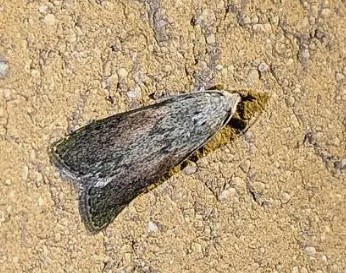
The Bee Moth, more commonly known as the Wax Moth, is a destructive moth species whose larvae infest honeybee colonies and stored beekeeping equipment. The two primary species are the Greater Wax Moth (Galleria mellonella) and the Lesser Wax Moth (Achroia grisella). These insects are considered major pests of weakened bee colonies because their larvae tunnel through beeswax comb, destroy stored honeycomb, and contaminate hives with silk webbing and waste.
Quick Facts
- Family: Pyralidae
- Habitat: Beehives and stored comb
- Diet: Beeswax, pollen, hive debris, and brood comb
- Status: Serious beekeeping pest
Identification
Adult bee moths are small to medium-sized moths with narrow wings and gray to brown coloration that helps them blend into hive materials and wooden structures.
- Adults are gray-brown moths with folded wings
- Larvae are cream-colored caterpillars with brown heads
- Silken webbing often appears throughout damaged comb
- Tunnels and galleries develop inside honeycomb
- Larval droppings accumulate in infested areas
The larvae are the destructive stage and may reach nearly 1 inch in length before pupating.
Heavy infestations often produce a noticeable webbed appearance throughout the hive or stored frames.
Distribution and Habitat
Bee moths occur worldwide and are found anywhere honeybees are maintained, including:
- Commercial apiaries
- Backyard beekeeping operations
- Wild bee colonies
- Stored beekeeping equipment
- Honey processing areas
They thrive in warm environments where hive materials are poorly protected or colonies become weak and unable to defend the comb.
Stored supers and unused frames are especially vulnerable to infestation.
Life Cycle and Behavior
Bee moths undergo complete metamorphosis consisting of:
- Egg
- Larva (caterpillar)
- Pupa
- Adult moth
Adult females lay eggs in cracks, crevices, or directly inside hive structures where bee activity is low.
After hatching, larvae begin feeding on:
- Beeswax
- Pollen residues
- Bee cocoons
- Hive debris
- Stored comb
As larvae tunnel through comb, they spin silk webbing that damages hive structure and interferes with honeybee movement.
When fully developed, larvae pupate inside silken cocoons often attached to wooden hive surfaces.
Damage and Economic Impact
Bee moth infestations can severely damage beekeeping equipment and stressed colonies.
Common damage includes:
- Destruction of honeycomb
- Contamination with webbing and frass
- Damage to wooden hive components
- Loss of stored brood comb
- Weakening of bee colonies
- Reduced honey production
Healthy honeybee colonies usually suppress wax moth populations by aggressively removing eggs and larvae.
Weak colonies, however, may quickly become overwhelmed by larval feeding activity.
Pest Status
Bee moths are considered major pests in apiculture and stored hive management.
Although they rarely kill strong colonies directly, they commonly destroy:
- Stored comb
- Abandoned hives
- Weak colonies
- Unused beekeeping equipment
Large infestations may force already weakened colonies to abscond or collapse.
Prevention
- Maintain strong healthy bee colonies
- Inspect hives regularly for webbing or larvae
- Store unused comb in cool, dry conditions
- Freeze stored frames before long-term storage
- Reduce excess hive space during weak periods
- Remove abandoned comb promptly
Proper hive management is the most effective long-term defense against wax moth infestations.
Control
Control strategies focus on both hive sanitation and stored equipment management.
Common control methods include:
- Freezing infested frames and comb
- Removing heavily damaged hive materials
- Using airtight storage containers
- Maintaining strong colony populations
- Cleaning hive debris regularly
Chemical treatment is generally avoided inside active hives due to potential risks to honeybees and honey contamination.
Interesting Facts
- Wax moth larvae can digest beeswax due to specialized enzymes.
- Greater Wax Moths are commonly used in scientific research and reptile feeding.
- Healthy bee colonies usually keep wax moth populations under control naturally.
- Larvae often create thick silk tunnels through honeycomb.
- Bee moth infestations are more common during warm weather.