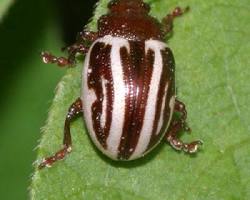
Zygogramma Leaf Beetles are a group of beneficial leaf beetles best known for their use in biological weed control programs. Belonging to the genus Zygogramma, these beetles are highly specialized plant feeders whose larvae and adults consume specific noxious weeds. Unlike many leaf beetles that become agricultural pests, Zygogramma Leaf Beetles are often intentionally released to suppress invasive plants such as ragweed and parthenium weed.
Their importance comes from their host specificity. Many species feed on only one plant species or a narrow group of closely related weeds. This makes them valuable tools in Integrated Weed Management programs, especially in rangelands, pastures, disturbed habitats, and agricultural margins where invasive weeds reduce biodiversity, compete with crops, and affect livestock production.
Rather than being viewed as pests, Zygogramma Leaf Beetles are generally considered beneficial insects when used properly. Their feeding can skeletonize leaves, weaken target weeds, reduce flowering, and limit seed production. Over time, repeated defoliation may reduce weed dominance and allow native or desirable vegetation to recover.
Taxonomy and Classification
Zygogramma Leaf Beetles belong to the large and diverse family of leaf beetles.
- Kingdom: Animalia
- Phylum: Arthropoda
- Class: Insecta
- Order: Coleoptera
- Family: Chrysomelidae
- Genus: Zygogramma
The family Chrysomelidae includes many species that feed on leaves as adults and larvae. While some members of this family are serious crop pests, several Zygogramma species are valuable biological control agents because they attack invasive weeds rather than crops.
Identification
Zygogramma Leaf Beetles are small, rounded beetles with distinctive color patterns.
Adults
- Length: 5–8 mm.
- Body Shape: Oval, rounded, and robust.
- Color: Yellow, cream, tan, or pale orange.
- Markings: Bold dark brown or black stripes on the wing covers.
- Surface: Smooth and slightly glossy.
Their striped appearance makes many species easy to distinguish from other small leaf beetles.
Larvae
- Soft-bodied.
- Usually dark or grayish.
- Slug-like or slightly flattened.
- Feed openly on target weed foliage.
Damage Signs
- Skeletonized leaves.
- Large feeding holes.
- Defoliated shoots.
- Reduced flower production.
- Weakened target weeds.
Because their feeding is directed at unwanted plants, this damage is generally beneficial rather than harmful.
Distribution and Habitat
Many Zygogramma species are native to Central America, South America, and parts of North America. Several have been introduced into other regions after careful host-specificity testing.
Common habitats include:
- Rangelands
- Pastures
- Roadsides
- Disturbed fields
- Weed-infested agricultural margins
- Grasslands
- Natural areas invaded by target weeds
Their distribution is closely tied to the presence of suitable host plants.
Host Plants
Zygogramma Leaf Beetles are known for their narrow host preferences.
Important target weeds include:
- Parthenium Weed (Parthenium hysterophorus)
- Ragweed (Ambrosia species)
- Related noxious weeds in the sunflower family
One of the best-known species, Zygogramma bicolorata, has been used as a biological control agent against parthenium weed in several countries.
Life Cycle
Zygogramma Leaf Beetles undergo complete metamorphosis.
- Egg Stage: Females lay eggs on or near host plant leaves.
- Larval Stage: Larvae hatch and feed aggressively on foliage.
- Pupal Stage: Mature larvae pupate in soil or protected areas near the host plant.
- Adult Stage: Adults emerge, feed, mate, and continue the cycle.
Multiple generations may occur during warm seasons when host weeds are actively growing.
Feeding Behavior
Both larvae and adults feed on the foliage of their target host plants.
Their feeding commonly causes:
- Leaf skeletonization.
- Loss of photosynthetic tissue.
- Reduced plant vigor.
- Suppressed flowering.
- Lower seed production.
Heavy beetle populations can strip target weeds of foliage and severely reduce their ability to compete with desirable vegetation.
Biological Control Importance
Zygogramma Leaf Beetles are important because they provide a natural method for suppressing invasive weeds.
Benefits of Biological Control
- Reduces dependence on herbicides.
- Targets specific invasive weeds.
- Provides long-term suppression.
- Helps restore native plant communities.
- Supports sustainable land management.
Biological control programs using Zygogramma beetles are most effective when combined with other weed management strategies such as grazing management, revegetation, and targeted herbicide use.
Damage and Economic Importance
In most contexts, Zygogramma feeding is considered desirable because it damages unwanted plants.
Effects on Target Weeds
- Reduced leaf area.
- Lower plant height.
- Reduced flowering.
- Reduced seed production.
- Lower competitive ability.
Repeated defoliation can weaken weed populations over time and reduce their spread.
Non-Target Concerns
Before release, candidate biological control beetles are tested extensively to ensure they do not feed on important crops, native plants, or ornamental species.
This host-specificity testing is critical for preventing unintended ecological effects.
Behavior and Conflict
The primary “conflict” associated with Zygogramma Leaf Beetles is not crop injury but management compatibility.
- Beneficial Feeding: Damage is directed at invasive weeds.
- Host Specificity: Most species feed on a narrow group of plants.
- Sensitivity to Insecticides: Broad-spectrum sprays can kill released beetles.
- Slow Establishment: Populations may need time to build.
- Environmental Limits: Temperature, rainfall, and host availability affect success.
Successful use requires protecting beetle populations after release and avoiding unnecessary insecticide applications.
Monitoring and Release Programs
Monitoring is essential in biological control projects.
- Check target weed foliage for larvae and adults.
- Record feeding damage levels.
- Monitor beetle survival after release.
- Measure reductions in weed growth and seed production.
- Track non-target plant safety.
Post-release monitoring helps determine whether beetles are establishing and contributing to weed suppression.
Management and Protection
Zygogramma Leaf Beetles should generally be protected rather than controlled.
Protection Measures
- Avoid broad-spectrum insecticides in release areas.
- Preserve target host patches until beetle populations establish.
- Minimize unnecessary disturbance.
- Coordinate weed control timing with beetle activity.
Mass Rearing
- Beetles may be raised in controlled facilities.
- Host plants are grown for larval feeding.
- Adults are released into weed-infested areas.
- Follow-up monitoring tracks establishment success.
Mass rearing allows land managers to distribute beetles into new areas where target weeds are spreading.
Conservation and Research
Research on Zygogramma Leaf Beetles focuses on host specificity, mass-rearing techniques, release strategies, population establishment, and long-term weed suppression. Scientists also study how climate, predators, parasites, and host plant quality affect beetle performance.
These beetles represent an important example of beneficial insect use in sustainable land management. When carefully selected, tested, and monitored, Zygogramma Leaf Beetles can help reduce invasive weed pressure while lowering reliance on chemical herbicides.