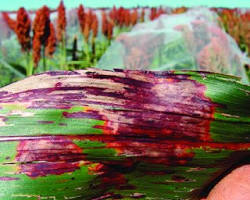
Zonate Leaf Spot Pests refers to a group of fungal and bacterial plant pathogens that cause distinctive leaf lesions characterized by concentric rings or bands. These circular patterns create a target-like appearance known as zonation, which gives the disease its common name. Among the most well-known causes is the fungus Cristulariella depraedans, although several other fungal and bacterial organisms can produce similar symptoms on ornamental plants, shade trees, shrubs, vegetables, and agricultural crops.
Zonate leaf spot diseases are primarily valued for their impact on plant appearance. Infected plants develop brown, black, tan, or gray lesions that expand over time, often merging into large dead areas. Severe infections can result in premature defoliation, reduced plant vigor, diminished ornamental value, and increased susceptibility to environmental stress.
While mature trees and established landscape plants rarely die from zonate leaf spot infections alone, repeated outbreaks can weaken plants over time and reduce their overall health and aesthetic appeal.
Taxonomy and Classification
Zonate leaf spot diseases may be caused by several groups of plant pathogens.
- Kingdom: Fungi or Bacteria
- Common Fungal Genera: Cristulariella, Alternaria, Cercospora, and related fungi
- Common Bacterial Groups: Various plant-pathogenic bacteria capable of producing zonate lesions
Most zonate leaf spot pathogens are considered polycyclic diseases, meaning multiple infection cycles can occur during a single growing season. This allows disease severity to increase rapidly when environmental conditions are favorable.
Identification
Zonate leaf spot diseases are primarily identified through their distinctive symptoms on leaves.
Leaf Lesions
- Circular or irregular spots.
- Brown, black, tan, or gray discoloration.
- Concentric rings creating a target-like appearance.
- Expanding lesions that merge together.
- Dead tissue surrounded by darker margins.
The alternating light and dark bands are the defining feature of many zonate leaf spot diseases.
Advanced Symptoms
- Large necrotic patches.
- Premature yellowing.
- Leaf curling.
- Leaf distortion.
- Premature defoliation.
- Shot-hole symptoms where dead tissue falls out.
In severe cases, entire branches may appear sparse due to excessive leaf loss.
Distribution and Habitat
Zonate leaf spot diseases occur worldwide and affect numerous ornamental, agricultural, and forest plant species.
Common habitats include:
- Landscape plantings
- Urban forests
- Shade trees
- Nurseries
- Greenhouses
- Gardens
- Agricultural fields
- Natural forests
These diseases are particularly common in regions that experience prolonged periods of humidity, rainfall, and moderate temperatures.
Host Plants
Zonate leaf spot pathogens attack a wide variety of plants.
Common hosts include:
- Maple trees
- Dogwoods
- Hydrangeas
- Rhododendrons
- Azaleas
- Vegetable crops
- Various ornamental shrubs
- Forest tree species
Host susceptibility varies depending on the pathogen involved and environmental conditions.
Disease Cycle
The disease cycle typically follows a predictable pattern.
- Overwintering Stage: Pathogens survive in infected leaves, plant debris, or dormant plant tissues.
- Spore Production: Fungal spores or bacterial cells become active during favorable weather.
- Dispersal: Rain splash, irrigation water, wind, and human activity spread the pathogen.
- Infection: Pathogens enter susceptible leaf tissue.
- Lesion Development: Characteristic zonate spots develop.
- Secondary Spread: New spores are produced and additional infections occur.
Multiple infection cycles may occur throughout the growing season.
Environmental Conditions Favoring Disease
Several environmental factors contribute to outbreaks.
- High humidity.
- Frequent rainfall.
- Extended leaf wetness.
- Poor air circulation.
- Dense plant canopies.
- Overhead irrigation.
- Moderate temperatures.
These conditions allow spores and bacteria to germinate, spread, and infect new foliage.
Damage and Economic Importance
Zonate leaf spot diseases are primarily significant because of their impact on appearance and plant vigor.
Ornamental Damage
- Unsightly foliage.
- Reduced landscape value.
- Poor nursery stock appearance.
- Lower marketability.
Even moderate infections can make otherwise healthy plants appear unhealthy.
Defoliation
- Premature leaf drop.
- Reduced photosynthesis.
- Thinning canopies.
- Stress on young plants.
Repeated defoliation can weaken plants over multiple growing seasons.
Growth Reduction
- Slower growth rates.
- Reduced energy reserves.
- Increased susceptibility to drought.
- Greater vulnerability to secondary pests.
Young trees and stressed plants are most affected by severe infections.
Behavior and Conflict
The primary conflict associated with zonate leaf spot diseases involves rapid spread under favorable environmental conditions.
- Overwintering Survival: Pathogens persist in infected debris.
- Splash Dispersal: Rain rapidly spreads infectious material.
- Polycyclic Development: Multiple generations occur each season.
- High Visibility: Symptoms are highly noticeable.
- Repeated Infection: Plants may become infected annually.
Without proper management, disease pressure can increase significantly from year to year.
Monitoring and Detection
Regular monitoring helps identify infections before they become severe.
- Inspect lower leaves first.
- Watch for concentric rings.
- Monitor humid areas.
- Check after periods of rainfall.
- Track seasonal disease development.
Early detection improves management success.
Management and Prevention
Integrated disease management provides the most effective control.
Sanitation
- Remove infected leaves.
- Destroy fallen foliage.
- Dispose of heavily infected debris.
- Clean pruning equipment.
Sanitation removes important sources of overwintering pathogens.
Water Management
- Avoid overhead watering.
- Water early in the day.
- Use drip irrigation when possible.
- Reduce leaf wetness periods.
Keeping foliage dry greatly reduces infection opportunities.
Cultural Controls
- Improve air circulation.
- Prune dense canopies.
- Space plants properly.
- Maintain overall plant health.
- Avoid excessive nitrogen fertilization.
Healthy plants are better able to tolerate infections.
Chemical Control
- Preventive fungicide applications.
- Protective sprays during favorable weather.
- Targeted treatments based on monitoring results.
Fungicides are most effective when applied before extensive infection occurs.
Conservation and Research
Research on zonate leaf spot diseases focuses on predictive disease models, resistant plant varieties, biological control options, and environmentally responsible fungicide programs. Scientists continue developing weather-based forecasting systems that allow growers and landscapers to anticipate outbreaks and apply preventive treatments more effectively.
Although zonate leaf spot diseases rarely kill established trees and ornamentals, their ability to cause severe defoliation and aesthetic damage makes them important concerns for homeowners, landscapers, nurseries, and forestry professionals. Proper sanitation, moisture management, and early detection remain the most effective strategies for long-term disease suppression.