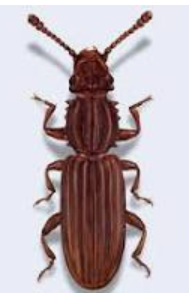
Zameus Grain Beetles is a common name sometimes applied to tiny stored-product beetles closely resembling the Foreign Grain Beetle (Ahasverus advena) and related species in the family Silvanidae. These minute beetles are commonly associated with damp grain, moldy food products, and high-humidity storage environments. Unlike many stored-product pests that directly consume grain kernels, Zameus Grain Beetles primarily feed on molds and fungi that develop on moist food products.
The presence of these beetles is often a warning sign of a larger moisture problem. Infestations commonly occur in pantries, grain storage facilities, warehouses, pet food containers, and food-processing environments where excessive humidity allows mold growth. Although the beetles themselves rarely cause significant feeding damage, they contaminate stored products and indicate conditions that may lead to substantial spoilage.
Because they thrive only under moist conditions, Zameus Grain Beetles are considered important indicator pests whose presence often signals the need for immediate sanitation and moisture control measures.
Taxonomy and Classification
Zameus Grain Beetles belong to a group of flattened beetles commonly associated with stored products and fungal growth.
- Kingdom: Animalia
- Phylum: Arthropoda
- Class: Insecta
- Order: Coleoptera
- Family: Silvanidae
- Representative Species: Ahasverus advena
The family Silvanidae contains numerous small beetles that inhabit bark, stored products, grain facilities, and environments containing fungal growth.
Identification
Zameus Grain Beetles are extremely small and often overlooked until populations become noticeable.
Adults
- Length: 1.5–2.5 mm.
- Color: Reddish-brown to brown.
- Shape: Flattened and elongated.
- Body: Narrow with parallel sides.
- Movement: Slow-moving compared to many stored-product beetles.
Their flattened bodies allow them to move easily through cracks, crevices, packaging seams, and stored products.
Larvae
- Small and pale.
- Worm-like appearance.
- Develop within moldy food materials.
- Feed primarily on fungal growth.
Key Signs of Infestation
- Tiny brown beetles in stored foods.
- Beetles wandering on shelves or walls.
- Moldy grain products.
- Moist or spoiled food materials.
- Infestations near water leaks.
Unlike grain weevils and flour beetles, these insects are strongly associated with fungal growth rather than healthy dry products.
Distribution and Habitat
Zameus Grain Beetles are found worldwide and occur wherever suitable moisture levels support mold development.
Common habitats include:
- Pantries
- Kitchen cabinets
- Food warehouses
- Grain elevators
- Pet food storage areas
- Feed mills
- Food-processing facilities
- Moist basements
- Storage sheds
They are especially common in environments with poor ventilation and elevated humidity.
Life Cycle
Zameus Grain Beetles undergo complete metamorphosis.
- Egg Stage: Eggs are deposited near moldy food sources.
- Larval Stage: Larvae feed on fungi growing on stored products.
- Pupal Stage: Pupation occurs within protected areas of the food source.
- Adult Stage: Adults emerge and disperse to locate additional moldy materials.
Under favorable conditions, development may occur rapidly, allowing populations to increase quickly.
Feeding Habits
The most important characteristic of Zameus Grain Beetles is their preference for fungal growth.
Common food sources include:
- Molds growing on grain.
- Spoiled cereals.
- Damp flour products.
- Moist pet food.
- Stored nuts.
- Animal feed.
- Organic debris.
Healthy, properly dried grain is generally less attractive than grain that has become damp and moldy.
Damage and Economic Importance
Although they rarely destroy grain directly, these beetles contribute to contamination and product losses.
Stored Product Contamination
- Presence of live insects.
- Contamination of food products.
- Reduced marketability.
- Consumer complaints.
Indicator of Moisture Problems
- Poor grain drying.
- Roof leaks.
- Condensation issues.
- Ventilation failures.
- High humidity levels.
Because fungal growth often accompanies infestations, economic losses may be greater from spoilage than from beetle feeding itself.
Secondary Problems
- Increased mold growth.
- Product degradation.
- Food safety concerns.
- Warehouse sanitation issues.
Their presence often signals conditions favorable for additional stored-product pests.
Behavior and Conflict
The conflict associated with Zameus Grain Beetles is primarily indirect.
- Fungus Feeders: Depend on mold development.
- Moisture Indicators: Signal environmental problems.
- Wandering Behavior: Adults often disperse from the food source.
- Rapid Colonization: Quickly exploit favorable conditions.
- Stored Product Nuisance: Frequently discovered in kitchens and pantries.
Many infestations are first noticed when adults begin wandering away from the original food source.
Signs of Infestation
Property owners may observe:
- Tiny reddish-brown beetles on shelves.
- Beetles near food containers.
- Insects around sinks and moist areas.
- Musty odors.
- Visible mold growth.
- Damp food products.
Inspection often reveals moisture-damaged foods hidden in rarely used storage areas.
Management and Prevention
Successful control focuses on eliminating both the beetles and the conditions supporting mold growth.
Sanitation
- Discard infested foods.
- Remove moldy products.
- Clean shelves thoroughly.
- Vacuum cracks and crevices.
- Remove food residues.
Sanitation is the most important step in eliminating infestations.
Moisture Control
- Repair plumbing leaks.
- Improve ventilation.
- Reduce humidity.
- Use dehumidifiers when necessary.
- Store products in dry locations.
Without moisture, mold cannot develop and beetle populations quickly decline.
Storage Practices
- Use sealed containers.
- Rotate stored products.
- Inspect grain regularly.
- Maintain proper drying procedures.
- Monitor humidity levels.
Proper storage greatly reduces the risk of infestation.
Chemical Control
Chemical treatments are rarely necessary once sanitation and moisture problems are corrected.
Most infestations disappear naturally after food sources and fungal growth are eliminated.
Conservation and Research
Research involving these beetles focuses on stored-product protection, moisture monitoring, fungal interactions, and early detection systems for grain storage facilities. Scientists are developing advanced sensors capable of identifying humidity problems before mold and insect infestations become established.
Although Zameus Grain Beetles are not among the most destructive stored-product pests, their presence should never be ignored. They serve as valuable indicators of moisture problems that can lead to significant food spoilage, mold contamination, and economic losses if left uncorrected.