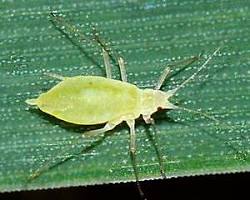
Yellow Wheat Aphids
Yellow Wheat Aphids are among the most economically important pests of cereal crops worldwide. The term commonly refers to several aphid species that infest wheat, barley, oats, and other grain crops, including the highly destructive Russian Wheat Aphid (Diuraphis noxia) and the Bird Cherry-Oat Aphid (Rhopalosiphum padi). These tiny sap-feeding insects can rapidly multiply and cause significant yield losses through direct feeding damage and the transmission of plant viruses.
Unlike many crop pests that simply consume plant tissue, Yellow Wheat Aphids damage plants by inserting specialized piercing-sucking mouthparts into the vascular system and extracting nutrient-rich phloem sap. Some species, particularly the Russian Wheat Aphid, inject toxic saliva during feeding that causes severe physiological changes within the plant. This results in leaf rolling, yellow streaking, purple discoloration, stunted growth, poor grain development, and significant reductions in crop yields.
Because aphids reproduce rapidly and often remain concealed within rolled leaves, infestations can become severe before they are noticed. Effective management relies on resistant crop varieties, monitoring programs, biological controls, and integrated pest management strategies.
Taxonomy and Classification
Yellow Wheat Aphids belong to a diverse family of sap-feeding insects that includes thousands of agricultural pest species.
- Kingdom: Animalia
- Phylum: Arthropoda
- Class: Insecta
- Order: Hemiptera
- Family: Aphididae
- Important Species: Diuraphis noxia, Rhopalosiphum padi
Aphids have complex life cycles that often involve alternating sexual and asexual generations, allowing populations to expand extremely rapidly under favorable conditions.
Identification
Yellow Wheat Aphids are small insects that can be difficult to identify without close inspection.
Adults
- Length: 1–3 mm.
- Color: Pale yellow, greenish-yellow, or light green.
- Body: Soft-bodied and pear-shaped.
- Texture: Often covered with a waxy coating.
- Antennae: Short to moderate length.
Russian Wheat Aphids possess distinctive short antennae and a characteristic double-tailed appearance at the rear of the body.
Nymphs
- Smaller versions of adults.
- Similar coloration.
- Concentrated in feeding colonies.
Winged Forms
- Produced when populations become crowded.
- Facilitate long-distance dispersal.
- Spread infestations between fields.
Damage Identification
Crop symptoms often provide the first indication of an infestation.
- Yellow streaks on leaves.
- White striping patterns.
- Purple discoloration.
- Leaf rolling.
- Twisted foliage.
- Stunted plants.
- Poor grain development.
- Reduced tillering.
Leaf rolling is particularly characteristic of Russian Wheat Aphid infestations and often conceals the insects inside the folded leaf tissue.
Distribution and Habitat
Yellow Wheat Aphids occur throughout major grain-producing regions around the world.
They are found in:
- North America
- Europe
- Asia
- Africa
- Australia
- South America
They primarily inhabit cereal crops and grass species that provide suitable feeding sites.
Host Plants
Yellow Wheat Aphids attack numerous grasses and cereal crops.
Common hosts include:
- Wheat
- Barley
- Oats
- Rye
- Triticale
- Wild grasses
- Volunteer cereal plants
Volunteer grains and grass weeds often serve as reservoirs that support aphid populations between cropping seasons.
Life Cycle
Yellow Wheat Aphids have highly adaptable life cycles that contribute to their pest status.
- Birth: Females often produce live young without mating.
- Nymph Stage: Nymphs immediately begin feeding.
- Development: Several molts occur before adulthood.
- Adult Stage: Reproduction begins quickly.
Under favorable weather conditions, multiple generations can occur in a single growing season.
Population growth can be explosive, especially during mild temperatures and abundant crop growth.
Feeding Behavior
Aphids use specialized mouthparts called stylets to feed directly from the plant’s vascular tissues.
During feeding they:
- Penetrate leaf tissue.
- Access phloem sap.
- Extract nutrients.
- Inject saliva into the plant.
This feeding process causes both direct and indirect damage.
Toxic Saliva Effects
The Russian Wheat Aphid is especially damaging because of the toxins present in its saliva.
These toxins can cause:
- Cellular damage.
- Leaf rolling.
- Chlorosis.
- Growth abnormalities.
- Reduced photosynthesis.
- Poor grain formation.
Damage frequently exceeds what would be expected from sap removal alone.
Virus Transmission
Several wheat aphid species are important vectors of plant viruses.
Common diseases transmitted include:
- Barley Yellow Dwarf Virus (BYDV)
- Cereal Yellow Dwarf Virus
- Other cereal viral diseases
Virus infections often result in additional yield losses beyond direct aphid damage.
Economic Importance
Yellow Wheat Aphids rank among the most serious cereal crop pests in many regions.
Direct Damage
- Sap removal.
- Leaf injury.
- Reduced vigor.
- Lower grain production.
Indirect Damage
- Virus transmission.
- Plant stress.
- Reduced photosynthesis.
- Delayed development.
Yield Losses
- Reduced grain size.
- Poor grain fill.
- Lower harvest weight.
- Economic losses.
Severe infestations can significantly reduce both crop quality and profitability.
Behavior and Conflict
Several biological characteristics contribute to their destructive nature.
- Rapid Reproduction: Colonies expand quickly.
- Concealed Feeding: Aphids hide inside rolled leaves.
- Toxic Saliva: Causes severe plant injury.
- Virus Vectoring: Spreads important crop diseases.
- Winged Dispersal: Enables rapid field-to-field spread.
These traits make Yellow Wheat Aphids difficult and costly agricultural pests.
Monitoring and Detection
Regular scouting is critical for early intervention.
- Inspect young cereal crops.
- Check rolled leaves.
- Monitor yellow streaking.
- Look for aphid colonies.
- Track virus symptoms.
Early detection often determines the success of management efforts.
Management and Prevention
Integrated Pest Management (IPM) provides the most effective long-term control.
Genetic Resistance
- Plant resistant wheat varieties.
- Utilize resistant barley cultivars.
- Incorporate resistance genes into breeding programs.
Host plant resistance remains one of the most effective control tools.
Biological Control
- Lady beetles.
- Lacewings.
- Hoverfly larvae.
- Parasitic wasps.
- Predatory bugs.
Natural enemies often suppress aphid populations when conserved.
Cultural Controls
- Destroy volunteer cereals.
- Manage grass weeds.
- Optimize planting dates.
- Maintain crop health.
Chemical Control
- Insecticidal seed treatments.
- Foliar insecticides.
- Threshold-based applications.
Chemical treatments are most effective when applied before populations become excessive.
Conservation and Research
Yellow Wheat Aphids remain a major focus of agricultural research worldwide. Scientists continue studying aphid biotypes, virus transmission mechanisms, insecticide resistance, plant resistance genes, and biological control systems. Researchers are also investigating the molecular effects of aphid saliva toxins and developing wheat varieties capable of resisting both aphid feeding and associated viral diseases.
Because of their ability to damage crops directly and spread devastating plant pathogens, Yellow Wheat Aphids remain among the most significant threats to cereal grain production. Effective monitoring, resistant varieties, and integrated pest management programs are essential for minimizing economic losses and protecting global grain supplies.