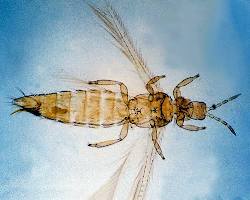
Yellow Thrips are among the most destructive and difficult-to-control pests affecting agricultural crops, greenhouse production systems, ornamental plants, and vegetable gardens worldwide. The term commonly refers to species such as the Western Flower Thrips (Frankliniella occidentalis) and the Onion Thrips (Thrips tabaci), both of which are notorious for causing direct feeding damage and transmitting devastating plant viruses.
Although extremely small, Yellow Thrips can cause significant economic losses through their feeding activity. Using specialized rasping-sucking mouthparts, they puncture plant cells and consume the contents, leaving behind characteristic silvery scars, distorted leaves, damaged flowers, and blemished fruit. Even more damaging is their ability to spread viruses such as Tomato Spotted Wilt Virus (TSWV) and Impatiens Necrotic Spot Virus (INSV), which can destroy entire crops.
Because thrips reproduce rapidly, hide within flowers and growing points, and develop resistance to insecticides, they are considered one of the most challenging insect pests in modern agriculture.
Taxonomy and Classification
Yellow Thrips belong to a unique group of insects characterized by their fringed wings and specialized feeding habits.
- Kingdom: Animalia
- Phylum: Arthropoda
- Class: Insecta
- Order: Thysanoptera
- Family: Thripidae
- Important Species: Frankliniella occidentalis, Thrips tabaci
The order Thysanoptera contains thousands of species worldwide, including both beneficial and pest species. Most economically important species are plant feeders that attack crops and ornamentals.
Identification
Thrips are among the smallest insect pests commonly encountered on plants.
Adults
- Length: 0.5–1.5 mm.
- Shape: Slender and elongated.
- Color: Yellow, pale brown, golden, or light tan.
- Wings: Narrow wings fringed with long hairs.
- Movement: Fast-moving and highly active.
The fringed wings are one of the defining characteristics of all thrips species.
Nymphs
- Wingless.
- Pale yellow or cream-colored.
- Similar in appearance to adults.
- Feed actively on plant tissues.
Young stages are often concentrated in flowers and growing points.
Damage Identification
Yellow Thrips produce distinctive symptoms that help separate them from other plant pests.
Leaf Damage
- Silvery streaks.
- Fine stippling.
- Bronzing.
- Leaf distortion.
- Curling foliage.
The silvery appearance results from the destruction of plant cells and the introduction of air into damaged tissues.
Flower Damage
- Brown petals.
- Distorted blooms.
- Premature flower drop.
- Reduced ornamental quality.
Flower damage is especially problematic in greenhouse ornamentals.
Fruit Damage
- Surface scarring.
- Corky patches.
- Russeting.
- Deformed fruit.
Even minor feeding can make fruit unmarketable.
Additional Signs
- Tiny black fecal spots.
- Visible thrips inside flowers.
- Premature plant decline.
Distribution and Habitat
Yellow Thrips are found throughout the world and occur wherever suitable host plants are grown.
Common habitats include:
- Greenhouses
- Vegetable fields
- Flower production facilities
- Nurseries
- Home gardens
- Landscape plantings
- Agricultural crops
They thrive in warm environments and can reproduce continuously in protected growing structures.
Host Plants
Yellow Thrips have an extremely broad host range.
Common hosts include:
- Tomatoes
- Peppers
- Onions
- Lettuce
- Cucumbers
- Beans
- Strawberries
- Roses
- Chrysanthemums
- Impatiens
- Petunias
- Hundreds of weed species
Their ability to feed on numerous hosts makes management particularly challenging.
Life Cycle
Thrips undergo a unique developmental process.
- Egg Stage: Eggs are inserted directly into plant tissue.
- Larval Stage: Two active feeding stages occur.
- Prepupal Stage: Non-feeding transitional stage.
- Pupal Stage: Usually occurs in soil, leaf litter, or protected crevices.
- Adult Stage: Winged adults emerge and begin reproducing.
Development can be completed in as little as two weeks under favorable conditions.
Multiple overlapping generations occur throughout the growing season.
Feeding Behavior
Thrips feed using specialized asymmetrical mouthparts.
They:
- Pierce plant cells.
- Scrape tissue surfaces.
- Extract cell contents.
- Damage developing growth.
Young leaves, flowers, and fruit are especially vulnerable.
Virus Transmission
The most serious threat posed by Yellow Thrips is their ability to transmit plant viruses.
Important viruses include:
- Tomato Spotted Wilt Virus (TSWV)
- Impatiens Necrotic Spot Virus (INSV)
- Groundnut Ringspot Virus
- Tomato Chlorotic Spot Virus
Virus Symptoms
- Ring spots.
- Necrotic lesions.
- Stunted growth.
- Leaf mottling.
- Plant death.
- Crop failure.
Thrips acquire viruses as larvae and spread them throughout their adult lives.
Economic Importance
Yellow Thrips are responsible for billions of dollars in agricultural losses worldwide.
Direct Damage
- Reduced photosynthesis.
- Flower destruction.
- Fruit scarring.
- Poor plant growth.
Indirect Damage
- Virus transmission.
- Marketability losses.
- Production costs.
- Crop rejection.
Virus-related losses often exceed feeding damage.
Behavior and Conflict
Several characteristics make Yellow Thrips difficult pests to manage.
- Hidden Feeding: Occupy flowers and growing points.
- Rapid Reproduction: Multiple generations annually.
- Pupal Protection: Soil-based pupation avoids sprays.
- Virus Vectoring: Spread devastating diseases.
- Insecticide Resistance: Resistance develops quickly.
These traits require comprehensive management programs rather than reliance on a single control method.
Monitoring and Detection
Early detection is essential.
- Inspect flowers regularly.
- Check growing points.
- Monitor leaf scarring.
- Look for fecal spots.
- Watch for virus symptoms.
Sticky Traps
- Blue sticky traps.
- Yellow sticky traps.
- Population monitoring.
- Early detection.
Sticky traps are widely used in greenhouse production systems.
Management and Prevention
Integrated Pest Management (IPM) provides the most effective approach.
Biological Control
- Predatory mites.
- Minute pirate bugs.
- Predatory thrips.
- Beneficial nematodes.
Biological control is a cornerstone of modern thrips management.
Cultural Controls
- Remove weeds.
- Inspect incoming plants.
- Maintain sanitation.
- Eliminate plant debris.
Monitoring Programs
- Sticky traps.
- Crop scouting.
- Virus surveillance.
- Population tracking.
Chemical Control
- Selective insecticides.
- Insecticide rotation.
- Resistance management programs.
- Targeted applications.
Because resistance develops rapidly, rotating chemical classes is essential.
Conservation and Research
Yellow Thrips remain one of the most heavily researched agricultural pests worldwide. Scientists continue developing improved biological control programs, resistant crop varieties, advanced monitoring technologies, and sustainable management strategies. Research also focuses on understanding virus transmission, insecticide resistance mechanisms, and methods for enhancing the effectiveness of natural enemies.
Although tiny, Yellow Thrips rank among the most destructive pests affecting agriculture, greenhouse production, and ornamental horticulture. Their ability to damage plants directly while transmitting devastating viruses makes them a constant concern for growers around the world.