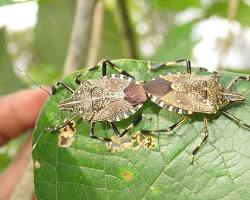
Yellow Spotted Stink Bugs
Yellow Spotted Stink Bugs is a common name often applied to various brightly colored stink bug species that display yellow, orange, or cream-colored markings on their bodies. These insects belong to the family Pentatomidae and include species such as the Harlequin Bug (Murgantia histrionica) and certain color forms of the Southern Green Stink Bug (Nezara viridula). While their appearance may vary, they share similar feeding habits and are considered important agricultural pests in many regions.
Yellow Spotted Stink Bugs damage crops by piercing plant tissues and extracting sap using specialized needle-like mouthparts. Their feeding causes deformities, discoloration, fruit blemishes, reduced yields, and poor crop quality. In addition to feeding damage, these insects are notorious for producing a strong defensive odor when disturbed or crushed. This odor can contaminate harvested produce and create nuisance issues for growers and homeowners.
Because they attack a wide variety of vegetables, fruits, legumes, and ornamental plants, Yellow Spotted Stink Bugs remain significant pests in both commercial agriculture and home gardens.
Taxonomy and Classification
Yellow Spotted Stink Bugs belong to a large family of plant-feeding true bugs.
- Kingdom: Animalia
- Phylum: Arthropoda
- Class: Insecta
- Order: Hemiptera
- Family: Pentatomidae
The Pentatomidae family contains hundreds of species worldwide, many of which are important agricultural pests. Their characteristic shield-shaped bodies make them easy to recognize.
Identification
Yellow Spotted Stink Bugs are medium-sized insects with distinctive coloration and body shape.
Adults
- Length: 10–17 mm.
- Shape: Broad, shield-shaped body.
- Color: Green, yellow, orange, black, or mixed patterns.
- Markings: Yellow spots, stripes, or patches on the body.
- Antennae: Long and segmented.
- Wings: Fully developed and functional.
The Harlequin Bug is especially recognizable because of its striking orange, yellow, and black coloration.
Nymphs
- Wingless.
- Brightly colored.
- Often red, orange, yellow, or black.
- Feed in groups during early development.
Nymphs frequently congregate on host plants where they can cause concentrated damage.
Eggs
- Barrel-shaped.
- Arranged in clusters.
- Typically attached to leaf surfaces.
- Often display distinctive markings or bands.
Egg masses are among the easiest signs of an impending infestation.
Distribution and Habitat
Yellow Spotted Stink Bugs occur across many agricultural regions worldwide.
Common habitats include:
- Vegetable gardens
- Agricultural fields
- Greenhouses
- Fruit orchards
- Pastures
- Weedy field margins
- Landscape plantings
They are especially abundant in warm climates and areas with diverse host plants.
Host Plants
These insects feed on a broad range of cultivated and wild plants.
Common hosts include:
- Tomatoes
- Peppers
- Beans
- Soybeans
- Cabbage
- Broccoli
- Kale
- Mustard greens
- Corn
- Sunflowers
- Various weeds
Cruciferous vegetables are particularly susceptible to Harlequin Bug infestations.
Life Cycle
Yellow Spotted Stink Bugs undergo simple metamorphosis.
- Egg Stage: Females lay clusters of eggs on leaves.
- Nymph Stage: Multiple immature stages develop while feeding on plants.
- Adult Stage: Fully developed insects continue feeding and reproducing.
Several generations may occur each year depending on climate and species.
Warm temperatures often accelerate development and increase population growth.
Feeding Behavior
Yellow Spotted Stink Bugs feed using piercing-sucking mouthparts.
They:
- Pierce plant tissues.
- Inject digestive saliva.
- Extract plant fluids.
- Damage developing fruits and seeds.
The feeding process can leave permanent damage even after the insect is gone.
Damage and Economic Importance
Yellow Spotted Stink Bugs cause both direct and indirect crop losses.
Fruit Damage
- Sunken spots.
- Discolored patches.
- Internal tissue damage.
- Catfacing and deformities.
Fruit damage often reduces marketability and consumer acceptance.
Vegetable Damage
- Leaf wilting.
- Stunted growth.
- Distorted foliage.
- Reduced yields.
Heavy infestations can significantly weaken plants.
Seed Damage
- Poor seed development.
- Reduced germination.
- Lower crop quality.
Seed-feeding species can cause substantial economic losses in grain and legume crops.
Defensive Odor
One of the defining characteristics of stink bugs is their ability to release foul-smelling defensive chemicals.
The odor:
- Repels predators.
- Warns other stink bugs of danger.
- Contaminates harvested produce.
- Creates nuisance problems indoors.
The smell originates from specialized glands located within the thorax.
Behavior and Conflict
Several biological traits contribute to their pest status.
- Wide Host Range: Feed on many crops.
- Group Feeding: Nymphs often aggregate.
- Strong Odor: Defensive secretions create nuisance issues.
- Mobility: Adults can move between fields easily.
- Overwintering Ability: Adults survive in protected habitats.
These characteristics allow populations to persist and spread rapidly.
Monitoring and Detection
Early detection is important for effective management.
- Inspect leaves regularly.
- Look for egg masses.
- Monitor developing fruit.
- Check for feeding scars.
- Watch for aggregations of nymphs.
Regular scouting helps prevent severe infestations.
Management and Prevention
Integrated Pest Management (IPM) provides the most effective approach.
Cultural Controls
- Remove crop debris.
- Eliminate weeds.
- Destroy overwintering sites.
- Rotate crops.
Good sanitation reduces population buildup.
Trap Cropping
- Plant attractive host plants.
- Concentrate stink bugs away from cash crops.
- Improve monitoring efficiency.
Trap crops are widely used in vegetable production systems.
Physical Control
- Hand-pick adults.
- Remove egg masses.
- Dispose of insects in soapy water.
This method is practical in home gardens and small plantings.
Biological Control
- Parasitic wasps.
- Predatory insects.
- Spiders.
- Birds.
Natural enemies can significantly reduce stink bug populations.
Chemical Control
- Targeted insecticide applications.
- Treatments based on monitoring thresholds.
- Management of heavy infestations.
Chemical control is most effective when directed at young nymph stages.
Conservation and Research
Research involving Yellow Spotted Stink Bugs focuses heavily on biological control programs, host plant resistance, behavioral ecology, and pheromone-based monitoring systems. Scientists continue studying egg parasitoids such as parasitic wasps, which show significant promise for long-term population suppression in agricultural systems.
Although their distinctive appearance may make them easy to recognize, Yellow Spotted Stink Bugs remain serious pests capable of causing substantial economic losses. Their feeding damage, broad host range, and defensive odor make them important targets for integrated pest management programs throughout agricultural regions worldwide.