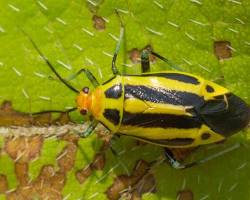
Yellow Plant Bugs
Yellow Plant Bugs are common agricultural pests that belong primarily to the genus Lygus, a group of highly adaptable plant-feeding insects found throughout the world. Species such as the Tarnished Plant Bug (Lygus lineolaris) can display yellow, green, or brown coloration and are among the most economically important pests of vegetables, fruit crops, cotton, alfalfa, and ornamental plants. Unlike chewing insects that consume leaves directly, Yellow Plant Bugs damage crops by piercing plant tissues and extracting fluids while injecting toxic saliva that disrupts normal growth.
Their feeding activity often results in distorted flowers, malformed fruits, aborted buds, and reduced crop yields. Because they are highly mobile and capable of feeding on hundreds of different plant species, Yellow Plant Bugs can quickly move between weeds, wild plants, and cultivated crops, making them difficult to manage once populations become established.
Farmers and gardeners frequently encounter these insects during the growing season, particularly in areas where weeds, flowering plants, and agricultural crops are abundant. Their ability to damage developing plant tissue makes them especially destructive during flowering and fruit production stages.
Taxonomy and Classification
- Kingdom: Animalia
- Phylum: Arthropoda
- Class: Insecta
- Order: Hemiptera
- Family: Miridae
- Genus: Lygus
Yellow Plant Bugs belong to the family Miridae, commonly known as plant bugs. This family contains thousands of species worldwide, many of which feed on agricultural crops. Members of the genus Lygus are among the most economically significant due to their broad host range and destructive feeding habits.
Identification
Adult Yellow Plant Bugs are small but highly active insects.
- Length: 5–8 mm.
- Body Shape: Oval and somewhat flattened.
- Color: Yellow, green, tan, or mottled brown.
- Wings: Fully developed wings covering the abdomen.
- Movement: Quick runners and strong fliers.
Adults often blend into foliage, making them difficult to spot until disturbed.
Nymphs resemble smaller wingless versions of adults and are usually pale green or yellow-green. They move rapidly across leaves and stems when disturbed.
Distribution and Habitat
Yellow Plant Bugs occur throughout North America, Europe, Asia, Africa, and many other agricultural regions worldwide.
Common habitats include:
- Vegetable gardens
- Commercial crop fields
- Fruit orchards
- Berry plantings
- Alfalfa fields
- Cotton fields
- Weedy roadsides
- Wildflower meadows
They frequently migrate between wild host plants and cultivated crops as food sources become available throughout the growing season.
Life Cycle
Yellow Plant Bugs undergo simple metamorphosis consisting of three stages:
- Egg
- Nymph
- Adult
Females insert eggs directly into plant tissues, where they remain protected until hatching.
After hatching, nymphs feed continuously on plant sap while progressing through several molts before becoming adults.
Depending on climate conditions, multiple generations may occur each year, allowing populations to increase rapidly.
Host Plants
One reason Yellow Plant Bugs are such successful pests is their extremely broad host range.
Common host plants include:
- Cotton
- Strawberries
- Tomatoes
- Peppers
- Beans
- Lettuce
- Celery
- Alfalfa
- Apples
- Peaches
- Sunflowers
- Numerous weeds
This flexibility allows populations to survive even when one crop is unavailable.
Damage and Economic Importance
Yellow Plant Bugs cause damage through their piercing-sucking feeding behavior.
Catfacing of Fruit
One of the most recognizable symptoms is catfacing, a condition where fruits become scarred, misshapen, or deformed.
Affected fruits may show:
- Sunken scars
- Irregular growth
- Distorted shapes
- Reduced market value
Flower Damage
Feeding on flower buds often causes:
- Bud abortion
- Poor pollination
- Flower drop
- Reduced fruit set
Terminal Growth Injury
Damage to growing points may result in:
- Stunted growth
- Twisted shoots
- Branch distortion
- Reduced plant vigor
Seed and Fruit Loss
In seed-producing crops, feeding may:
- Reduce seed quality
- Lower seed production
- Decrease germination rates
Behavior and Conflict
The economic impact of Yellow Plant Bugs is largely due to their unique feeding behavior.
Unlike insects that simply remove plant fluids, they inject toxic saliva into plant tissues before feeding.
This saliva:
- Breaks down plant cells.
- Interferes with growth hormones.
- Causes tissue death.
- Produces deformities far beyond the feeding site.
As a result, relatively small populations can cause significant crop losses.
Their ability to fly also enables rapid movement between fields, making infestations difficult to predict and contain.
Monitoring and Detection
Early detection is important for successful management.
Common monitoring methods include:
- Sweep net sampling
- Visual inspections
- Sticky traps
- Flower inspections
- Fruit examinations
Growers often rely on economic thresholds to determine when treatment is justified.
Management and Prevention
Effective management requires an integrated approach.
Cultural Control
- Control weeds around fields.
- Remove alternative host plants.
- Practice crop rotation.
- Maintain field sanitation.
Reducing nearby weed populations helps eliminate breeding sites and migration sources.
Biological Control
Natural enemies help suppress populations.
- Big-eyed bugs
- Damsel bugs
- Minute pirate bugs
- Spiders
- Parasitic wasps
Conserving beneficial insects can significantly reduce pest pressure.
Chemical Control
When populations exceed economic thresholds, insecticides may be required.
- Target nymph stages when possible.
- Rotate insecticide classes to prevent resistance.
- Follow label directions carefully.
- Avoid unnecessary applications that harm beneficial insects.
Prevention
Long-term prevention strategies include:
- Regular scouting.
- Managing weed hosts.
- Maintaining healthy crops.
- Using integrated pest management programs.
- Protecting natural enemies.
Preventative monitoring is often more effective than attempting to control large established infestations.
Conservation and Research
Research continues to focus on improving management of Yellow Plant Bugs through better monitoring techniques, biological control programs, and reduced-risk insecticides. Scientists are also investigating plant traits that naturally repel feeding and developing attract-and-kill systems that target bugs before they enter valuable crops.
Because of their broad host range, toxic feeding behavior, and ability to damage flowers, fruits, and growing points, Yellow Plant Bugs remain among the most important agricultural pests affecting vegetables, fruit crops, cotton, and ornamental plants worldwide.