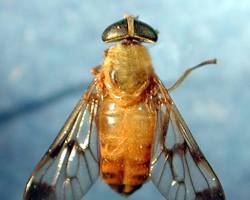
Yellow Flies (Diachlorus ferrugatus) are among the most aggressive and painful biting flies found in the southeastern United States. Closely related to horse flies and deer flies, these blood-feeding insects are notorious for their relentless attacks on humans, pets, horses, cattle, and wildlife. Their painful bites, persistent behavior, and ability to appear suddenly in large numbers make them one of the most dreaded outdoor pests in coastal and swampy regions.
Unlike mosquitoes, which pierce the skin with needle-like mouthparts, Yellow Flies use sharp, blade-like mouthparts that slice the skin open and feed on the blood that pools in the wound. This feeding method causes immediate pain and often leaves behind bleeding wounds, swelling, and irritation. During peak summer activity, heavy infestations can make outdoor recreation, gardening, hiking, and livestock management extremely difficult.
Yellow Flies are particularly common in areas near wetlands, forests, marshes, and coastal plains. Their ability to track hosts using movement, carbon dioxide, and visual cues allows them to locate people and animals from considerable distances.
Taxonomy and Classification
Yellow Flies belong to the horse fly family and are classified as true flies.
- Kingdom: Animalia
- Phylum: Arthropoda
- Class: Insecta
- Order: Diptera
- Family: Tabanidae
- Genus: Diachlorus
- Species: Diachlorus ferrugatus
Members of the Tabanidae family include horse flies, deer flies, and yellow flies, all of which are known for their painful blood-feeding behavior.
Identification
Yellow Flies are medium-sized biting flies with several distinctive characteristics.
Adult Flies
- Length: 8–10 mm.
- Color: Yellowish-brown to tan.
- Eyes: Brilliant metallic green or emerald-colored eyes.
- Wings: Smoky or slightly clouded.
- Body: Slender compared to many horse fly species.
Their bright green eyes are often the easiest identifying feature.
Larvae
- Elongated and worm-like.
- Cream-colored to pale brown.
- Found in moist soil and organic matter.
- Predatory on small invertebrates.
Larvae develop in wet environments and are rarely encountered by homeowners.
Distribution and Habitat
Yellow Flies are primarily found throughout the southeastern United States.
Common locations include:
- Florida
- Georgia
- South Carolina
- Alabama
- Mississippi
- Louisiana
- Coastal Texas
Preferred habitats include:
- Swamps
- Marshes
- Wet forests
- Riverbanks
- Coastal plains
- Wetland edges
Populations are often highest near areas where standing water and moist soil support larval development.
Life Cycle
Yellow Flies undergo complete metamorphosis.
- Egg Stage: Females lay eggs on vegetation near water or moist soil.
- Larval Stage: Larvae develop in damp organic material.
- Pupal Stage: Pupation occurs within the soil.
- Adult Stage: Adults emerge and begin feeding and reproduction.
Development times vary depending on temperature, moisture, and habitat conditions.
Feeding Behavior
Only female Yellow Flies feed on blood.
Blood meals provide the nutrients needed for egg production.
Host Selection
Yellow Flies commonly attack:
- Humans
- Dogs
- Horses
- Cattle
- Deer
- Wild mammals
Males do not bite and survive on nectar and plant sugars.
Biting Method
Unlike mosquitoes, Yellow Flies do not pierce the skin.
Instead, they:
- Use blade-like mouthparts.
- Slice through the skin.
- Create a small wound.
- Feed on pooled blood.
This feeding method causes immediate pain and bleeding.
Damage and Public Health Importance
Yellow Flies are considered serious nuisance pests because of their aggressive biting behavior.
Painful Bites
- Immediate burning sensation.
- Bleeding wounds.
- Localized swelling.
- Persistent itching.
Many people describe Yellow Fly bites as significantly more painful than mosquito bites.
Allergic Reactions
- Large welts.
- Inflammation.
- Redness.
- Prolonged irritation.
Sensitive individuals may experience stronger reactions.
Livestock Stress
- Reduced grazing.
- Constant irritation.
- Lower weight gain.
- Reduced productivity.
Heavy infestations can significantly impact livestock comfort and performance.
Outdoor Activity Disruption
- Interfere with recreation.
- Reduce enjoyment of outdoor spaces.
- Drive people indoors.
- Create nuisance complaints.
Yellow Flies are capable of making outdoor activities extremely unpleasant during peak seasons.
Behavior and Conflict
Several characteristics contribute to the pest status of Yellow Flies.
- Persistent Pursuit: Follow hosts for long distances.
- Silent Approach: Often land unnoticed before biting.
- Daytime Activity: Most active during daylight hours.
- Visual Hunters: Attracted to movement and dark colors.
- Strong Fliers: Capable of traveling significant distances.
These traits make them particularly difficult to avoid in infested areas.
Peak Activity Periods
Yellow Flies are most active during warm weather.
- Late spring.
- Summer.
- Early fall.
Activity often peaks during hot, humid days.
Monitoring and Detection
Signs of Yellow Fly activity include:
- Painful bites.
- Visible adults around people or animals.
- Repeated attacks near wetlands.
- Livestock agitation.
- Increased outdoor nuisance activity.
Adults are usually easy to identify because of their bright green eyes and painful bites.
Management and Prevention
Complete elimination of Yellow Flies is rarely practical because of their extensive breeding habitats.
Repellents
- DEET-based products.
- Picaridin repellents.
- Protective clothing treatments.
Repellents remain one of the most effective personal protection measures.
Protective Clothing
- Long sleeves.
- Long pants.
- Light-colored clothing.
- Protective hats.
Covering exposed skin reduces opportunities for bites.
Mechanical Trapping
- Horse fly traps.
- Black ball traps.
- Sticky trap systems.
These traps exploit the fly’s attraction to dark moving objects.
Habitat Management
- Reduce standing water where practical.
- Maintain vegetation around recreation areas.
- Limit outdoor activity during peak periods.
Habitat modification may provide localized reductions in activity.
Natural Enemies
Several predators help suppress Yellow Fly populations.
- Birds
- Dragonflies
- Spiders
- Predatory beetles
- Aquatic predators
Natural enemies contribute to population regulation but rarely eliminate nuisance levels.
Conservation and Research
Research on Yellow Flies focuses on developing improved trapping systems, understanding host attraction cues, and identifying environmentally friendly methods of population suppression. Scientists continue studying the visual and chemical signals that attract these flies in hopes of creating more effective control technologies.
Although Yellow Flies provide ecological value as part of natural food webs, they remain one of the most troublesome biting insects in the southeastern United States. Their painful bites, relentless behavior, and ability to disrupt outdoor activities make them a significant nuisance pest for both people and animals.