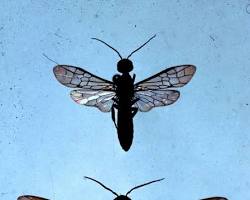
Xiphydria Wood Wasps (Xiphydria spp.) are slender, wood-boring insects belonging to the wood wasp family Xiphydriidae. These unusual insects are commonly associated with weakened, stressed, or recently dead deciduous trees, particularly birch, willow, maple, and other hardwood species. Although they are often mistaken for dangerous stinging wasps because of their elongated bodies and prominent ovipositors, they are completely harmless to humans.
The primary concern surrounding Xiphydria Wood Wasps is the damage caused by their larvae, which tunnel through wood for one to two years while feeding and developing. Their galleries weaken branches and trunks, especially in ornamental or stressed trees. Large infestations may contribute to branch dieback, structural weakness, and wood degradation.
While these insects usually attack already weakened wood rather than healthy trees, they can become significant secondary pests in ornamental landscapes, urban forests, and park settings where stressed birches and willows are common.
Quick Facts
- Scientific Group: Xiphydria spp.
- Common Name: Xiphydria Wood Wasps
- Order: Hymenoptera
- Family: Xiphydriidae
- Main Conflict: Wood tunneling and ornamental tree damage
- Habitat: Deciduous trees and wooded areas
- Diet: Wood and symbiotic fungi
- Status: Secondary wood-boring pests
Taxonomy and Classification
Xiphydria Wood Wasps belong to the order Hymenoptera, the same insect order that includes bees, ants, and wasps. However, unlike hornets or paper wasps, they belong to the family Xiphydriidae, a group commonly referred to as wood wasps or wood-boring sawflies.
These insects undergo complete metamorphosis consisting of:
- Egg
- Larva
- Pupa
- Adult
The genus Xiphydria contains numerous species distributed across North America, Europe, and Asia. Their larvae develop inside weakened or dead hardwood trees where they bore galleries through the wood. Many species also maintain symbiotic relationships with fungi that help break down woody tissues for larval feeding. :contentReference[oaicite:0]{index=0}
Physical Description
Adult Xiphydria Wood Wasps are slender, elongated insects measuring approximately 10 mm to 25 mm long.
Adult Appearance
- Dark brown or black coloration
- Long narrow abdomen
- Distinct “neck-like” thorax
- Long antennae
- Transparent smoky wings
- Female with long ovipositor
The female’s ovipositor resembles a stinger but is used solely for egg-laying and cannot sting humans. Adults are often mistaken for dangerous wasps due to their intimidating appearance. :contentReference[oaicite:1]{index=1}
Larvae
Larvae are:
- Creamy white
- Legless
- Soft-bodied
- Wood-boring grubs
They tunnel deep into wood while feeding and developing over one to two years.
Damage Signs
Signs of infestation include:
- Round exit holes in branches or trunks
- Loose piles of boring dust (frass)
- Internal wood galleries
- Branch weakening
- Dead or hollow sections of wood
Exit holes are generally circular and may measure 5–8 mm in diameter depending on species.
Distribution and Habitat
Xiphydria Wood Wasps are found across temperate regions of North America, Europe, and Asia. They occur primarily in:
- Forests
- Woodlots
- Parks
- Urban landscapes
- Riparian woodlands
Their preferred hosts are weakened deciduous trees, especially:
- Birch
- Willow
- Maple
- Oak
- Elm
- Alder
- Beech
Females are particularly attracted to stressed, dying, or recently dead wood where larvae can more easily establish galleries. :contentReference[oaicite:2]{index=2}
Behavior and Conflict
The primary conflict associated with Xiphydria Wood Wasps is their wood-boring larval activity inside ornamental and weakened trees.
Egg Laying
Female wood wasps use their ovipositors to insert eggs deep into cracks, wounds, or weakened wood tissues.
Many species select:
- Recently dead branches
- Drought-stressed trees
- Fungal-damaged wood
- Storm-damaged limbs
Larval Tunneling
After hatching, larvae bore tunnels parallel to the wood grain while feeding and developing.
These tunnels:
- Reduce structural integrity
- Weaken branches
- Create entry points for fungi
- Accelerate wood decay
Large infestations may eventually contribute to branch breakage or canopy decline.
Harmless to Humans
Despite their alarming appearance, Xiphydria Wood Wasps:
- Do not sting
- Do not attack people
- Do not infest household furniture
- Are not aggressive
The female ovipositor is strictly an egg-laying structure rather than a defensive stinger. :contentReference[oaicite:3]{index=3}
Association With Firewood
Adults sometimes emerge indoors from stored firewood or unfinished lumber brought inside homes.
This emergence can surprise homeowners, but the insects cannot reinfest dry structural wood indoors.
Life Cycle
Egg Stage
Eggs are inserted beneath bark or into weakened wood tissues.
Larval Stage
Larvae bore through wood while feeding on woody tissues and associated fungi.
The larval stage may last:
- 1 year in favorable conditions
- Up to 2 years in cooler climates
Pupal Stage
Pupation occurs within chambers inside the wood galleries.
Adult Emergence
Adults chew circular exit holes through the bark before emerging during spring or summer.
Management and Prevention
Management focuses mainly on maintaining tree health and removing infested wood.
Tree Health Maintenance
Healthy trees are less susceptible to attack.
- Water trees during drought
- Avoid root damage
- Prevent bark injuries
- Apply proper fertilization
- Reduce soil compaction
Birch trees in particular benefit from stress reduction and proper irrigation.
Sanitation
Infested or heavily weakened wood should be:
- Pruned promptly
- Removed from landscapes
- Destroyed or chipped
Removing breeding sites reduces future adult emergence.
Firewood Management
Store firewood outdoors until shortly before use to prevent indoor emergence of adult wasps.
Chemical Control
Chemical treatment is rarely necessary because these insects typically attack already weakened wood rather than healthy trees.
Interesting Facts About Xiphydria Wood Wasps
- They belong to the sawfly lineage rather than true stinging wasps.
- Their larvae can live inside wood for up to two years.
- Females use specialized ovipositors to drill into wood.
- Some species carry symbiotic fungi that aid larval feeding.
- Adults are often mistaken for giant parasitic wasps.
Conservation and Research
Research involving Xiphydria Wood Wasps focuses on:
- Wood decomposition ecology
- Fungal symbiosis
- Forest nutrient cycling
- Natural parasitoid interactions
- Urban tree decline
Scientists are also studying the specialized parasitic wasps that naturally attack Xiphydria larvae inside wood galleries, helping regulate populations naturally. :contentReference[oaicite:4]{index=4}