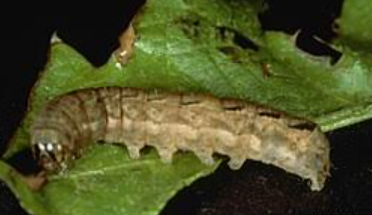
Xestia Cutworms are the larval stage of moths belonging to the genus Xestia in the family Noctuidae. These caterpillars are among the most economically important agricultural pests because of their habit of feeding at or just below the soil surface, where they sever young plants from their root systems. Their destructive behavior has earned them the common name “cutworms.”
Xestia species are found throughout temperate regions and attack a wide range of crops, vegetables, ornamentals, and field plants. Because they feed primarily at night and hide beneath the soil during the day, infestations often go unnoticed until significant stand loss has already occurred.
In gardens and commercial agriculture alike, Xestia Cutworms can destroy newly emerged seedlings within a matter of days. A single larva may damage multiple plants in one night, making early detection and management critical.
Taxonomy and Classification
- Kingdom: Animalia
- Phylum: Arthropoda
- Class: Insecta
- Order: Lepidoptera
- Family: Noctuidae
- Genus: Xestia
Cutworms are a subgroup of noctuid moth larvae known for feeding on stems, foliage, and roots of young plants. Several Xestia species are important agricultural pests across North America, Europe, and Asia.
Identification
Xestia Cutworms have a typical cutworm appearance with smooth, thick bodies designed for life at the soil surface.
- Size: 35 mm to 40 mm long when mature.
- Color: Gray, brown, tan, or dark brown.
- Body: Smooth and cylindrical.
- Markings: Often display dark spots or wedge-shaped markings on the back.
- Behavior: Curl into a tight “C” shape when disturbed.
Their coloration provides excellent camouflage among soil, mulch, and plant debris.
Adult Moths
Adult Xestia moths are medium-sized nocturnal moths.
- Muted brown or gray coloration.
- Patterned forewings.
- Wingspan of approximately 30 mm to 45 mm.
- Active primarily at night.
Many species possess distinctive wing markings that aid identification by entomologists.
Distribution and Habitat
Xestia Cutworms occur throughout temperate agricultural regions worldwide.
Common habitats include:
- Vegetable gardens
- Corn fields
- Soybean fields
- Grain crops
- Ornamental landscapes
- Nurseries
- Vineyards
- Field margins
They thrive in areas containing abundant vegetation, crop residue, and loose soil suitable for hiding during daylight hours.
Life Cycle
Xestia Cutworms undergo complete metamorphosis.
- Egg Stage: Females lay eggs on vegetation, weeds, or soil surfaces.
- Larval Stage: Caterpillars hatch and begin feeding on seedlings and foliage.
- Pupal Stage: Mature larvae pupate within the soil.
- Adult Stage: Moths emerge, mate, and begin a new generation.
Several generations may occur annually depending on climate and species.
Host Plants
Xestia Cutworms are highly polyphagous and feed on many plant species.
- Corn
- Soybeans
- Lettuce
- Cabbage
- Tomatoes
- Peppers
- Beans
- Numerous ornamental plants
Young seedlings are especially vulnerable because even minor feeding can kill the entire plant.
Damage and Economic Importance
Xestia Cutworms cause damage through direct feeding on stems and foliage.
Seedling Cutting
The most recognizable injury occurs when larvae cut seedlings near the soil line.
- Severed stems.
- Wilted plants.
- Dead seedlings.
- Missing rows of plants.
Entire sections of newly planted fields may disappear overnight.
Stand Loss
Heavy infestations often result in reduced plant populations.
- Poor crop establishment.
- Uneven plant spacing.
- Reduced yields.
- Increased production costs.
Severe infestations may require costly replanting operations.
Climbing Behavior
Some species transition to feeding above ground as they mature.
- Bud destruction.
- Leaf feeding.
- Flower damage.
- Fruit injury.
This behavior expands the range of potential damage beyond seedling loss.
Signs of Infestation
Several symptoms may indicate the presence of cutworms.
- Plants cut at soil level.
- Missing seedlings.
- Wilted young plants.
- C-shaped caterpillars in soil.
- Nighttime feeding activity.
- Uneven plant stands.
Inspecting soil around damaged plants often reveals hiding larvae.
Behavior and Biology
Xestia Cutworms are primarily nocturnal pests.
- Hide in soil during daylight.
- Feed after sunset.
- Prefer young tender plants.
- Remain concealed near host plants.
This secretive lifestyle makes early infestations difficult to detect.
Management and Prevention
Effective management requires an integrated pest management approach.
Physical Barriers
Protecting seedlings is one of the most reliable methods.
- Cardboard collars.
- Plastic plant guards.
- Protective sleeves.
- Row covers.
Barriers prevent larvae from reaching plant stems.
Cultural Control
- Remove weeds before planting.
- Reduce crop residue.
- Till fields when appropriate.
- Maintain field sanitation.
These practices reduce egg-laying sites and overwintering habitat.
Biological Control
- Ground beetles.
- Parasitic wasps.
- Birds.
- Beneficial nematodes.
Natural enemies help suppress cutworm populations in many agricultural systems.
Chemical Control
When populations exceed economic thresholds, insecticides may be necessary.
- Target young larvae.
- Apply during periods of activity.
- Use labeled products.
- Rotate active ingredients.
Early intervention generally produces the best results.
Monitoring
Regular monitoring helps detect infestations before major losses occur.
- Inspect seedlings daily.
- Look for cut stems.
- Search soil around damaged plants.
- Use blacklight traps for adult moth monitoring.
Adult moth activity often provides an early warning of future larval outbreaks.
Research and Future Management
Current research focuses on improving biological control, refining economic thresholds, and developing predictive models that forecast cutworm outbreaks. Scientists are also studying habitat management strategies that increase populations of beneficial predators while reducing cutworm survival.
Advances in integrated pest management continue to provide growers with more sustainable alternatives to broad-spectrum insecticides.
Conclusion
Xestia Cutworms are highly destructive agricultural pests capable of causing severe stand loss by cutting seedlings at or below the soil surface. Their nocturnal feeding habits and underground concealment make them challenging pests to manage. However, a combination of monitoring, physical barriers, biological control, cultural practices, and targeted treatments can effectively reduce damage and protect valuable crops.