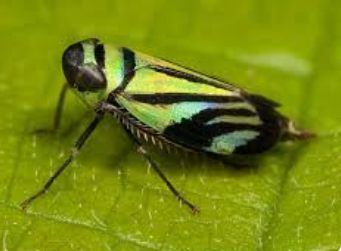
Xenochira Leafhoppers refers to leafhopper species within the enormous family Cicadellidae, one of the largest and most economically important groups of plant-feeding insects in the world. While the genus Xenochira itself is relatively obscure, leafhoppers as a group are major agricultural and ornamental pests due to their feeding habits and their ability to transmit devastating plant diseases.
These small, wedge-shaped insects feed by piercing plant tissues and extracting sap. Their feeding can cause discoloration, leaf curling, and reduced plant vigor. However, the greatest threat posed by leafhoppers is their role as vectors of viruses, phytoplasmas, and bacterial pathogens that can severely damage crops, ornamentals, fruit trees, and landscape plants.
Because of their mobility and broad host range, leafhoppers are among the most challenging insect pests to manage in agricultural systems.
Taxonomy and Classification
- Kingdom: Animalia
- Phylum: Arthropoda
- Class: Insecta
- Order: Hemiptera
- Family: Cicadellidae
- Genus: Xenochira (and related leafhopper genera)
The family Cicadellidae contains more than 20,000 known species worldwide. Leafhoppers are closely related to treehoppers, cicadas, aphids, and other sap-feeding insects.
Identification
Leafhoppers are small, active insects with a distinctive body shape.
- Size: 2–15 mm long.
- Shape: Wedge-shaped or tapered.
- Color: Green, yellow, brown, gray, or patterned.
- Antennae: Short and inconspicuous.
- Wings: Held roof-like over the body.
- Movement: Rapid jumping, running, or sideways movement.
Nymphs resemble adults but lack fully developed wings.
When disturbed, leafhoppers often jump quickly from plant to plant, making them difficult to capture and identify.
Distribution and Habitat
Leafhoppers occur on every continent except Antarctica and occupy a wide variety of habitats.
Common habitats include:
- Vegetable gardens
- Agricultural fields
- Orchards
- Vineyards
- Grasslands
- Forests
- Greenhouses
- Landscape plantings
They can be found feeding on virtually every type of vascular plant.
Life Cycle
Leafhoppers undergo simple metamorphosis.
- Egg Stage: Eggs are inserted into plant tissues.
- Nymph Stage: Wingless nymphs feed on plant sap.
- Adult Stage: Winged adults disperse and reproduce.
Many species produce multiple generations annually, particularly in warm climates.
Host Plants
Leafhoppers attack an enormous range of plants.
- Corn
- Wheat
- Rice
- Potatoes
- Tomatoes
- Beans
- Cotton
- Grapes
- Fruit trees
- Ornamental shrubs
- Turfgrass
- Native vegetation
Some species specialize on a single host, while others feed on dozens of different plants.
Damage and Economic Importance
Leafhoppers cause both direct and indirect damage.
Sap Feeding
As leafhoppers feed, they remove plant fluids and damage cells.
- Reduced vigor.
- Leaf yellowing.
- Stunted growth.
- Reduced yields.
Stippling Damage
Feeding often creates numerous tiny pale spots on leaves.
- White stippling.
- Yellow spotting.
- Silvering of foliage.
- Reduced photosynthesis.
Hopperburn
Some species inject toxic saliva while feeding.
- Leaf curling.
- Brown margins.
- Premature leaf drop.
- Plant stress.
Disease Transmission
The most serious damage results from pathogen transmission.
- Plant viruses.
- Phytoplasmas.
- Bacterial diseases.
- Xylem-limited pathogens.
Examples include diseases that cause witches’ broom, yellowing disorders, stunting, and plant death.
Signs of Infestation
Common symptoms include:
- Small jumping insects on foliage.
- White or yellow stippling.
- Leaf curling.
- Hopperburn symptoms.
- Stunted growth.
- Witches’ broom growth.
- Disease symptoms spreading through crops.
Yellow sticky traps are often used to detect early infestations.
Behavior and Conflict
Several characteristics make leafhoppers particularly difficult pests to manage.
- High Mobility: Adults move rapidly between plants.
- Efficient Vectoring: Diseases spread quickly during feeding.
- Broad Host Range: Many weeds serve as reservoirs.
- Rapid Reproduction: Multiple generations can develop each season.
Even relatively low populations can create serious economic losses when disease transmission occurs.
Management and Prevention
Integrated Pest Management (IPM) is the most effective approach.
Monitoring
- Use yellow sticky cards.
- Inspect foliage regularly.
- Monitor disease symptoms.
- Track population trends.
Cultural Controls
- Remove weed hosts.
- Eliminate pathogen reservoirs.
- Practice crop rotation.
- Destroy infected plants.
Physical Exclusion
- Use floating row covers.
- Protect young plants.
- Reduce vector access.
Biological Control
Natural enemies help suppress populations.
- Lady beetles
- Lacewings
- Minute pirate bugs
- Parasitic wasps
- Spiders
Chemical Control
- Apply insecticides when necessary.
- Target nymph stages.
- Rotate active ingredients.
- Follow local treatment thresholds.
Chemical control alone often provides limited protection against disease transmission because pathogens can be spread before insects are killed.
Conservation and Research
Researchers continue to study the complex interactions between leafhoppers, host plants, and pathogens. Current efforts focus on developing resistant crop varieties, improving disease forecasting systems, and understanding the molecular mechanisms of pathogen transmission.
Advances in Integrated Pest Management are helping growers reduce reliance on insecticides while maintaining effective control of these important agricultural pests.
Although small in size, Xenochira Leafhoppers and related species rank among the most economically significant insect pests worldwide due to their ability to damage plants directly and spread devastating plant diseases.