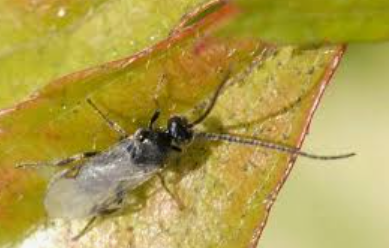
Xanthostigma Aphids
Xanthostigma Aphids are specialized sap-feeding insects within the family Aphididae that infest a variety of ornamental trees, shrubs, and woody landscape plants. Like other aphids, they feed by inserting needle-like mouthparts into plant tissues and extracting nutrient-rich phloem sap. While individual aphids are tiny, their extraordinary reproductive capacity allows populations to increase rapidly, creating dense colonies capable of causing significant plant stress.
These aphids are particularly notable for their production of honeydew, a sticky sugary waste product that coats leaves, branches, vehicles, sidewalks, and outdoor furniture beneath infested plants. Honeydew accumulation promotes the growth of black sooty mold, which interferes with photosynthesis and greatly reduces the aesthetic value of landscape plants. Heavy infestations can result in yellowing foliage, branch dieback, stunted growth, and increased susceptibility to environmental stress.
Because they often form large colonies on bark, twigs, and branches, Xanthostigma Aphids are considered important pests of ornamental and shade trees throughout temperate regions.
Taxonomy and Classification
- Kingdom: Animalia
- Phylum: Arthropoda
- Class: Insecta
- Order: Hemiptera
- Family: Aphididae
- Subfamily: Lachninae and related groups
- Genus: Xanthostigma and related taxa
Aphids belong to a large group of plant-feeding insects known as true bugs. Members of the Aphididae family are famous for their rapid reproduction, complex life cycles, and ability to transmit plant pathogens. Xanthostigma Aphids are often associated with woody plants and may be found on both deciduous and coniferous hosts.
Identification
Xanthostigma Aphids are generally larger than many common garden aphids and can be difficult to notice because their coloration blends well with bark and woody stems.
- Size: Approximately 3 mm to 5 mm long.
- Shape: Pear-shaped body.
- Color: Dark brown, gray, black, or mottled.
- Cornicles: Short, pore-like structures on the abdomen.
- Body Texture: Soft-bodied and easily crushed.
Colonies are often found clustered along twigs, stems, and branches rather than on leaves alone. Large infestations may appear as dense masses of dark insects covering sections of bark.
Distribution and Habitat
Xanthostigma Aphids occur in temperate and subtropical regions where suitable host plants are available.
Common habitats include:
- Residential landscapes
- Shade trees
- Parks
- Ornamental plantings
- Forest edges
- Nurseries
- Conifer plantations
- Deciduous woodlands
They are particularly common on mature trees where bark crevices and woody stems provide ideal feeding and overwintering sites. Significant infestations have been reported in regions such as the Pacific Northwest and Appalachian areas of North America.
Life Cycle
Xanthostigma Aphids possess a complex life cycle that combines sexual and asexual reproduction.
- Overwintering Stage: Eggs or specialized forms survive unfavorable conditions.
- Spring Emergence: Females begin reproducing without mating.
- Nymph Development: Young aphids feed and molt several times.
- Colony Expansion: Multiple generations develop rapidly.
- Winged Forms: Some aphids develop wings and disperse to new hosts.
- Autumn Reproduction: Sexual forms may appear and produce overwintering eggs.
Under favorable conditions, several generations can occur within a single season, allowing populations to increase exponentially.
Damage and Economic Importance
Xanthostigma Aphids damage plants through both direct feeding and indirect effects.
Sap Removal
Their feeding removes valuable carbohydrates and nutrients from plant tissues.
- Reduced vigor.
- Stunted growth.
- Yellowing foliage.
- Premature leaf drop.
Honeydew Production
One of the most obvious signs of infestation is excessive honeydew.
- Sticky leaves.
- Coated branches.
- Contaminated outdoor surfaces.
- Attraction of nuisance insects.
Honeydew often accumulates beneath infested trees, creating complaints from homeowners and property managers.
Sooty Mold Growth
Honeydew serves as a food source for fungi.
- Black fungal coatings.
- Reduced photosynthesis.
- Unsightly appearance.
- Permanent staining of surfaces.
Sooty mold may cover leaves, branches, vehicles, patios, and garden furniture located beneath infested trees.
Branch Dieback
Heavy infestations can weaken twigs and branches.
- Dead branch tips.
- Reduced canopy density.
- Declining tree health.
Virus Transmission
Like many aphids, some species may vector plant pathogens.
- Virus transmission.
- Reduced crop quality.
- Additional plant stress.
Ant Mutualism
Xanthostigma Aphids frequently form beneficial relationships with ants.
Ants actively protect aphid colonies from predators in exchange for access to honeydew. This relationship can significantly increase aphid survival and population growth.
- Protection from predators.
- Transportation to new feeding sites.
- Increased colony success.
- Reduced biological control effectiveness.
Large ant trails climbing tree trunks are often the first visible indication of a hidden aphid infestation higher in the canopy.
Signs of Infestation
- Sticky honeydew deposits.
- Black sooty mold.
- Large aphid colonies on bark.
- Yellowing foliage.
- Branch dieback.
- Heavy ant activity.
- Stunted growth.
- Leaf distortion.
Management and Prevention
Integrated Pest Management (IPM) offers the most effective control strategy.
Monitoring
- Inspect branches regularly.
- Watch for ant trails.
- Check for honeydew deposits.
- Identify colonies early.
Mechanical Control
Strong water sprays can significantly reduce populations.
- Dislodge aphids.
- Reduce colony size.
- Remove honeydew buildup.
Because aphids are weak crawlers, many individuals cannot return to the host plant after being dislodged.
Ant Exclusion
Breaking the ant-aphid relationship improves biological control.
- Sticky trunk barriers.
- Ant control programs.
- Removal of bridge vegetation.
Preventing ants from accessing colonies allows natural enemies to suppress aphid populations more effectively.
Biological Control
- Lady beetles.
- Lacewing larvae.
- Hoverfly larvae.
- Parasitic wasps.
These beneficial insects can dramatically reduce aphid populations when protected from broad-spectrum insecticides.
Horticultural Oils and Soaps
- Smother soft-bodied aphids.
- Minimal environmental impact.
- Compatible with many beneficial insects.
Plant Health Management
- Proper irrigation.
- Adequate fertilization.
- Stress reduction.
- Routine maintenance.
Conservation and Research
Researchers continue studying aphid population dynamics, host relationships, and interactions with beneficial insects. Current research emphasizes sustainable management approaches that reduce pesticide use while enhancing natural predator populations.
Scientists are also investigating methods to disrupt ant-aphid mutualism, improve biological control efficiency, and reduce the impacts of honeydew and sooty mold in urban landscapes.
Although Xanthostigma Aphids are small insects, their ability to reproduce rapidly and form large colonies makes them significant pests of ornamental trees and shrubs. Early detection, conservation of natural enemies, and integrated pest management practices remain the most effective long-term solutions.