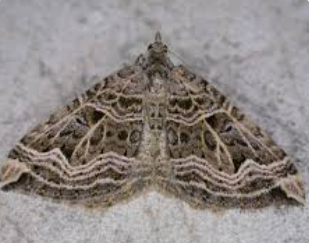
Xanthorhoe moths, commonly referred to as carpet moths, are a group of small moths in the family Geometridae. While many species are not considered major pests, their larval stages (inchworms) can feed on a variety of plants, including ornamentals and crops. In certain situations, populations can increase and lead to noticeable foliage damage.
These moths are widespread across temperate regions and are often found in gardens, meadows, and agricultural landscapes. Their larvae are particularly adapted to camouflage, blending with plant stems and leaves to avoid predators.
The “Geometric” Defoliators: Xanthorhoe Moths (Carpet Moths)
The Xanthorhoe genus, commonly known as Carpet Moths, belongs to the Geometridae family. For Pestipedia.com users, these insects are significant because of their unique larval movement and their broad impact on both wild and ornamental ground-cover plants. Distributed widely throughout the United States, they are characterized by the distinctive “carpet-like” patterns on their wings. While the adults are primarily nocturnal pollinators, their looping caterpillars can cause rapid skeletonization of foliage in U.S. gardens and agricultural margins during peak moisture cycles.
Technical Identification: Diagnostic Markers
- Phenotype (Adult): Typically features a broad, dark central band across the forewings, flanked by lighter wavy lines. They rest with their wings spread flat, highlighting a “carpet” or “tapestry” texture.
- Anatomy (Larva): Known as inchworms or loopers, they lack middle prolegs, forcing them to arch their bodies into a loop to move. Most species are cryptically colored (brown or green) to mimic small twigs or leaf veins.
- Behavioral Pattern: Most species are bivoltine in the United States, producing two generations per year. They overwinter as pupae in the soil or leaf litter, with the first flight of adults appearing in the U.S. late spring.
Larval Impact: Foliar Skeletonization
The primary impact of Xanthorhoe is the rapid consumption of leaf tissue during the larval developmental phase.
- Host Specificity: They are generalist herbivores, but have a high preference for low-growing plants including Crucifers (mustards), Bedstraw (Galium), and various garden perennials.
- Damage Signature: Early instars create shothole damage, while mature larvae engage in margin feeding. Under high-density conditions, they can completely skeletonize a host plant, leaving only the primary veins.
- Efficiency Metric: A single Xanthorhoe generation can reduce the photosynthetic capacity of a ground-cover colony by 15% to 30% within a 14-day feeding window.
Management & Conservation Strategies
For Pestipedia.com users, control is rarely required for mature plants, but protection is vital for young seedlings and ornamental nurseries.
| Strategy | Technical Specification | Operational Benefit |
|---|---|---|
| Biological Control | Applying Bacillus thuringiensis (Bt) | Specifically targets the larval gut; 100% effective against young loopers. |
| Cultural Control | Late-autumn tilling or raking | Exposes overwintering pupae to U.S. freezing temperatures and predators. |
| Physical Barriers | Floating row covers | Prevents adults from ovipositing (laying eggs) on susceptible seedlings. |
- Monitoring: Use UV light traps in the evening to track adult flight activity. A sudden surge in adult counts usually precedes a larval outbreak by 7 to 10 days.
- Predator Support: In the United States, ground beetles and various parasitic wasps are the primary natural enemies. Avoid broad-spectrum soil drenches to maintain a healthy population of these beneficial hunters.
Taxonomy and Classification
Order Lepidoptera, family Geometridae. This family includes inchworms known for their looping movement.
Identification
Adults are small moths with patterned wings that often resemble carpet-like designs. Larvae are slender, green or brown inchworms.
Damage appears as chewed leaves and reduced foliage.
Life Cycle
Eggs are laid on host plants. Larvae feed on leaves before pupating in soil or plant debris.
Adults emerge and reproduce, with multiple generations possible annually.
Damage and Economic Importance
While generally minor pests, high populations can cause defoliation and reduce plant vigor.
In agricultural settings, they may affect crop yield if infestations are severe.
Management and Control (IPM)
- Monitor populations: Detect early infestations
- Encourage predators: Birds and beneficial insects
- Use Bt treatments: Target larvae
- Maintain plant health: Improves resilience
- Remove infested foliage: Reduces populations
Conclusion
Xanthorhoe moths are typically minor pests but can cause damage under outbreak conditions. Integrated pest management helps control populations effectively.