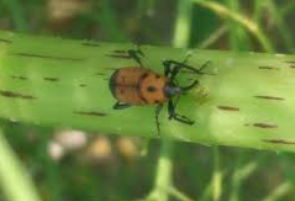
Xanthium Seed Weevils are specialized insects that attack plants in the genus Xanthium, commonly known as cockleburs. These insects are closely associated with the seeds and fruiting structures of cocklebur plants, where their larvae develop by feeding internally. Although they may appear insignificant due to their small size, they play an important role in reducing the spread of invasive cocklebur populations.
Unlike many agricultural pests that damage crops, Xanthium Seed Weevils are often considered beneficial biological control agents. Their feeding activity destroys developing seeds, reducing the ability of cockleburs to reproduce and spread. Because cockleburs are invasive weeds that compete with crops, contaminate livestock feed, and reduce pasture quality, these insects are valuable allies in weed management programs.
The relationship between Xanthium Seed Weevils and their host plants is highly specialized. Females lay eggs directly into developing seed structures, ensuring that larvae have immediate access to food upon hatching. This intimate association has made them important subjects in biological control research worldwide.
Taxonomy and Classification
- Kingdom: Animalia
- Phylum: Arthropoda
- Class: Insecta
- Order: Coleoptera
- Family: Curculionidae
- Common Name: Xanthium Seed Weevils
Members of the family Curculionidae are commonly known as weevils and are recognized by their elongated snouts and specialized feeding habits. Many species are important agricultural pests, while others serve beneficial roles by attacking invasive plants.
Identification
Xanthium Seed Weevils are relatively small insects that can be difficult to identify without close inspection.
- Size: Approximately 3 mm to 6 mm long.
- Body Shape: Oval and compact.
- Color: Dark brown, black, or gray.
- Snout: Distinct elongated rostrum typical of weevils.
- Antennae: Elbowed and attached to the snout.
Adults are commonly found on cocklebur plants during the growing season. Their coloration provides camouflage against stems, leaves, and developing burs.
Larvae
The larval stage is rarely seen because development occurs entirely within the cocklebur seed structure.
- Creamy white coloration.
- Legless body.
- Brown head capsule.
- Protected development inside seeds.
Larvae are responsible for nearly all of the insect’s impact on cocklebur reproduction.
Distribution and Habitat
Xanthium Seed Weevils are found wherever cocklebur plants occur.
Common habitats include:
- Pastures
- Roadsides
- Agricultural fields
- Riverbanks
- Disturbed ground
- Waste areas
- Field margins
- Open grasslands
Because cockleburs thrive in disturbed environments, seed weevils are often associated with agricultural landscapes and grazing areas.
Life Cycle
Xanthium Seed Weevils undergo complete metamorphosis.
- Egg Stage: Females deposit eggs into developing cocklebur fruits.
- Larval Stage: Larvae hatch and feed on the developing seeds.
- Pupal Stage: Pupation occurs within the seed structure.
- Adult Stage: Adults emerge and seek mates and host plants.
Most species complete a single generation per year, synchronized with the life cycle of their host plants.
Host Plant Relationship
Xanthium Seed Weevils are highly specialized and depend heavily on cocklebur plants.
Common host species include:
- Xanthium strumarium (Common Cocklebur)
- Xanthium spinosum (Spiny Cocklebur)
- Other regional Xanthium species
This specialization makes them valuable biological control agents because they rarely attack non-target plants.
Damage and Economic Importance
Unlike many weevils that damage crops, Xanthium Seed Weevils primarily affect invasive weeds.
Seed Destruction
The primary impact occurs when larvae consume developing seeds.
- Reduced seed viability.
- Lower germination rates.
- Reduced weed spread.
- Decreased seed bank accumulation.
By destroying seeds before they mature, the weevils limit future generations of cockleburs.
Biological Weed Control
These insects contribute significantly to natural weed suppression.
- Reduced invasive plant populations.
- Improved pasture quality.
- Lower management costs.
- Reduced herbicide dependence.
In some biological control programs, their activity can reduce viable seed production by substantial percentages.
Agricultural Benefits
Cockleburs compete aggressively with crops and livestock forage.
- Compete for water.
- Compete for nutrients.
- Reduce crop yields.
- Contaminate harvested products.
By reducing cocklebur reproduction, Xanthium Seed Weevils indirectly benefit agricultural production systems.
Signs of Infestation
Infestations are often detected through examination of cocklebur fruits.
- Small emergence holes.
- Hollow seeds.
- Reduced seed viability.
- Larval feeding damage inside burs.
- Adult weevils present on plants.
Because most feeding occurs internally, external symptoms may be subtle.
Behavior and Ecology
Xanthium Seed Weevils have evolved a close relationship with their host plants.
- Host-specific feeding behavior.
- Precise egg placement within fruits.
- Protected larval development.
- Synchronization with host plant growth.
This specialization minimizes competition with other insects while maximizing reproductive success.
Management and Conservation
Unlike pest weevils, management typically focuses on conserving populations rather than eliminating them.
Biological Control Programs
- Preserve existing populations.
- Monitor establishment success.
- Evaluate seed reduction rates.
- Integrate with weed management plans.
Selective Weed Management
In some situations, maintaining small populations of host plants may support beneficial weevil populations.
- Preserve biological control agents.
- Support long-term weed suppression.
- Reduce reliance on chemical controls.
Avoid Broad-Spectrum Insecticides
Broad-spectrum insecticides may eliminate beneficial seed weevil populations.
- Use targeted treatments when necessary.
- Protect beneficial insects.
- Support natural weed control systems.
Research and Biological Control Applications
Researchers continue studying Xanthium Seed Weevils because of their value in integrated weed management. Current research focuses on host specificity, establishment success, population dynamics, and long-term impacts on invasive cocklebur populations.
Scientists are also evaluating how these insects interact with other biological control agents and how environmental conditions influence their effectiveness.
Conclusion
Xanthium Seed Weevils are highly specialized insects that provide valuable biological control of invasive cocklebur plants. By destroying developing seeds, they reduce weed reproduction, limit spread, and support sustainable weed management strategies. Their host specificity, effectiveness, and environmental safety make them important allies in agricultural and natural ecosystems.