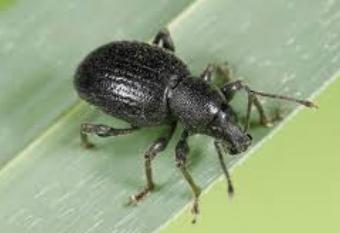
Xanthium Root Weevils are specialized beetles belonging to the family Curculionidae that target plants in the genus Xanthium, commonly known as cockleburs. Unlike many plant-feeding insects that attack leaves or stems, these weevils spend much of their life cycle below ground where their larvae feed directly on roots and root crowns.
Their underground feeding habits make them difficult to detect, but they can have a significant impact on host plant health. By damaging roots, the larvae interfere with water and nutrient uptake, causing reduced vigor, wilting, and stunted growth. In many situations, these insects are considered beneficial because they help suppress invasive cocklebur populations naturally.
Xanthium Root Weevils are particularly valuable in biological control programs because they attack the foundation of the plant. Their feeding weakens invasive weeds from below, often making them more vulnerable to drought, disease, and additional insect pressure.
Taxonomy and Classification
- Kingdom: Animalia
- Phylum: Arthropoda
- Class: Insecta
- Order: Coleoptera
- Family: Curculionidae
- Common Name: Xanthium Root Weevils
Root weevils are a specialized group of beetles recognized for their elongated snouts and root-feeding larvae. Many species attack agricultural crops, while others are beneficial biological control agents that target invasive weeds.
Identification
Xanthium Root Weevils are relatively small beetles with the classic appearance associated with weevils.
- Size: Approximately 3 mm to 5 mm long.
- Body Shape: Oval and compact.
- Color: Dark brown, black, or metallic blue-black.
- Snout: Distinct elongated rostrum.
- Antennae: Elbowed and attached to the snout.
Adults are often found on host plants, near the soil surface, or resting among surrounding vegetation.
Larvae
The larval stage causes the majority of plant damage.
- Cream-colored body.
- Legless appearance.
- C-shaped form.
- Brown head capsule.
Larvae remain underground and tunnel within roots and root crowns where they are protected from many predators and environmental conditions.
Distribution and Habitat
Xanthium Root Weevils are found wherever suitable cocklebur host plants occur.
Common habitats include:
- Pastures
- Agricultural fields
- Roadsides
- Riverbanks
- Disturbed soils
- Open grasslands
- Field margins
- Rangelands
Because cockleburs thrive in disturbed environments, these weevils are frequently associated with agricultural and grazing landscapes.
Life Cycle
Xanthium Root Weevils undergo complete metamorphosis.
- Egg Stage: Females deposit eggs in soil near host plants.
- Larval Stage: Larvae hatch and begin feeding on roots and root crowns.
- Pupal Stage: Pupation occurs within the soil.
- Adult Stage: Adults emerge, feed, mate, and begin the cycle again.
Most species complete one generation per year, although environmental conditions may influence development rates.
Host Plants
Xanthium Root Weevils are closely associated with cocklebur species.
- Xanthium strumarium (Common Cocklebur)
- Xanthium spinosum (Spiny Cocklebur)
- Related Xanthium species
Their host specificity makes them useful biological control agents because they primarily target undesirable weed species rather than crops.
Damage and Economic Importance
The primary impact of Xanthium Root Weevils occurs below ground.
Root Feeding
Larvae tunnel directly into root systems.
- Reduced water uptake.
- Reduced nutrient absorption.
- Root tissue destruction.
- Impaired plant growth.
Plants often appear stressed even when adequate soil moisture is available.
Wilting and Stunting
Root damage frequently produces above-ground symptoms.
- Persistent wilting.
- Stunted growth.
- Reduced vigor.
- Poor overall health.
Heavily infested plants may fail to produce flowers or viable seed.
Secondary Disease Entry
Tunneling creates opportunities for pathogens.
- Fungal infections.
- Root rot development.
- Bacterial invasion.
- Accelerated plant decline.
Damaged roots become vulnerable to a variety of soil-borne organisms.
Biological Weed Suppression
In weed management programs, root feeding is highly beneficial.
- Reduces invasive weed populations.
- Limits seed production.
- Weakens established plants.
- Supports long-term control efforts.
Root-feeding insects often complement other biological control agents that attack leaves, stems, or seeds.
Signs of Infestation
Because feeding occurs underground, symptoms are often indirect.
- Wilting plants.
- Stunted growth.
- Poor vigor.
- Root tunneling.
- Damaged root crowns.
- Easy uprooting of plants.
Inspection of roots often reveals internal feeding galleries and damaged tissue.
Behavior and Ecology
Xanthium Root Weevils are highly specialized insects adapted to life around their host plants.
- Adults feed above ground.
- Larvae develop underground.
- Root feeding dominates the life cycle.
- Host-specific behavior limits non-target impacts.
Their ability to exploit underground plant tissues makes them effective long-term suppressors of invasive weeds.
Management and Conservation
Because these insects are generally beneficial, management focuses on conservation rather than eradication.
Protect Biological Control Populations
- Preserve established populations.
- Monitor effectiveness.
- Avoid unnecessary treatments.
- Support integrated weed management.
Maintain Soil Health
Healthy soils support both plant communities and beneficial insect populations.
- Reduce excessive soil disturbance.
- Maintain vegetation cover.
- Limit erosion.
- Encourage biodiversity.
Avoid Broad-Spectrum Insecticides
Non-selective insecticides may eliminate beneficial root weevil populations.
- Use targeted treatments when necessary.
- Protect biological control agents.
- Reduce disruption of natural ecosystems.
Research and Biological Control Applications
Researchers continue studying Xanthium Root Weevils because of their potential value in invasive weed management. Current research focuses on host specificity, establishment success, population dynamics, and integration with other biological control programs.
Scientists are also examining how root-feeding insects interact with plant pathogens, drought stress, and other biological control agents to improve long-term weed suppression.
Conclusion
Xanthium Root Weevils are specialized root-feeding beetles that attack invasive cocklebur plants from below ground. Their larvae damage roots, reduce nutrient uptake, weaken plant vigor, and contribute to natural weed suppression. Although their activity may appear harmful to the host plant, they are often highly valuable biological control agents that help manage invasive weed populations in an environmentally sustainable manner.