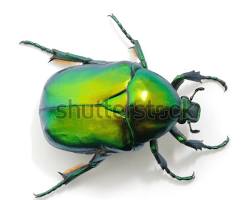
Xanthic Leaf Beetles
Xanthic Leaf Beetles is a general term used to describe members of the leaf beetle family (Chrysomelidae) that exhibit yellow or yellowish coloration. The word “xanthic” simply means yellow-colored and does not refer to a single species. Many important agricultural pests fall into this category, including the Striped Cucumber Beetle (Acalymma vittatum), the Colorado Potato Beetle (Leptinotarsa decemlineata), and several species of flea beetles and leaf-feeding chrysomelids.
These beetles are among the most economically significant pests of vegetables, field crops, and ornamental plants. Both adults and larvae feed on plant tissues, causing direct damage through defoliation and indirect damage through disease transmission. Heavy infestations can reduce yields, stunt plant growth, and even kill young seedlings.
Because many xanthic leaf beetles are highly mobile and capable of reproducing rapidly, they are often difficult to manage once populations become established in a crop.
Taxonomy and Classification
- Kingdom: Animalia
- Phylum: Arthropoda
- Class: Insecta
- Order: Coleoptera
- Family: Chrysomelidae
The family Chrysomelidae contains more than 35,000 known species worldwide, making it one of the largest beetle families. Most species are herbivorous and closely associated with specific host plants.
Identification
Adult Xanthic Leaf Beetles vary considerably depending on the species, but they share several common characteristics.
- Size: 5–12 mm long.
- Shape: Oval or elongated.
- Color: Yellow, yellow-green, yellow-brown, or cream-colored.
- Markings: Often striped, spotted, or banded with black markings.
- Body: Hard-shelled with smooth wing covers.
Larvae differ among species but are usually soft-bodied and actively feed on leaves, roots, or stems.
- Colorado Potato Beetle Larvae: Red-orange with rows of black spots.
- Cucumber Beetle Larvae: Slender white grubs with brown heads.
- Leaf Beetle Larvae: Soft-bodied and often hump-backed.
Distribution and Habitat
Xanthic Leaf Beetles occur worldwide and are found in nearly every agricultural region.
Common habitats include:
- Vegetable gardens
- Commercial farms
- Greenhouses
- Orchards
- Field crops
- Meadows
- Landscape plantings
Most species remain closely associated with their preferred host plants throughout their life cycle.
Life Cycle
Like all beetles, Xanthic Leaf Beetles undergo complete metamorphosis.
- Egg Stage: Eggs are deposited on foliage, stems, or soil.
- Larval Stage: Larvae feed aggressively on host plants.
- Pupal Stage: Pupation occurs in soil, leaf litter, or on the plant.
- Adult Stage: Adults emerge and continue feeding and reproduction.
Many species produce multiple generations each year, particularly in warmer climates.
Host Plants
Host plants vary depending on the species.
- Cucumbers
- Squash
- Pumpkins
- Melons
- Potatoes
- Tomatoes
- Beans
- Corn
- Peppers
- Various ornamental plants
Some species are highly specialized while others feed on a broad range of crops.
Damage and Economic Importance
Xanthic Leaf Beetles cause both direct and indirect crop damage.
Leaf Feeding
Adult beetles chew holes through leaves.
- Shot-hole damage.
- Ragged feeding holes.
- Reduced photosynthesis.
- Defoliation.
Seedling Injury
Young plants are particularly vulnerable.
- Stem feeding.
- Seedling death.
- Poor plant establishment.
- Reduced crop stands.
Root Damage
Many larvae attack roots underground.
- Reduced nutrient uptake.
- Plant stress.
- Lower yields.
Disease Transmission
Some of the most destructive species act as disease vectors.
- Bacterial wilt.
- Mosaic viruses.
- Various plant pathogens.
Disease transmission often causes greater losses than direct feeding injury.
Signs of Infestation
Common indicators include:
- Yellow beetles on foliage.
- Shot-hole feeding damage.
- Skeletonized leaves.
- Wilting plants.
- Stunted growth.
- Visible egg clusters.
- Larvae feeding on roots or foliage.
Behavior and Conflict
The primary threat posed by Xanthic Leaf Beetles comes from their combination of feeding activity and disease transmission.
- Aggregation: Adults often gather in large groups.
- Rapid Reproduction: Multiple generations may occur annually.
- Disease Vectoring: Many species spread pathogens.
- Mobility: Adults readily move between crops.
This combination makes early detection especially important.
Management and Prevention
Integrated Pest Management (IPM) offers the most effective long-term control.
Exclusion
- Use floating row covers.
- Protect young seedlings.
- Prevent beetle access during vulnerable growth stages.
Cultural Controls
- Rotate crops annually.
- Remove crop residues.
- Control weeds around fields.
- Plant resistant varieties when available.
Biological Control
Natural enemies help suppress populations.
- Ground beetles
- Parasitic wasps
- Predatory stink bugs
- Beneficial nematodes
Chemical Control
- Apply insecticides when economic thresholds are reached.
- Target adults before egg-laying begins.
- Rotate active ingredients to reduce resistance.
Monitoring
- Inspect crops regularly.
- Use sticky traps.
- Scout for feeding damage.
- Monitor disease symptoms.
Conservation and Research
Research continues to focus on disease-resistant crop varieties, biological control programs, and sustainable management practices. Scientists are also developing improved monitoring techniques and integrated pest management strategies that reduce reliance on conventional insecticides.
Xanthic Leaf Beetles represent an important group of agricultural pests worldwide. Their ability to damage crops directly through feeding and indirectly through disease transmission makes them a significant concern for growers of vegetables, field crops, and ornamental plants.