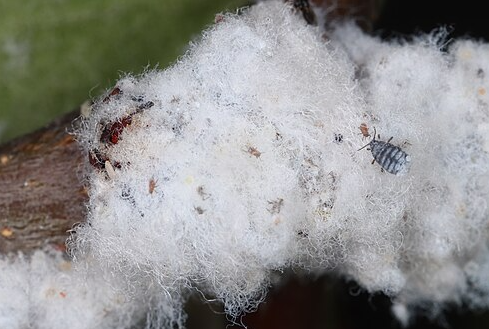
Woolly Apple Aphids
Woolly apple aphids (Eriosoma lanigerum) are serious sap-feeding pests of apple trees and related plants. They are named for the white, cottony wax that covers their bodies, making colonies look like small patches of wool or cotton on bark, pruning wounds, shoots, and roots. Although the insects themselves are small, their feeding can cause long-term damage to tree health, fruit production, and orchard profitability.
This pest is especially important because it attacks both aboveground and belowground portions of apple trees. Colonies may develop on twigs, branches, wounds, graft unions, trunks, and roots. Feeding stimulates the formation of swollen galls and rough, cracked tissue that interferes with water and nutrient movement. Heavy infestations can weaken trees, reduce fruit size, increase susceptibility to canker diseases, and lower overall orchard performance.
Taxonomy and Classification
- Kingdom: Animalia
- Phylum: Arthropoda
- Class: Insecta
- Order: Hemiptera
- Family: Aphididae
- Genus: Eriosoma
- Species: Eriosoma lanigerum
Woolly apple aphids belong to the aphid family, a large group of soft-bodied insects known for rapid reproduction and sap-feeding behavior.
Physical Description
Adult Aphids
Woolly apple aphids are small, soft-bodied insects usually hidden beneath waxy filaments.
- Length: 1.5–3 millimeters.
- Body Color: Reddish-brown, purple-brown, or dark brown.
- Covering: White waxy filaments that form a wool-like coating.
- Body Type: Soft, oval, and sap-feeding.
- Staining: When crushed, they may leave a reddish stain.
The white cottony covering is the easiest field identification feature.
Nymphs
Nymphs resemble smaller adults and also produce waxy filaments. They may spread across bark, wounds, shoots, and roots as populations expand.
Distribution and Habitat
Woolly apple aphids are found worldwide wherever apples are grown.
They are common in:
- Commercial orchards.
- Backyard apple trees.
- Nurseries.
- Ornamental crabapple plantings.
- Old neglected orchards.
- Temperate fruit-growing regions.
They are most damaging in orchards where susceptible rootstocks, pruning wounds, and mild winters allow populations to persist.
Host Plants
Primary hosts include:
- Apple trees.
- Crabapple trees.
- Hawthorn.
- Mountain ash.
- Elm in some regions.
Apple trees are the most economically important host.
Life Cycle
Woolly apple aphids have a complex life cycle that may include both root and aerial colonies.
Overwintering
They may overwinter:
- On roots.
- In bark cracks.
- Near pruning wounds.
- Around graft unions.
- In protected trunk crevices.
Spring Activity
As temperatures rise, colonies resume feeding and reproduction. Aphids multiply rapidly and begin spreading to new growth, wounds, and branch crotches.
Summer Population Growth
Multiple generations occur during the growing season.
- Asexual reproduction allows rapid increase.
- Colonies expand across shoots and bark.
- Winged forms may disperse to nearby trees.
Root Colonies
Belowground colonies are especially damaging because they are hidden and difficult to control.
Root feeding causes swelling, galling, and reduced root function.
Signs of Infestation
Common signs include:
- White cottony masses on bark.
- Colonies around pruning cuts.
- Woolly patches on shoots and water sprouts.
- Swollen galls on twigs and branches.
- Cracked bark or canker-like wounds.
- Sticky honeydew.
- Black sooty mold.
- Reduced tree vigor.
Root infestations may not be visible unless soil is removed around the base of the tree.
Damage and Economic Importance
Branch and Shoot Damage
Feeding causes swelling and roughened bark.
- Knobby galls.
- Cracked bark.
- Weak shoots.
- Distorted new growth.
Root Damage
Root colonies can be highly destructive.
- Cauliflower-like root galls.
- Reduced water uptake.
- Reduced nutrient absorption.
- Poor anchoring.
- Tree decline.
Fruit and Yield Impact
Heavy infestations may lead to:
- Smaller fruit.
- Reduced yield.
- Poor tree vigor.
- Lower fruit quality.
- Increased production costs.
Disease Risk
Feeding wounds create entry points for pathogens.
- Canker diseases.
- Wood decay organisms.
- Secondary infections.
Management and Control
Monitoring
Inspect apple trees regularly during the growing season.
- Check pruning wounds.
- Inspect water sprouts.
- Look at branch crotches.
- Examine graft unions.
- Watch for white woolly colonies.
Resistant Rootstocks
Using resistant rootstocks is one of the best long-term prevention strategies.
- Malling-Merton rootstocks provide resistance.
- Resistant rootstocks reduce root colony damage.
- They are especially valuable in commercial orchards.
Biological Control
Natural enemies are extremely important.
- Aphelinus mali parasitoid wasps.
- Lady beetles.
- Lacewings.
- Syrphid fly larvae.
- Predatory bugs.
Aphid mummies with small round exit holes indicate parasitoid activity.
Pruning and Sanitation
- Remove heavily infested water sprouts.
- Prune out damaged shoots.
- Avoid excessive pruning wounds.
- Destroy infested material.
Horticultural Oils
Dormant or delayed-dormant oil applications can help reduce exposed overwintering colonies.
Oils work best when they directly contact aphids.
Chemical Control
Severe infestations may require targeted insecticide treatment.
Because root colonies are difficult to reach, product choice and timing are critical. Broad-spectrum insecticides should be used carefully because they may harm beneficial insects that naturally suppress aphid populations.
Prevention
- Plant resistant rootstocks.
- Maintain tree vigor.
- Avoid unnecessary bark injuries.
- Monitor pruning wounds.
- Encourage natural enemies.
- Control water sprouts where colonies develop.
- Avoid excessive nitrogen fertilization.
Conclusion
Woolly apple aphids are important apple pests because they attack both visible canopy tissues and hidden root systems. Their cottony colonies are easy to recognize above ground, but root infestations can cause long-term weakening before symptoms become obvious. Effective management depends on monitoring, resistant rootstocks, biological control, careful pruning, and targeted treatments when necessary. With an integrated approach, growers and homeowners can reduce damage and maintain healthier, more productive apple trees.