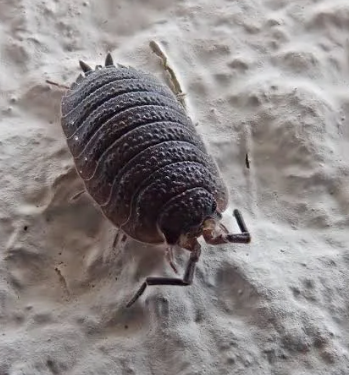
Woodlice are unique terrestrial crustaceans belonging to the order Isopoda. Commonly known as pillbugs, roly-polies, or sowbugs, these small arthropods are among the few crustaceans that have successfully adapted to life on land. Although they are often mistaken for insects, woodlice are actually more closely related to shrimp, crabs, and lobsters.
Woodlice play an important ecological role as decomposers, feeding primarily on decaying plant material and helping recycle nutrients back into the soil. In most situations, they are beneficial organisms that contribute to healthy garden ecosystems. However, when populations become extremely high or environmental conditions remain excessively damp, they may occasionally feed on tender seedlings, soft fruits, and young plant tissues, causing minor economic damage.
Because they depend heavily on moisture for survival, woodlice are commonly found beneath rocks, mulch, logs, compost piles, and other damp locations. Their presence often indicates excessive moisture conditions that may also favor other pest problems.
Taxonomy and Classification
- Kingdom: Animalia
- Phylum: Arthropoda
- Class: Malacostraca
- Order: Isopoda
- Suborder: Oniscidea
Woodlice are remarkable because they are the only crustaceans that spend their entire lives on land. Despite this adaptation, they still require humid environments because their respiratory structures must remain moist to function properly.
Common groups include:
- Pillbugs (Armadillidium spp.)
- Sowbugs (Porcellio spp.)
- Rough Woodlice (Porcellio scaber)
- Common Pillbug (Armadillidium vulgare)
Identification
Woodlice possess a distinctive appearance that makes them easy to recognize.
- Size: 5 mm to 15 mm long.
- Color: Gray, brown, slate-colored, or bluish-gray.
- Body Shape: Oval and flattened.
- Segments: Clearly visible armored body plates.
- Legs: Seven pairs of walking legs.
Pillbugs vs. Sowbugs
The two most common types of woodlice differ in several important ways.
- Pillbugs: Roll into a tight protective ball when disturbed.
- Sowbugs: Cannot roll into a ball and possess visible rear appendages called uropods.
This defensive rolling behavior gives pillbugs their common name “roly-poly.”
Distribution and Habitat
Woodlice are found throughout the world and occur in nearly every temperate and tropical region.
Preferred habitats include:
- Mulch beds
- Compost piles
- Leaf litter
- Under rocks
- Under logs
- Garden soil
- Crawl spaces
- Damp basements
They require consistently moist environments because they lose water rapidly and can die if exposed to prolonged dry conditions.
Life Cycle
Woodlice undergo direct development rather than complete metamorphosis.
- Egg Stage: Females carry eggs in a specialized brood pouch called a marsupium.
- Juvenile Stage: Young woodlice emerge as miniature versions of adults.
- Molting Stage: Individuals molt multiple times as they grow.
- Adult Stage: Mature woodlice reproduce and continue feeding on organic matter.
Many species live for two to four years, which is unusually long for small arthropods.
Behavior and Feeding Habits
Woodlice are primarily nocturnal and spend daylight hours hiding in moist shelters.
Primary Food Sources
- Decaying leaves
- Dead plant material
- Rotting wood
- Fungi
- Algae
- Organic debris
By consuming decomposing material, woodlice accelerate nutrient recycling and improve soil quality.
Occasional Plant Feeding
Under certain conditions, woodlice may feed on living plants.
- Young seedlings
- Tender stems
- Soft roots
- Ripening strawberries
- Low-growing vegetables
Damage usually occurs when populations become unusually large or when preferred decaying food sources are limited.
Economic Importance
Woodlice are generally considered beneficial organisms.
Benefits
- Break down organic matter.
- Improve soil fertility.
- Accelerate decomposition.
- Support healthy soil ecosystems.
Their ecological contributions make them valuable members of garden and forest environments.
Potential Damage
Economic losses are usually minor but may occur in sensitive crops.
- Seedling injury.
- Root feeding.
- Strawberry damage.
- Greenhouse nuisance issues.
Most infestations become problematic only when excessive moisture favors population growth.
Woodlice Indoors
Woodlice occasionally enter structures but rarely establish permanent indoor infestations.
Common entry locations include:
- Basements
- Crawl spaces
- Garages
- Utility rooms
- Ground-floor bathrooms
Indoor sightings almost always indicate excessive moisture problems rather than a true infestation.
Signs of Activity
Woodlice are often discovered through direct observation.
- Clusters beneath pots.
- Groups under mulch.
- Activity around compost piles.
- Feeding damage on seedlings.
- Individuals wandering indoors.
Because they are nocturnal, nighttime inspections often reveal much larger populations than daytime observations.
Management and Prevention
Effective management focuses on reducing moisture and eliminating favorable habitat.
Moisture Control
- Repair leaking pipes.
- Improve drainage.
- Increase ventilation.
- Reduce excessive irrigation.
Lower humidity levels make environments less suitable for woodlice survival.
Habitat Modification
- Remove excess mulch.
- Clear leaf litter.
- Reduce ground debris.
- Elevate stored materials.
Removing shelter sites helps reduce population density around structures and gardens.
Exclusion
- Seal foundation cracks.
- Repair door sweeps.
- Screen vents.
- Seal utility penetrations.
Exclusion prevents accidental entry into homes and buildings.
Chemical Control
Chemical treatments are rarely necessary.
- Most infestations resolve after moisture reduction.
- Outdoor treatments provide limited long-term benefits.
- Habitat management is usually more effective.
Research and Conservation
Researchers continue studying woodlice because of their unique status as terrestrial crustaceans. Current research focuses on their role in nutrient cycling, decomposition processes, soil ecology, and adaptation to life on land.
Scientists also investigate how woodlice contribute to carbon recycling and soil health in both natural and agricultural ecosystems.
Conclusion
Woodlice are fascinating crustaceans that play an essential role in decomposition and nutrient recycling. Although they occasionally damage seedlings and soft fruits when populations become excessive, they are generally beneficial organisms that support healthy soil ecosystems. Managing moisture, improving sanitation, and reducing habitat can effectively control nuisance populations while preserving their valuable ecological contributions.