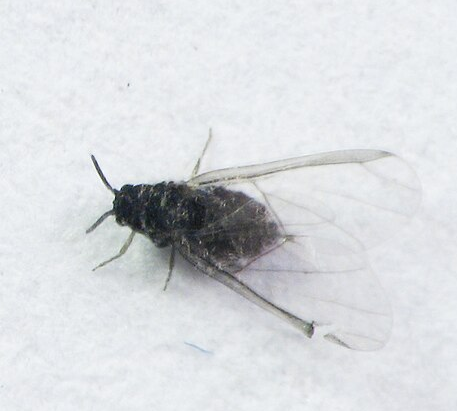
Witch hazel gall aphids (Hormaphis hamamelidis) are fascinating sap-feeding insects best known for their ability to induce the formation of distinctive cone-shaped galls on witch hazel leaves. Native to North America, these aphids have one of the most unusual life cycles among common landscape pests, alternating between witch hazel (Hamamelis) and birch (Betula) hosts throughout the year.
Unlike many aphid species that simply feed on plant sap, witch hazel gall aphids manipulate plant growth hormones, causing the host plant to produce specialized structures that serve as both shelter and food sources for developing colonies. Although damage is primarily cosmetic, heavy infestations can reduce the ornamental value of landscape plants and occasionally contribute to plant stress.
Taxonomy and Classification
- Kingdom: Animalia
- Phylum: Arthropoda
- Class: Insecta
- Order: Hemiptera
- Family: Aphididae
- Genus: Hormaphis
- Species: Hormaphis hamamelidis
Like other aphids, witch hazel gall aphids possess piercing-sucking mouthparts used to extract plant fluids. However, their remarkable gall-forming ability distinguishes them from most other aphid species found in North America.
Physical Description
Adult Aphids
Adult witch hazel gall aphids are extremely small and often difficult to see without magnification.
- Soft-bodied appearance
- Pale green to yellow coloration
- Typically 1–2 millimeters long
- Piercing-sucking mouthparts
- Winged and wingless forms occur
Winged adults are responsible for migration between witch hazel and birch hosts.
Nymphs
Nymphs resemble miniature versions of adults and remain protected within galls during much of their development.
On birch hosts, some generations produce a white, woolly wax covering that helps protect colonies from predators and environmental stress.
Distribution and Habitat
Witch hazel gall aphids are found throughout much of the eastern and central United States, particularly where both witch hazel and birch trees occur.
Common habitats include:
- Woodlands
- Forest edges
- Botanical gardens
- Residential landscapes
- Parks and arboretums
- Naturalized plantings
Their distribution closely follows that of their host plants.
Host Plants
This species requires two different hosts to complete its lifecycle.
Primary Host
- American Witch Hazel (Hamamelis virginiana)
Gall formation occurs exclusively on witch hazel.
Secondary Hosts
- River Birch (Betula nigra)
- Paper Birch (Betula papyrifera)
- Other birch species
Several generations occur on birch before the aphids return to witch hazel.
Life Cycle
The lifecycle of witch hazel gall aphids is among the most complex of any landscape insect pest.
Overwintering Stage
Eggs overwinter on witch hazel twigs and branches.
As spring arrives, eggs hatch into founding females.
Gall Formation
Newly emerged aphids feed on expanding leaves.
During feeding, chemicals injected into plant tissues trigger the formation of distinctive cone-shaped galls.
These galls:
- Provide shelter
- Supply nutrients
- Protect colonies from predators
- Create a stable microenvironment
Colony Development
Multiple generations develop within the gall.
The aphids reproduce asexually, allowing populations to grow rapidly.
Migration to Birch
By midsummer, winged aphids emerge through openings in the underside of the gall and fly to nearby birch trees.
Several generations develop on birch foliage during summer.
Return Migration
In autumn, winged aphids migrate back to witch hazel.
A sexual generation develops, mates, and deposits overwintering eggs, completing the cycle.
Gall Formation
The cone-shaped galls are the most recognizable feature of this species.
Appearance
- Conical or horn-shaped
- Green when young
- Often turn red, yellow, or brown later
- May reach 10–15 millimeters in length
- Usually located on the upper leaf surface
Internal Structure
The interior of each gall contains numerous aphids feeding on specialized plant tissues.
The gall functions as both a nursery and a food source.
Damage and Economic Importance
Leaf Distortion
Gall formation alters normal leaf development.
Affected leaves may:
- Curl
- Twist
- Become misshapen
- Exhibit reduced photosynthetic area
Aesthetic Damage
The primary concern is cosmetic.
Large numbers of brightly colored galls can make ornamental witch hazel plants appear unhealthy.
Reduced Photosynthesis
Heavy infestations reduce the amount of functional leaf tissue available for photosynthesis.
However, healthy mature plants typically tolerate this damage without serious long-term consequences.
Premature Leaf Drop
Severely infested leaves may yellow and drop earlier than normal.
Birch Host Damage
Damage on birch differs from the cone-shaped galls seen on witch hazel.
Symptoms include:
- Leaf curling
- Leaf wrinkling
- Corrugated foliage
- Waxy aphid colonies
- Reduced aesthetic quality
Birch damage is generally minor but can become noticeable during large infestations.
Natural Enemies
Numerous predators and parasitoids help regulate populations.
- Lady beetles
- Lacewings
- Syrphid fly larvae
- Parasitic wasps
- Predatory bugs
- Small insect-eating birds
Natural biological control often keeps populations below damaging levels.
Management and Control (IPM)
Monitoring
Inspect witch hazel foliage during spring and early summer.
Look for:
- Developing cone-shaped galls
- Leaf distortion
- Winged aphid emergence holes
Pruning
When infestations are light:
- Remove affected leaves early
- Destroy infested foliage
- Reduce future population growth
This approach is most effective before winged aphids emerge.
Encourage Beneficial Insects
Maintaining diverse landscapes supports natural predators.
- Avoid unnecessary insecticide applications
- Provide flowering plants for beneficial insects
- Preserve natural habitats nearby
Dormant Oil Applications
Horticultural oils applied before bud break may reduce overwintering egg survival.
This can help lower spring populations.
Systemic Treatments
In rare cases involving valuable ornamental specimens, systemic insecticides may be used before gall formation occurs.
Once aphids become enclosed within galls, most contact insecticides provide little or no control.
Prevention
- Inspect plants annually
- Maintain overall plant health
- Prune lightly infested foliage
- Promote beneficial insects
- Avoid excessive fertilization
- Monitor both witch hazel and nearby birch trees
Interesting Facts
- Witch hazel gall aphids require two completely different host plants to complete their lifecycle.
- The cone-shaped galls are created entirely by manipulated plant growth.
- Each gall functions as a self-contained nursery for developing aphids.
- Several generations reproduce without mating during the growing season.
- The species has been studied extensively as a model of insect-induced plant development.
Conclusion
Witch hazel gall aphids are among the most intriguing insects found in North American landscapes. Their ability to induce striking cone-shaped galls and alternate between witch hazel and birch hosts makes them biologically unique. Although infestations can reduce ornamental appearance and cause localized leaf damage, healthy plants typically tolerate their presence well. Through regular monitoring, pruning of heavily infested foliage, and support of natural predators, gardeners can successfully manage these unusual aphids while appreciating one of nature’s most remarkable examples of insect-plant interaction.