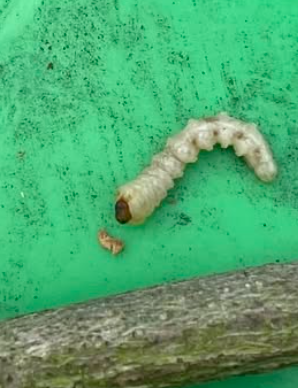
Wisteria borers are destructive wood-boring insects that attack the stems, trunks, and woody vines of wisteria plants. Although several species may be referred to as wisteria borers, many belong to groups of clearwing moths (family Sesiidae), longhorn beetles (Cerambycidae), or metallic wood-boring beetles (Buprestidae). Their larvae tunnel deep within plant tissues, disrupting the movement of water and nutrients while weakening the structural integrity of the vine.
Because the damaging stage develops hidden inside woody stems, infestations often remain unnoticed until extensive injury has occurred. Wilting branches, poor flowering, dieback, and sudden vine collapse are frequently the first signs homeowners observe. In ornamental landscapes where mature wisteria vines may be decades old, borer infestations can result in significant aesthetic and economic losses.
Taxonomy and Classification
The term “wisteria borer” may refer to several wood-boring insects capable of attacking wisteria plants.
- Kingdom: Animalia
- Phylum: Arthropoda
- Class: Insecta
- Orders: Lepidoptera and Coleoptera
- Common Families: Sesiidae, Cerambycidae, Buprestidae
Clearwing moth species are among the most commonly reported borers in ornamental wisteria plantings. Their adults resemble stinging wasps, while the larvae are concealed wood-borers that feed within stems and trunks.
Physical Description
Adult Stage
Adult appearance varies depending on the species involved.
- Clearwing moths resemble paper wasps.
- Bodies are slender and narrow.
- Wings are often transparent or partially clear.
- Coloration ranges from black and yellow to brown and orange.
- Adults are active during warm months.
Their wasp-like appearance helps deter predators despite their harmless nature.
Larval Stage
The larvae are responsible for all significant damage.
- Creamy white coloration.
- Soft-bodied appearance.
- Dark brown head capsule.
- Legless or nearly legless.
- Typically 15–30 millimeters long when mature.
Larvae spend most of their lives hidden inside stems and trunks where they are protected from predators and pesticides.
Distribution and Habitat
Wisteria borers occur throughout much of the United States wherever wisteria is grown.
They are especially common in:
- Residential landscapes.
- Botanical gardens.
- Historic properties.
- Arbors and pergolas.
- Commercial nurseries.
- Public parks.
- Southern and eastern states.
Older vines and stressed plants are often more susceptible to infestation.
Host Plants
Although wisteria is the primary host, some species may attack additional woody ornamentals.
Common hosts include:
- Chinese wisteria (Wisteria sinensis)
- Japanese wisteria (Wisteria floribunda)
- American wisteria (Wisteria frutescens)
- Hawthorn
- Apple
- Other woody vines and shrubs
Plants suffering from drought, pruning wounds, mechanical injury, or disease are often preferred for egg-laying.
Life Cycle
Egg Stage
Adult females lay eggs on bark, pruning wounds, cracks, or rough surfaces near the base of vines.
Eggs are usually deposited individually or in small groups.
Larval Development
After hatching, larvae bore directly into plant tissues.
- Feed beneath the bark initially.
- Tunnel into sapwood and heartwood.
- Create galleries within stems.
- Push frass toward entry holes.
Larval development may continue for one or more years depending on species and environmental conditions.
Pupation
When development is complete, larvae create a pupal chamber within the vine.
The pupa remains inside until adult emergence.
Adult Emergence
Adults emerge through circular exit holes and begin searching for mates.
The cycle then repeats.
Signs of Infestation
Because larvae remain hidden, symptoms are often more noticeable than the insects themselves.
Frass Accumulation
One of the earliest signs is the appearance of frass.
- Sawdust-like material.
- Wood shavings near stems.
- Accumulation around vine bases.
- Mixed with sap or moisture.
Exit Holes
Adult emergence creates distinct openings.
- Round holes in stems.
- Located near the base or trunk.
- Often 6–10 millimeters wide.
- May appear singly or in groups.
Wilting and Dieback
As vascular tissues become damaged:
- Leaves wilt.
- Shoots die back.
- Branches decline.
- Flower production decreases.
Stem Weakening
Extensive tunneling can result in:
- Hollow stems.
- Cracking trunks.
- Structural weakness.
- Vine collapse.
Damage and Economic Importance
Vascular Disruption
Larval feeding destroys tissues responsible for transporting water and nutrients.
This results in:
- Reduced vigor.
- Poor flowering.
- Leaf yellowing.
- Branch death.
Structural Failure
Tunnels weaken the woody framework of the vine.
Heavy vines may:
- Split unexpectedly.
- Break during storms.
- Collapse under their own weight.
- Require extensive pruning.
Disease Entry Points
Borer tunnels create opportunities for secondary problems.
- Wood-decay fungi.
- Canker pathogens.
- Bacterial infections.
- Additional insect infestations.
Landscape Impact
Mature ornamental wisteria vines often represent years of growth.
Severe infestations can:
- Reduce property value.
- Destroy landscape features.
- Require costly replacement.
- Damage pergolas and supports.
Behavior and Ecology
Hidden Development
The concealed lifestyle of larvae provides protection from many predators.
This also makes infestations difficult to detect until damage becomes severe.
Preference for Stressed Plants
Many borers are attracted to weakened hosts.
Risk factors include:
- Drought stress.
- Mechanical injuries.
- Poor soil conditions.
- Improper pruning.
- Disease pressure.
Management and Control
Regular Inspection
Routine monitoring is essential.
- Check stems for holes.
- Look for frass deposits.
- Inspect for wilting shoots.
- Monitor flowering performance.
Mechanical Removal
When tunnels are accessible, larvae may be physically removed.
- Insert flexible wire into tunnels.
- Destroy larvae inside galleries.
- Remove severely damaged stems.
- Prune infested sections.
Sanitation
Proper maintenance helps reduce future infestations.
- Remove dead wood.
- Dispose of infested material.
- Avoid leaving cut stems nearby.
- Maintain clean planting areas.
Improve Plant Health
Healthy plants are better able to resist attacks.
- Provide adequate irrigation.
- Apply mulch appropriately.
- Avoid trunk injuries.
- Maintain soil fertility.
Preventive Treatments
Targeted insecticide applications may help protect high-value vines when timed to adult emergence.
However, treatments are generally most effective before larvae enter plant tissues.
Prevention
- Inspect vines annually.
- Avoid excessive pruning injuries.
- Maintain vigorous plant growth.
- Remove damaged wood promptly.
- Protect trunks from mechanical injury.
- Monitor for frass and exit holes.
Interesting Facts
- Many wisteria borers resemble stinging wasps despite being harmless.
- Larvae can spend more than a year inside stems.
- Damage often remains hidden until vines suddenly decline.
- Mature vines may support several generations simultaneously.
- Borer tunnels can extend several feet through large stems.
Conclusion
Wisteria borers are serious hidden pests capable of causing extensive damage to ornamental vines. Their larvae tunnel through stems and trunks, disrupting nutrient flow, weakening structural integrity, and reducing flowering performance. Because infestations often remain concealed until significant injury has occurred, regular inspections and prompt management are critical. Through careful monitoring, sanitation, pruning, and maintenance of plant health, homeowners and landscape managers can minimize the impact of these destructive wood-boring insects.