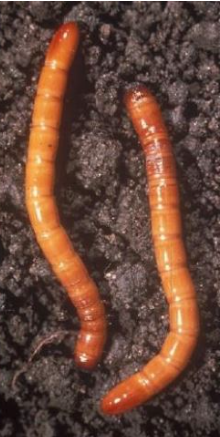
Wireworms are the larval stage of click beetles (Family Elateridae) and are among the most persistent and economically important soil-dwelling agricultural pests worldwide. These tough-bodied larvae spend multiple years underground feeding on seeds, roots, tubers, and underground stems. Their feeding can reduce crop emergence, damage root crops, and significantly lower yields in both field crops and vegetable production.
Wireworms are particularly problematic because they live in the soil for several years before becoming adult click beetles. This extended life cycle allows populations to build up gradually and persist through multiple growing seasons. Unlike many insect pests that complete their development within a single year, wireworms can remain active underground for two to six years, causing repeated damage to successive crops.
Their feeding activity affects a wide variety of crops, including corn, wheat, barley, potatoes, carrots, onions, sugar beets, soybeans, and numerous vegetable crops. Because the larvae feed beneath the soil surface, infestations are often difficult to detect until significant damage has already occurred.
Taxonomy and Classification
- Kingdom: Animalia
- Phylum: Arthropoda
- Class: Insecta
- Order: Coleoptera
- Family: Elateridae
Thousands of click beetle species exist worldwide, but only a portion produce wireworm larvae that are significant agricultural pests.
Common pest genera include:
- Agriotes
- Limonius
- Melanotus
- Conoderus
- Selatosomus
Identification
Larvae
The larval stage is responsible for nearly all crop damage.
- Length: 10 mm to 40 mm.
- Color: Yellow, amber, or reddish-brown.
- Shape: Long and cylindrical.
- Body: Hard, shiny, and wire-like.
- Legs: Three pairs of short legs near the head.
Key Identification Features
- Hard, smooth body.
- Wire-like appearance.
- Yellowish-brown coloration.
- Slow movement through soil.
- Found feeding on roots and seeds underground.
Their tough outer covering distinguishes them from softer soil pests such as white grubs.
Adult Click Beetles
- Elongated body.
- Dark brown or black coloration.
- Hard exoskeleton.
- Ability to snap or “click” when overturned.
The clicking mechanism helps the beetle flip itself upright when placed on its back.
Distribution and Habitat
Wireworms occur worldwide and are found in nearly every agricultural region.
Preferred habitats include:
- Pastures.
- Grasslands.
- Hay fields.
- Corn fields.
- Potato fields.
- Vegetable farms.
- Recently converted sod fields.
Fields that have been planted in grasses for several years often support particularly high wireworm populations.
Life Cycle
Wireworms undergo complete metamorphosis.
- Egg Stage: Female click beetles lay eggs in soil during spring and summer.
- Larval Stage: Wireworms hatch and begin feeding underground.
- Pupal Stage: Mature larvae pupate in soil chambers.
- Adult Stage: Click beetles emerge and reproduce.
Depending on the species, the larval stage may last from two to six years, making wireworms one of the longest-lived agricultural insect pests.
Feeding Habits
Wireworms feed on a wide range of plant tissues.
- Germinating seeds.
- Seedlings.
- Roots.
- Tubers.
- Underground stems.
- Root vegetables.
Their feeding is especially damaging because it often occurs during early crop establishment when plants are most vulnerable.
Damage and Economic Importance
Seed Destruction
Wireworms frequently attack newly planted seeds.
- Hollow out seeds.
- Prevent germination.
- Reduce crop stands.
- Create gaps in fields.
Corn, wheat, barley, and soybean fields are commonly affected.
Root Crop Damage
Root vegetables are especially vulnerable.
- Potatoes.
- Carrots.
- Sweet potatoes.
- Sugar beets.
- Onions.
The larvae bore clean tunnels through the edible portions of crops, reducing quality and marketability.
Seedling Injury
Young plants often suffer severe damage.
- Wilting.
- Stunted growth.
- Plant death.
- Reduced vigor.
Heavy infestations can require costly replanting.
Signs of Infestation
- Poor germination.
- Missing plants in rows.
- Wilting seedlings.
- Tunnels in potatoes and carrots.
- Visible wireworms in soil.
- Stand reduction throughout fields.
Damage often appears unevenly across fields, corresponding to areas with higher wireworm populations.
Behavior and Conflict
Long-Term Persistence
Wireworms remain active underground for years.
- Multi-year development.
- Slow population decline.
- Difficult eradication.
Crop damage may occur long after the original eggs were laid.
Seasonal Movement
Wireworms move vertically through the soil profile.
- Move deeper during hot weather.
- Return closer to the surface in cool, moist conditions.
- Feed most actively in spring and fall.
This movement can influence monitoring and treatment effectiveness.
Durability
Their hard cuticle provides protection.
- Tolerate environmental stress.
- Resist desiccation.
- Survive adverse conditions.
This durability contributes to their persistence as agricultural pests.
Management and Prevention
Integrated Pest Management (IPM) is essential for wireworm control.
Monitoring
- Bait stations.
- Buried potato traps.
- Corn seed traps.
- Pre-plant soil sampling.
Monitoring helps determine infestation levels before planting.
Seed Treatments
- Protect germinating seeds.
- Reduce early feeding damage.
- Improve crop establishment.
Seed treatments are among the most widely used wireworm management tools.
Cultural Control
- Deep tillage.
- Field sanitation.
- Crop rotation.
- Reducing grassy weeds.
While crop rotation alone may not eliminate wireworms, it can help reduce populations over time.
Chemical Control
- In-furrow insecticides.
- Soil-applied treatments.
- Seed-applied products.
Treatments are most effective when applied before significant feeding occurs.
Research and Future Management
Researchers continue developing improved monitoring systems, biological controls, and precision soil treatments for wireworms. New approaches focus on reducing pesticide use while maintaining effective protection of crops.
Studies are also investigating trap crops, attract-and-kill technologies, and crop varieties with greater tolerance to wireworm feeding.
Conclusion
Wireworms are among the most challenging soil-dwelling agricultural pests due to their long life cycle, hidden feeding habits, and ability to attack a wide range of crops. Their damage to seeds, seedlings, roots, and tubers can significantly reduce yields and market quality. Effective management requires monitoring, preventative treatments, cultural practices, and long-term integrated pest management strategies.