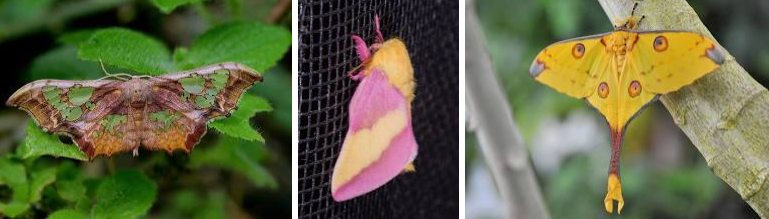
Window Moths is a common term used to describe small moths frequently seen resting on or flying around indoor windows. These moths are not a single species but rather a group of moths that have emerged from hidden infestations within a home and are attracted to natural light coming through windows. Common examples include Indian Meal Moths, Clothes Moths, and various small household moth species.
While the adult moths themselves cause little direct damage, their presence often indicates a larger infestation occurring elsewhere in the structure. The damaging stage is typically the larva, which may feed on stored foods, grains, pet food, bird seed, dried fruits, wool, silk, feathers, carpets, or other organic materials. Because adults naturally fly toward light, homeowners often first notice them gathered around windows, making the window an important clue when locating the infestation source.
Finding multiple window moths indoors should prompt an inspection of pantries, closets, storage areas, and pet food supplies to identify and eliminate the source of the infestation.
Taxonomy and Classification
Window moths may belong to several different moth families depending on the species involved.
- Order: Lepidoptera
- Family: Pyralidae (Pantry Moths)
- Family: Tineidae (Clothes Moths)
- Family: Noctuidae (Owlet Moths)
- Family: Crambidae (Grass and Snout Moths)
The most common indoor species include:
- Indian Meal Moth (Plodia interpunctella)
- Webbing Clothes Moth (Tineola bisselliella)
- Case-Bearing Clothes Moth (Tinea pellionella)
All undergo complete metamorphosis with egg, larval, pupal, and adult stages.
Identification
Most window moths are relatively small and inconspicuous.
- Wingspan: 6 mm to 15 mm.
- Color: Gray, tan, brown, buff, or bronze.
- Body Shape: Slender with folded wings.
- Flight: Weak, fluttering movement.
Key Identification Features
- Frequently found resting on windows or screens.
- Active near lights during evening hours.
- Often emerge from hidden indoor breeding sites.
- Small size makes them easy to overlook initially.
Species identification is often necessary to determine the source of the infestation.
Distribution and Habitat
Window moths are found worldwide and occur in virtually every type of structure.
Their habitat depends on the larval food source.
- Pantries.
- Food storage rooms.
- Closets.
- Carpeted areas.
- Pet food storage.
- Bird seed containers.
- Attics.
- Garages.
The windows themselves do not serve as breeding sites. Instead, they function as gathering points because adult moths are attracted to light.
Life Cycle
Window moths undergo complete metamorphosis.
- Egg Stage: Females deposit eggs directly on suitable food sources.
- Larval Stage: Caterpillars feed on stored products, fabrics, or organic materials.
- Pupal Stage: Larvae construct cocoons or protective shelters before pupation.
- Adult Stage: Adults emerge, mate, and seek locations to lay eggs.
The larval stage is responsible for nearly all economic damage associated with these pests.
Common Sources of Infestation
Pantry Moths
Pantry moth larvae attack stored food products.
- Flour.
- Cereal.
- Rice.
- Pasta.
- Nuts.
- Dried fruit.
- Pet food.
- Bird seed.
Infested foods often contain webbing, caterpillars, or pupal cases.
Clothes Moths
Clothes moth larvae feed on animal-based fibers.
- Wool.
- Silk.
- Feathers.
- Fur.
- Carpets.
- Stored clothing.
Damage typically appears as irregular holes or bare patches.
Behavior and Conflict
Light Attraction
Adult moths exhibit positive phototaxis.
- Fly toward windows.
- Gather around lamps.
- Rest on glass surfaces.
- Attempt to reach outdoor light.
This behavior often alerts homeowners to an otherwise hidden infestation.
Indicator Pest
The primary concern is not the adult moth itself.
- Adults indicate active breeding.
- Larvae may be causing damage elsewhere.
- Infestations can persist unnoticed for months.
Multiple moth sightings usually indicate an established infestation requiring investigation.
Signs of Infestation
- Small moths near windows.
- Moths around ceiling lights.
- Silken webbing in food products.
- Larvae crawling on walls.
- Damaged fabrics.
- Small cocoons in storage areas.
Early detection greatly improves control success.
Management and Prevention
Successful control depends on locating and eliminating the breeding source.
Source Identification
- Inspect all stored foods.
- Check pet food containers.
- Examine bird seed.
- Inspect closets and fabrics.
- Search for larvae and webbing.
Eliminating the source is the most important step in management.
Sanitation
- Discard infested materials.
- Vacuum shelves thoroughly.
- Clean cracks and crevices.
- Remove food residues.
Sanitation helps eliminate eggs, larvae, and pupae.
Storage Practices
- Use airtight containers.
- Store susceptible foods securely.
- Rotate stored products regularly.
- Inspect new purchases before storage.
Proper storage prevents future infestations.
Monitoring
- Use pheromone traps.
- Monitor pantry areas.
- Inspect closets regularly.
- Track adult activity.
Pheromone traps are especially useful for identifying pantry moth infestations.
Research and Future Management
Researchers continue developing improved pheromone lures, monitoring systems, and integrated pest management programs for stored-product and fabric pests. Advances in detection technology allow infestations to be identified earlier and managed more effectively with reduced pesticide use.
Commercial food facilities and warehouses increasingly rely on pheromone-based monitoring systems to detect infestations before significant product losses occur.
Conclusion
Window moths are not a specific species but rather a visible sign of hidden indoor infestations involving stored foods, fabrics, or other organic materials. Although adult moths are harmless, their presence often indicates active larvae causing damage elsewhere in the structure. Proper identification, source elimination, sanitation, and monitoring are the keys to successful long-term control.