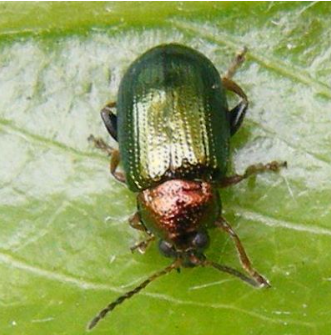
Willow flea beetles are small, agile leaf-feeding beetles that specialize in feeding on willow trees and shrubs. Most are members of the family Chrysomelidae, particularly species in genera such as Crepidodera. These insects are called flea beetles because their enlarged hind legs allow them to leap suddenly when disturbed, much like fleas.
Willow flea beetles are commonly found in wetlands, riparian corridors, parks, nurseries, restoration plantings, and ornamental landscapes where willow species are abundant. At low population levels, they are usually minor pests and may go unnoticed. However, during outbreak years, adults and larvae can cause extensive leaf injury, creating a scorched, skeletonized, or shot-hole appearance that reduces plant vigor and ornamental value.
Although mature willows usually survive infestations, repeated or severe feeding can weaken trees, reduce growth, and make plants more vulnerable to drought, winter injury, and secondary pests.
Taxonomy and Classification
- Kingdom: Animalia
- Phylum: Arthropoda
- Class: Insecta
- Order: Coleoptera
- Family: Chrysomelidae
- Subfamily: Galerucinae
- Common Genera: Crepidodera and related flea beetles
Flea beetles are a subgroup of leaf beetles known for their jumping ability, plant-feeding habits, and often host-specific relationships with particular plants.
Physical Description
Adult Beetles
Adult Willow Flea Beetles are tiny but distinctive insects.
- Length: 2–4 millimeters.
- Body Shape: Oval and compact.
- Color: Metallic blue, green, bronze, black, or dark brown.
- Legs: Enlarged hind legs adapted for jumping.
- Movement: Quick jumping or dropping from leaves when disturbed.
The metallic sheen of many species makes them visible when inspected closely, but their small size and fast jumping behavior can make them difficult to capture.
Larvae
Larvae are small, slender, and usually found feeding on leaf surfaces or undersides.
- Soft-bodied appearance.
- Yellowish, brownish, or dark coloration.
- Small black spots may be present.
- Often feed in groups on young foliage.
Larval feeding often produces more extensive skeletonization than adult feeding.
Distribution and Habitat
Willow flea beetles occur throughout North America and other temperate regions where willows grow.
Common habitats include:
- Riparian zones.
- Wetlands.
- Streamsides.
- Riverbanks.
- Landscape plantings.
- Parks.
- Nurseries.
- Restoration sites.
- Urban shade plantings.
Because willows thrive near water, infestations are often concentrated in moist habitats and lowland landscapes.
Host Plants
Willow flea beetles primarily feed on species in the genus Salix.
Common hosts include:
- Weeping willow.
- Black willow.
- Sandbar willow.
- Arroyo willow.
- Pussy willow.
- Ornamental willow cultivars.
Some related flea beetles may also feed on poplars and cottonwoods.
Life Cycle
Willow flea beetles undergo complete metamorphosis.
Overwintering Stage
Adults usually overwinter in protected sites.
- Leaf litter.
- Plant debris.
- Soil cracks.
- Bark crevices.
- Vegetation near host plants.
Spring Emergence
Adults become active when temperatures warm and new willow foliage appears.
- Begin feeding on tender leaves.
- Mate shortly after emergence.
- Females deposit eggs on or near host plants.
Larval Feeding
Larvae hatch and begin feeding on leaf tissue.
- Feed on undersides of leaves.
- Skeletonize soft tissue.
- Leave veins and tougher tissues behind.
- Develop through several instars.
Pupation and Adult Emergence
Larvae eventually pupate in soil, leaf litter, or protected areas near the host plant.
New adults emerge and continue feeding. Multiple generations may occur annually in favorable climates.
Damage and Economic Importance
Adult Feeding Damage
Adult beetles chew small, circular holes in leaves.
This creates the characteristic:
- Shot-hole damage.
- Scalloped leaf margins.
- Small round feeding pits.
- Tattered foliage.
Larval Damage
Larvae often cause more severe injury by feeding on leaf surfaces.
- Skeletonized leaves.
- Browned foliage.
- Reduced photosynthetic area.
- Premature leaf drop.
Plant Stress
Heavy infestations can weaken willow trees and shrubs.
- Reduced growth.
- Lower energy reserves.
- Increased drought sensitivity.
- Greater susceptibility to secondary pests.
- Reduced ornamental value.
Young willows, nursery plants, and newly transplanted trees are most vulnerable.
Signs of Infestation
Common signs include:
- Tiny metallic beetles on leaves.
- Jumping insects when branches are disturbed.
- Small round holes in foliage.
- Skeletonized leaf surfaces.
- Brown or scorched-looking foliage.
- Premature leaf drop.
- Larvae on undersides of leaves.
A simple branch-shaking test over a white sheet can help confirm adult activity.
Behavior and Conflict
Jumping Defense
Willow flea beetles rely on rapid jumping to escape predators.
- Launch suddenly from leaves.
- Disappear into vegetation.
- Evade hand capture.
Seasonal Population Growth
Warm, favorable weather can support rapid population increases.
- Multiple generations may develop.
- Damage accumulates through summer.
- Outbreaks may appear suddenly.
Localized Outbreaks
Because they depend on host plants, infestations often remain concentrated around willow stands.
Management and Control
Monitoring
Early monitoring is important for preventing severe defoliation.
- Inspect new foliage in spring.
- Shake branches over a white sheet.
- Check leaf undersides for larvae.
- Watch for shot-hole damage.
Water Sprays
For smaller willows, strong water sprays can reduce populations.
- Dislodge larvae.
- Remove adults from foliage.
- Reduce feeding pressure.
- Avoid chemical use.
Biological Control
Natural enemies help keep populations in balance.
- Lady beetles.
- Lacewing larvae.
- Predatory bugs.
- Spiders.
- Birds.
- Parasitic wasps.
Conserving beneficial insects is important for long-term control.
Neem Oil and Horticultural Oils
Low-impact sprays may help suppress small infestations.
- Target larvae on leaf undersides.
- Apply during early activity.
- Avoid spraying during extreme heat.
- Repeat as needed according to label directions.
Systemic Treatments
For severe infestations on valuable landscape or nursery stock, systemic treatments may be used by professionals.
These treatments should be applied carefully to reduce risks to pollinators and aquatic environments, especially because willows often grow near water.
Prevention
- Maintain healthy willow trees.
- Water during drought stress.
- Remove excess leaf litter near nursery stock.
- Encourage natural predators.
- Avoid unnecessary broad-spectrum insecticides.
- Inspect nursery plants before planting.
Conclusion
Willow flea beetles are small but noticeable leaf-feeding pests that can create shot-hole damage, skeletonized foliage, and premature leaf browning on willow trees and shrubs. While they rarely kill mature willows, repeated infestations can reduce vigor and ornamental value. Regular monitoring, plant health care, biological control, water sprays, and targeted low-impact treatments provide effective management while preserving beneficial insects and the ecological value of willow habitats.