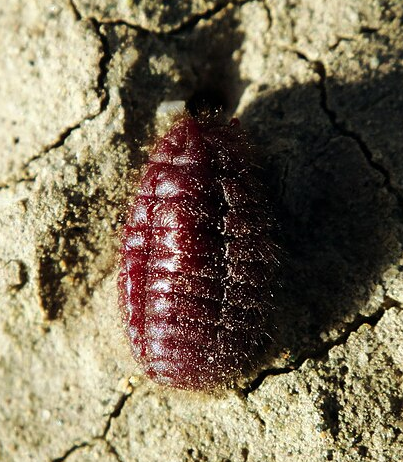
White Margarodid Scales are large sap-sucking insects belonging to a group of scale insects known for producing conspicuous white, cottony egg sacs. The term is commonly associated with the Cottony Cushion Scale (Icerya purchasi), one of the most historically important agricultural pests in the world. These insects attack a wide range of ornamental plants, shrubs, fruit trees, and citrus crops, weakening plants through continuous feeding and causing significant aesthetic and economic damage.
The most recognizable feature of these pests is the large white cotton-like ovisac produced by adult females. This structure contains hundreds of eggs and makes infestations highly visible. In addition to sap removal, white margarodid scales produce large quantities of honeydew, which encourages the growth of black sooty mold and attracts ants.
Historically, the Cottony Cushion Scale nearly destroyed California’s citrus industry during the late nineteenth century before becoming one of the world’s most famous examples of successful biological control.
Taxonomy and Classification
- Kingdom: Animalia
- Phylum: Arthropoda
- Class: Insecta
- Order: Hemiptera
- Superfamily: Coccoidea
- Family: Monophlebidae (formerly Margarodidae)
- Species: Icerya purchasi
White margarodid scales belong to a group of giant scale insects that are generally larger than many other common scale species.
Identification
Adult females are highly distinctive and relatively easy to identify.
- Length: 5 mm to 10 mm.
- Color: Reddish-brown body.
- Egg Sac: Large white cottony ovisac.
- Body Shape: Oval and soft-bodied.
Key Identification Features
- Bright white ribbed cottony egg sac.
- Reddish-brown adult female.
- Clusters on stems and branches.
- Heavy honeydew production.
- Associated black sooty mold.
The white cottony egg sac often appears much larger than the insect itself and can contain hundreds of eggs.
Crawlers
The crawler stage is the primary dispersal stage.
- Small and mobile.
- Orange to reddish coloration.
- Move to new feeding sites.
Once settled, individuals become relatively immobile and remain attached to the host plant.
Distribution and Habitat
White margarodid scales occur worldwide in warm and temperate regions.
Common habitats include:
- Citrus orchards.
- Landscape trees.
- Ornamental shrubs.
- Gardens.
- Greenhouses.
- Urban plantings.
They are especially common in areas with mild winters and abundant host plants.
Host Plants
These scales feed on a wide variety of plants.
- Citrus trees.
- Pittosporum.
- Acacia.
- Rose plants.
- Wattle trees.
- Numerous ornamentals.
Their broad host range contributes to their success as invasive pests.
Life Cycle
White margarodid scales undergo simple metamorphosis.
- Egg Stage: Eggs develop within the cottony ovisac.
- Crawler Stage: Newly hatched crawlers disperse and locate feeding sites.
- Nymph Stage: Immature insects settle and begin feeding on plant sap.
- Adult Stage: Mature females continue feeding and produce egg sacs.
Multiple generations may occur annually in favorable climates.
Feeding Habits
White margarodid scales feed using specialized piercing-sucking mouthparts.
- Extract phloem sap.
- Feed continuously.
- Remain attached to host plants.
- Remove plant nutrients.
Heavy infestations can significantly stress host plants.
Damage and Economic Importance
Sap Loss and Plant Stress
Continuous feeding weakens plants over time.
- Reduced growth.
- Yellowing foliage.
- Twig dieback.
- Reduced vigor.
Young plants are particularly vulnerable to severe infestations.
Honeydew Production
Large amounts of sugary honeydew are produced during feeding.
- Sticky leaves.
- Contaminated fruit.
- Dirty outdoor surfaces.
- Attraction of ants.
Honeydew often becomes the most noticeable symptom of infestation.
Sooty Mold Development
Honeydew provides a food source for fungi.
- Black fungal growth.
- Reduced plant appearance.
- Lower photosynthesis.
- Decreased fruit quality.
Sooty mold can cover leaves, stems, and fruit during severe infestations.
Agricultural Losses
Historically, Cottony Cushion Scale caused devastating losses.
- Reduced citrus yields.
- Tree decline.
- Lower fruit quality.
- Increased management costs.
Without control measures, populations can increase rapidly.
Behavior and Conflict
Immobile Feeding
Adult females remain attached to plants after settling.
- Continuous sap extraction.
- Long-term feeding.
- Persistent infestations.
This behavior allows large colonies to build over time.
Honeydew Production
The enormous volume of honeydew creates secondary pest issues.
- Ant activity.
- Sooty mold growth.
- Aesthetic problems.
- Plant stress.
Historic Biological Control Success
The Cottony Cushion Scale is famous for inspiring one of the greatest biological control successes in agricultural history.
The introduction of the Vedalia Beetle (Rodolia cardinalis) dramatically reduced scale populations and saved California’s citrus industry.
Signs of Infestation
- White cottony masses on branches.
- Sticky honeydew deposits.
- Black sooty mold.
- Yellowing leaves.
- Twig dieback.
- Large ant populations.
Heavy infestations can often be identified from a distance due to the bright white egg sacs.
Management and Prevention
Integrated Pest Management (IPM) provides the most effective control.
Biological Control
- Vedalia Beetles (Rodolia cardinalis).
- Parasitic flies.
- Predatory insects.
Biological control remains one of the most effective long-term management strategies.
Horticultural Oils
- Smother scales.
- Reduce egg survival.
- Minimize crawler populations.
Applications are most effective when directed at active infestations.
Systemic Treatments
- Soil drenches.
- Trunk injections.
- Systemic insecticides.
These treatments may be necessary for severe infestations on valuable landscape plants.
Ant Management
- Control ant populations.
- Protect natural enemies.
- Improve biological control success.
Reducing ant activity often improves predator effectiveness.
Research and Future Studies
White margarodid scales remain important subjects of study because of their invasive potential and their historical role in biological control. Scientists continue researching improved biological control programs, invasive species management, and sustainable alternatives to broad-spectrum insecticides.
The relationship between Cottony Cushion Scale and the Vedalia Beetle remains one of the most frequently cited examples in modern integrated pest management programs.
Conclusion
White margarodid scales are destructive sap-feeding pests that can weaken ornamental plants, citrus trees, and numerous other hosts. Their cottony egg sacs, heavy honeydew production, and associated sooty mold make infestations highly visible. Fortunately, biological control, horticultural oils, and integrated pest management strategies provide effective tools for reducing populations and protecting valuable plants.