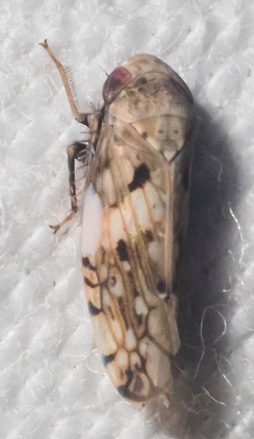
White-Banded Leafhoppers
White-banded Leafhoppers are small, highly mobile sap-feeding insects belonging to the family Cicadellidae. Among the most notable species is Scaphytopius acutus, a leafhopper recognized not only for its feeding activity but also for its role as a vector of serious plant diseases. While direct feeding damage is often minor compared to other agricultural pests, the transmission of phytoplasmas and other plant pathogens can result in severe economic losses for fruit growers, nurseries, and agricultural producers.
These insects are found throughout much of North America and are commonly associated with orchards, vineyards, berry plantings, field crops, ornamental landscapes, and native vegetation. Their remarkable jumping ability, rapid reproduction, and capacity to move between wild and cultivated plants make them important pests in integrated pest management programs.
Taxonomy and Classification
- Kingdom: Animalia
- Phylum: Arthropoda
- Class: Insecta
- Order: Hemiptera
- Family: Cicadellidae
- Genus: Scaphytopius
- Species: Scaphytopius acutus
Leafhoppers are among the largest families of plant-feeding insects, with thousands of species worldwide. Many are important agricultural pests because they transmit plant pathogens while feeding.
Physical Description
Adult White-banded Leafhoppers are small insects measuring approximately 3 to 5 millimeters in length.
- Coloration: Brownish-gray to tan body with distinct white markings.
- Head: Sharply pointed, giving the insect a triangular appearance.
- Wings: Transparent to lightly colored with white speckling and visible banding.
- Body Shape: Slender and wedge-shaped.
- Movement: Capable of rapid jumping, sideways movement, and short flights.
The prominent white band across the face and wing markings help distinguish this species from many other leafhoppers.
Nymphs
Immature stages resemble miniature adults but lack fully developed wings.
- Light green, cream, or pale brown coloration.
- Wingless or partially winged.
- Highly active and mobile.
- Typically found on leaf undersides.
Distribution and Habitat
White-banded Leafhoppers occur throughout much of the United States and southern Canada.
Common habitats include:
- Apple orchards
- Cherry orchards
- Peach plantings
- Blueberry farms
- Vineyards
- Pastures
- Field crop systems
- Roadside vegetation
- Weedy fields
- Natural woodlands
Many populations survive on wild host plants before moving into cultivated crops during the growing season.
Life Cycle
White-banded Leafhoppers undergo simple metamorphosis consisting of egg, nymph, and adult stages.
Egg Stage
Females insert eggs directly into plant tissues.
- Protected within stems and leaves.
- Difficult to detect.
- Hatch after several days or weeks depending on temperature.
Nymph Stage
Nymphs emerge and begin feeding immediately.
- Pass through multiple molts.
- Feed on plant sap.
- Develop wing pads gradually.
- Remain active throughout development.
Adult Stage
Adults are highly mobile and responsible for spreading pathogens between plants.
- Capable of long-distance dispersal.
- Move between wild and cultivated hosts.
- Mate and reproduce throughout the growing season.
Several generations may occur annually in warmer regions.
Host Plants
White-banded Leafhoppers feed on numerous plant species.
Important hosts include:
- Apple trees
- Cherry trees
- Peach trees
- Blueberries
- Wild chokecherry
- Clover
- Dandelion
- Grasses
- Various weeds
- Ornamental plants
Their broad host range contributes significantly to their ability to spread plant diseases.
Damage and Economic Importance
Direct Feeding Damage
Leafhoppers feed by inserting piercing-sucking mouthparts into plant tissues and extracting sap.
Symptoms may include:
- Leaf stippling.
- Yellowing foliage.
- Reduced vigor.
- Minor leaf curling.
- Slower plant growth.
Direct feeding damage alone rarely causes severe injury.
Disease Transmission
The greatest threat posed by White-banded Leafhoppers is their ability to transmit phytoplasmas.
Major diseases include:
- X-Disease: Affects cherries, peaches, and other stone fruits.
- Blueberry Stunt: Causes severe decline in blueberry plantings.
- Phytoplasma Disorders: Various diseases affecting multiple crops.
These pathogens spread through the insect’s feeding activity, moving from infected plants to healthy hosts.
X-Disease Impact
X-Disease is among the most economically important phytoplasma diseases transmitted by White-banded Leafhoppers.
Symptoms include:
- Small fruit.
- Bitter flavor.
- Poor coloration.
- Leaf yellowing.
- Reduced productivity.
- Tree decline.
Once infected, trees typically cannot be cured and often require removal.
Blueberry Stunt
In blueberries, phytoplasma infection can cause:
- Stunted growth.
- Small leaves.
- Leaf cupping.
- Poor fruit production.
- Gradual plant decline.
Behavior and Conflict
Rapid Mobility
White-banded Leafhoppers are extremely agile.
- Jump instantly when disturbed.
- Move sideways quickly.
- Fly short distances between plants.
This mobility makes monitoring and treatment challenging.
Pathogen Acquisition
Leafhoppers acquire phytoplasmas while feeding on infected plants.
After acquisition:
- Pathogens multiply within the insect.
- The insect remains infectious.
- Disease spreads throughout the season.
Wild Reservoirs
Many disease outbreaks originate from infected wild plants.
Common reservoirs include:
- Wild chokecherry.
- Clover.
- Dandelion.
- Native weeds.
These reservoirs allow both the insect and pathogen to persist year after year.
Management and Prevention
Effective management requires controlling both insect populations and disease sources.
Monitoring
Regular scouting is essential.
- Inspect host plants.
- Monitor nymph populations.
- Use yellow sticky traps.
- Track seasonal movement.
Weed Management
Reducing alternative hosts helps lower populations.
- Remove clover infestations.
- Control dandelions.
- Manage orchard floor vegetation.
- Eliminate nearby disease reservoirs.
Removal of Infected Hosts
In fruit production systems, eliminating infected plants is critical.
- Remove diseased trees.
- Destroy infected blueberry bushes.
- Eliminate nearby wild chokecherry hosts.
This reduces pathogen availability for transmission.
Biological Control
Numerous natural enemies attack leafhoppers.
- Spiders.
- Predatory bugs.
- Parasitic wasps.
- Lacewings.
- Lady beetles.
Conserving beneficial insects contributes to long-term suppression.
Chemical Control
In high-value crops, insecticides may be necessary.
- Pyrethroids.
- Neonicotinoids.
- Targeted systemic products.
Applications are generally most effective against active adults and nymphs before disease transmission occurs.
Kaolin Clay Barriers
Organic growers often use kaolin clay products.
- Discourages feeding.
- Reduces landing activity.
- Provides non-toxic protection.
Research and Future Outlook
Current research focuses on understanding phytoplasma transmission, improving disease-resistant crop varieties, and developing sustainable biological control programs. Scientists are also investigating how landscape management and host plant diversity influence leafhopper movement and disease spread.
As awareness of vector-borne plant diseases increases, White-banded Leafhoppers continue to receive attention as important pests in fruit production systems.
Conclusion
White-banded Leafhoppers are small but economically important sap-feeding insects whose greatest threat comes from their ability to transmit destructive phytoplasma diseases. While direct feeding damage is usually limited, pathogen transmission can lead to severe declines in fruit trees, blueberries, and other crops. Through careful monitoring, weed management, biological control, and integrated pest management practices, growers can reduce both leafhopper populations and the risk of disease outbreaks.