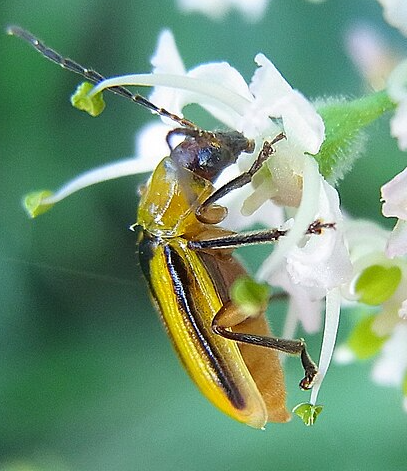
Western Corn Rootworms (Diabrotica virgifera virgifera) are among the most destructive agricultural pests affecting corn production in North America. Often referred to as the “billion-dollar bug,” this species causes extensive economic losses through direct crop damage and costly management programs. The larvae feed on corn roots beneath the soil surface, weakening plants, reducing nutrient uptake, and causing severe lodging that can dramatically reduce yields.
Unlike many agricultural pests, Western Corn Rootworms have demonstrated an extraordinary ability to adapt to management strategies. Populations have evolved resistance to crop rotation in some regions and have developed resistance to several insecticides and certain genetically engineered corn varieties. As a result, this insect remains one of the most studied and challenging pests in modern agriculture.
The pest is particularly problematic in large-scale corn production areas where continuous corn planting provides ideal conditions for population growth and survival.
Taxonomy and Classification
- Kingdom: Animalia
- Phylum: Arthropoda
- Class: Insecta
- Order: Coleoptera
- Family: Chrysomelidae
- Genus: Diabrotica
- Species: Diabrotica virgifera virgifera
Western Corn Rootworms belong to the leaf beetle family (Chrysomelidae). While adults feed above ground on leaves, pollen, and silks, the most destructive stage is the underground larval stage.
Physical Description
Western Corn Rootworms undergo complete metamorphosis with four distinct life stages: egg, larva, pupa, and adult.
Adult Beetles
- Length: 5 mm to 7 mm.
- Yellow to yellow-green coloration.
- Three dark stripes running lengthwise along the wing covers.
- Males often appear darker due to broader markings.
- Strong fliers capable of dispersing between fields.
Adults are frequently seen feeding on corn silks, tassels, pollen, and leaves during summer.
Larvae
- White to cream-colored body.
- Brown head capsule.
- Dark plate at the tail end.
- Slender, worm-like appearance.
- Up to 13 mm long when mature.
The larvae spend their entire feeding period underground attacking corn roots.
Eggs
- Tiny and oval-shaped.
- Deposited in soil during late summer.
- Initially white before darkening.
Distribution and Habitat
Western Corn Rootworms are found throughout major corn-growing regions of North America and have spread into parts of Europe where they are considered invasive pests.
Common regions include:
- Midwestern United States.
- Great Plains states.
- Corn Belt production areas.
- Southern Canada.
- Several European countries.
Their primary habitat is agricultural fields planted with corn. Continuous corn production systems provide ideal conditions for population buildup.
Life Cycle
Western Corn Rootworms typically complete one generation per year.
Egg Stage
Adult females deposit eggs in the soil near corn plants during late summer and early fall.
- Eggs overwinter in soil.
- Can survive harsh winter temperatures.
- Remain dormant until spring.
Larval Stage
Larvae hatch in late spring when corn roots become available.
- Immediately begin feeding on roots.
- Pass through three larval stages.
- Remain underground for several weeks.
This is the most destructive phase of the life cycle.
Pupal Stage
After completing development, larvae create earthen cells within the soil and pupate.
- Occurs underground.
- Lasts approximately one to two weeks.
- Produces adult beetles.
Adult Stage
Adults emerge during mid to late summer.
- Feed on corn silks and pollen.
- Mate repeatedly.
- Lay eggs for the next generation.
Adults may remain active until frost.
Damage and Economic Importance
Western Corn Rootworms cause both below-ground and above-ground damage.
Root Feeding Damage
Larvae attack the root system.
- Prune major roots.
- Reduce water uptake.
- Reduce nutrient absorption.
- Weaken plant stability.
Severely damaged plants become susceptible to drought stress and yield loss.
Lodging
One of the most recognizable symptoms is lodging.
- Plants lean or fall over.
- Roots fail to support stalks.
- Creates “gooseneck” growth patterns.
Lodged plants are difficult to harvest and often produce lower yields.
Silk Feeding
Adult beetles feed on corn silks.
- Interferes with pollination.
- Reduces kernel development.
- Impacts grain production.
Heavy adult populations can significantly reduce ear quality.
Economic Losses
Combined yield losses and management expenses exceed hundreds of millions of dollars annually.
In some years, total economic impacts approach or exceed one billion dollars across North America.
Behavior and Conflict
Adaptability
Western Corn Rootworms are notorious for adapting to management practices.
- Resistance to crop rotation.
- Resistance to some insecticides.
- Resistance to certain Bt traits.
This adaptability makes long-term management particularly challenging.
Continuous Corn Preference
The pest thrives in continuous corn production systems.
- Reliable food source.
- Predictable habitat.
- Higher survival rates.
Fields planted to corn year after year often experience the highest infestations.
Dispersal
Adult beetles are capable fliers.
- Move between neighboring fields.
- Colonize new areas.
- Spread resistant populations.
Signs of Infestation
- Lodged corn plants.
- Gooseneck-shaped stalks.
- Poor plant vigor.
- Reduced root mass.
- Adult beetles on silks and tassels.
- Uneven field growth.
Root inspections during the growing season often reveal characteristic feeding scars and root pruning.
Management and Prevention
Integrated Pest Management (IPM) is essential for effective control.
Crop Rotation
- Breaks the life cycle.
- Reduces larval survival.
- Most effective in areas without rotation-resistant populations.
Monitoring
- Sticky traps.
- Field scouting.
- Root damage assessments.
- Adult beetle counts.
Monitoring allows growers to make informed treatment decisions.
Bt Corn Hybrids
- Provide root protection.
- Reduce larval survival.
- Require resistance management programs.
Trait rotation is important to slow resistance development.
Soil Insecticides
- Applied at planting.
- Protect developing roots.
- Used where pressure is high.
These products provide supplemental protection when needed.
Biological Control
Natural enemies include:
- Predatory beetles.
- Parasitic nematodes.
- Beneficial fungi.
- Soil-dwelling predators.
While rarely sufficient alone, biological control contributes to overall suppression.
Research and Future Studies
Western Corn Rootworms remain a major focus of agricultural research. Scientists continue investigating resistance management strategies, new biological controls, RNA interference technologies, and improved monitoring systems.
Research is also examining sustainable approaches that reduce dependence on chemical insecticides while maintaining profitability for growers.
Conclusion
Western Corn Rootworms are among the most costly and challenging pests facing corn producers. Their underground feeding damages roots, causes lodging, reduces yields, and increases production costs. Their remarkable ability to adapt to control measures has earned them a reputation as one of agriculture’s most resilient pests. Successful management requires a comprehensive IPM program that combines monitoring, crop rotation, resistant hybrids, biological controls, and targeted insecticide applications. With proper management, growers can significantly reduce losses and protect corn production from this destructive pest.