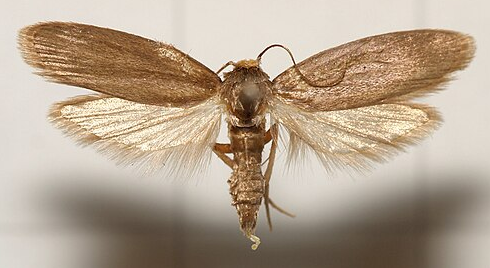
Wax Moths are among the most destructive pests affecting honey bee colonies and stored beekeeping equipment. The two primary species are the Greater Wax Moth (Galleria mellonella) and the Lesser Wax Moth (Achroia grisella). While adult moths themselves cause little direct damage, their larvae are highly destructive and capable of rapidly destroying valuable honeycomb by tunneling through wax, pollen stores, brood comb, and hive debris.
Wax moth infestations are particularly problematic in weak honey bee colonies, abandoned hives, and stored frames. Strong, healthy bee colonies can typically suppress wax moth activity, but weakened colonies may quickly become overwhelmed. Severe infestations can result in extensive comb destruction, contamination of honey, loss of brood, and even colony abandonment.
For beekeepers, wax moths represent one of the most important pests of hive equipment and stored comb throughout the world.
Taxonomy and Classification
- Kingdom: Animalia
- Phylum: Arthropoda
- Class: Insecta
- Order: Lepidoptera
- Family: Pyralidae
The two most important pest species are:
- Greater Wax Moth (Galleria mellonella)
- Lesser Wax Moth (Achroia grisella)
Both species are specialized pests of honey bee colonies and wax comb.
Identification
Adult Wax Moths
Adult wax moths are relatively inconspicuous insects that often go unnoticed.
- Wingspan: 15 mm to 35 mm.
- Color: Gray, brown, or tan.
- Body: Slender and soft-bodied.
- Behavior: Nocturnal and secretive.
Key Identification Features
- Narrow folded wings.
- Brownish-gray coloration.
- Rapid movement across hive surfaces.
- Mostly active at night.
Adult moths are frequently observed running rather than flying when disturbed.
Larvae
The larval stage causes all significant damage.
- Creamy-white coloration.
- Brown or dark head capsule.
- Soft caterpillar-like body.
- Greasy appearance.
- Numerous silk-producing glands.
Larvae are commonly found within comb tunnels and silk-lined galleries.
Distribution and Habitat
Wax moths occur worldwide wherever honey bees are maintained.
Common habitats include:
- Honey bee colonies.
- Stored hive equipment.
- Honey supers.
- Stored comb frames.
- Abandoned hives.
- Bee breeding facilities.
Warm temperatures and poorly protected comb provide ideal conditions for population growth.
Life Cycle
Wax moths undergo complete metamorphosis.
- Egg Stage: Females lay eggs in cracks, crevices, or directly within hive materials.
- Larval Stage: Larvae hatch and begin feeding on wax, pollen, and hive debris.
- Pupal Stage: Mature larvae spin cocoons and pupate within protected areas.
- Adult Stage: Moths emerge, mate, and begin a new generation.
Under favorable conditions, the complete life cycle may be completed within several weeks.
Feeding Habits
Wax moth larvae feed on materials found within bee colonies.
- Beeswax.
- Pollen stores.
- Bee cocoons.
- Propolis residues.
- Organic hive debris.
Older brood comb is particularly attractive because it contains additional proteins and nutrients from accumulated brood residues.
Damage and Economic Importance
Comb Destruction
The most significant damage is caused by larval tunneling.
- Destroyed wax foundations.
- Collapsed comb structures.
- Damaged brood cells.
- Reduced honey storage capacity.
Severe infestations can render entire frames unusable.
Silken Webbing
Larvae produce large amounts of silk.
- Web-covered frames.
- Blocked bee movement.
- Contaminated comb.
- Reduced hive efficiency.
Heavy silk accumulation is often one of the first signs of infestation.
Honey Contamination
Infestations may affect honey quality.
- Frass contamination.
- Webbing contamination.
- Larval debris.
- Reduced market value.
Damaged honeycomb often requires replacement.
Signs of Infestation
- Silken tunnels throughout comb.
- Cream-colored larvae.
- Accumulations of frass pellets.
- Webbing between frames.
- Damaged brood cells.
- Collapsed comb structures.
- Cocoons attached to wood surfaces.
Advanced infestations can leave comb completely destroyed and covered in dense silk.
Behavior and Conflict
Wax Digestion
Wax moth larvae possess specialized digestive capabilities.
- Consume beeswax.
- Digest hive residues.
- Exploit stored comb resources.
This unique adaptation allows them to thrive in honey bee environments.
Weak Colony Exploitation
Healthy colonies often suppress wax moth populations.
- Remove eggs.
- Attack larvae.
- Maintain hive sanitation.
Weak colonies lack sufficient worker populations to defend against infestations.
Stored Equipment Risk
Stored frames are especially vulnerable.
- No bee protection.
- Abundant food resources.
- Stable temperatures.
Entire inventories of stored comb can be destroyed if left unprotected.
Management and Prevention
Integrated management is essential for preventing wax moth damage.
Maintain Strong Colonies
- Healthy queens.
- Adequate worker populations.
- Proper nutrition.
- Disease management.
Strong colonies are the best natural defense against wax moths.
Cold Storage
- Freeze comb at -10°C or lower.
- Maintain freezing temperatures for at least 48 hours.
- Kill eggs, larvae, pupae, and adults.
Freezing is one of the most effective non-chemical control methods.
Storage Sanitation
- Inspect frames regularly.
- Remove damaged comb.
- Store equipment in sealed areas.
- Provide adequate ventilation.
Proper storage greatly reduces infestation risk.
Chemical Treatments
- Acetic acid fumigation.
- Sulfur-based treatments.
- Approved storage fumigants.
Chemical treatments should only be used according to beekeeping regulations and safety guidelines.
Research and Future Studies
Recent research has generated considerable interest in wax moth larvae due to their apparent ability to break down polyethylene plastics. Scientists are studying the enzymes responsible for wax digestion and their potential applications in plastic waste management.
Additional research focuses on biological control methods, improved storage practices, and understanding the interactions between wax moths and honey bee colony health.
Conclusion
Wax moths are among the most damaging pests encountered by beekeepers. Their larvae can rapidly destroy valuable honeycomb, contaminate hive products, and overwhelm weak colonies. Through strong colony management, proper storage practices, freezing treatments, and regular inspections, beekeepers can significantly reduce wax moth damage and protect both their bees and their equipment.