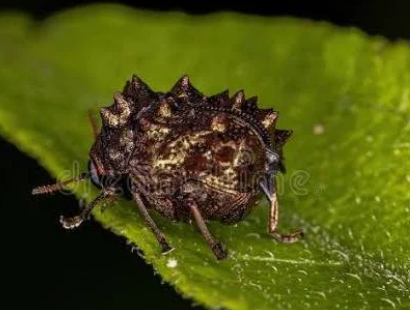
Warty Leaf Beetles is a common descriptive term used for various members of the family Chrysomelidae that possess rough, heavily sculptured, bumpy, or wart-like body surfaces. These beetles often rely on camouflage, mimicry, and protective body structures to avoid predators. Many species resemble bird droppings, plant debris, bark fragments, or other natural materials, making them difficult to detect on their host plants.
Among the most recognizable examples are the Tortoise Beetles (subfamily Cassidinae), which are famous for their shield-like bodies and unusual larvae that carry protective coverings made from shed skins and fecal material. While most warty leaf beetles are considered minor pests, both adults and larvae feed on plant foliage and can occasionally cause noticeable damage to ornamental plants, garden vegetables, and agricultural crops.
Although infestations are typically localized and rarely severe, heavy populations can reduce plant vigor and detract from the appearance of ornamental plantings.
Taxonomy and Classification
- Kingdom: Animalia
- Phylum: Arthropoda
- Class: Insecta
- Order: Coleoptera
- Family: Chrysomelidae
The family Chrysomelidae contains more than 35,000 species worldwide and includes many economically important plant-feeding beetles.
Groups commonly associated with the term “warty leaf beetles” include:
- Tortoise Beetles (Cassidinae)
- Spiny Leaf Beetles
- Armored Leaf Beetles
- Various cryptic tropical leaf beetles
Identification
Warty leaf beetles vary considerably in appearance depending on species.
- Length: 5 mm to 15 mm.
- Color: Brown, black, green, yellow, metallic, or mottled.
- Body Shape: Rounded, oval, or dome-shaped.
- Surface: Rough, bumpy, ridged, or wart-like.
Key Identification Features
- Heavily sculptured exoskeleton.
- Compact body shape.
- Hard protective wing covers.
- Excellent camouflage.
- Often found on host plant leaves.
Many species cling tightly to leaf surfaces and remain motionless when disturbed, making them difficult to spot.
Larvae
The larval stage often appears dramatically different from the adult.
- Flattened or squat body.
- Spiny or armored appearance.
- Protective fecal shields in some species.
- Found feeding on leaf surfaces.
Tortoise beetle larvae are especially known for carrying a shield of waste material and cast skins above their bodies.
Distribution and Habitat
Warty leaf beetles occur throughout the world.
Common habitats include:
- Gardens.
- Agricultural fields.
- Forests.
- Woodlands.
- Wetlands.
- Ornamental landscapes.
- Tropical vegetation.
Most species are closely associated with specific host plants and spend nearly their entire lives on those plants.
Life Cycle
Warty leaf beetles undergo complete metamorphosis.
- Egg Stage: Eggs are deposited on leaves or stems of host plants.
- Larval Stage: Larvae feed extensively on foliage.
- Pupal Stage: Pupation occurs on the host plant or in nearby protected areas.
- Adult Stage: Adults emerge and continue feeding and reproduction.
Several generations may occur annually in warm climates.
Feeding Habits
Both adults and larvae are herbivorous.
- Leaf tissues.
- Young foliage.
- Tender plant growth.
- Specific host plants.
Most species are highly specialized and feed on only a limited number of plant species.
Damage and Economic Importance
Leaf Feeding
The primary damage results from chewing activity.
- Round holes in leaves.
- Irregular feeding scars.
- Skeletonized foliage.
- Reduced leaf surface area.
Damage is usually cosmetic but can occasionally become significant.
Ornamental Plant Injury
Several species attack popular ornamental plants.
- Morning glory.
- Sweet potato vines.
- Landscape ornamentals.
- Native flowering plants.
Heavy feeding may reduce aesthetic value in gardens.
Agricultural Impact
Some species occasionally affect crop production.
- Leaf loss.
- Reduced photosynthesis.
- Lower plant vigor.
Most species are considered minor agricultural pests.
Behavior and Conflict
Camouflage and Mimicry
One of the most remarkable characteristics of warty leaf beetles is their ability to avoid detection.
- Resemble bird droppings.
- Mimic plant debris.
- Blend with bark and leaves.
- Remain motionless when threatened.
This camouflage significantly reduces predation.
Host Specialization
Most species exhibit strong host preferences.
- Restricted plant choices.
- Localized infestations.
- Limited spread between plant species.
This specialization often limits the severity of damage.
Larval Defenses
Some larvae employ unusual protective strategies.
- Fecal shields.
- Spines.
- Cryptic coloration.
- Behavioral camouflage.
These adaptations help deter predators and parasitoids.
Signs of Infestation
- Small holes in leaves.
- Skeletonized foliage.
- Visible beetles on leaf undersides.
- Larvae carrying debris shields.
- Localized feeding damage.
Inspection of the undersides of leaves often reveals both adults and larvae.
Management and Prevention
Integrated Pest Management (IPM) is usually sufficient for control.
Physical Removal
- Hand-pick adults.
- Remove larvae.
- Destroy heavily infested leaves.
This is often the most effective method for small infestations.
Biological Control
- Predatory insects.
- Parasitic wasps.
- Birds.
- Natural predators.
Natural enemies frequently keep populations under control.
Chemical Control
- Insecticidal soaps.
- Horticultural oils.
- Targeted contact insecticides.
Chemical treatments are rarely necessary except during unusually heavy infestations.
Research and Future Studies
Scientists continue studying the evolution of camouflage, defensive morphology, and host-plant specialization among leaf beetles. Particular attention has been given to the unique fecal shield defense used by tortoise beetle larvae and its effectiveness against predators.
Research also focuses on plant-insect interactions and the chemical defenses used by both beetles and their host plants.
Conclusion
Warty leaf beetles are unusual members of the leaf beetle family known for their heavily armored appearance, remarkable camouflage, and specialized feeding habits. While they occasionally damage ornamental plants and crops, most species are relatively minor pests whose populations remain localized. Their fascinating adaptations, including mimicry and defensive larval shields, make them some of the most intriguing insects found in gardens and natural ecosystems.