Overview
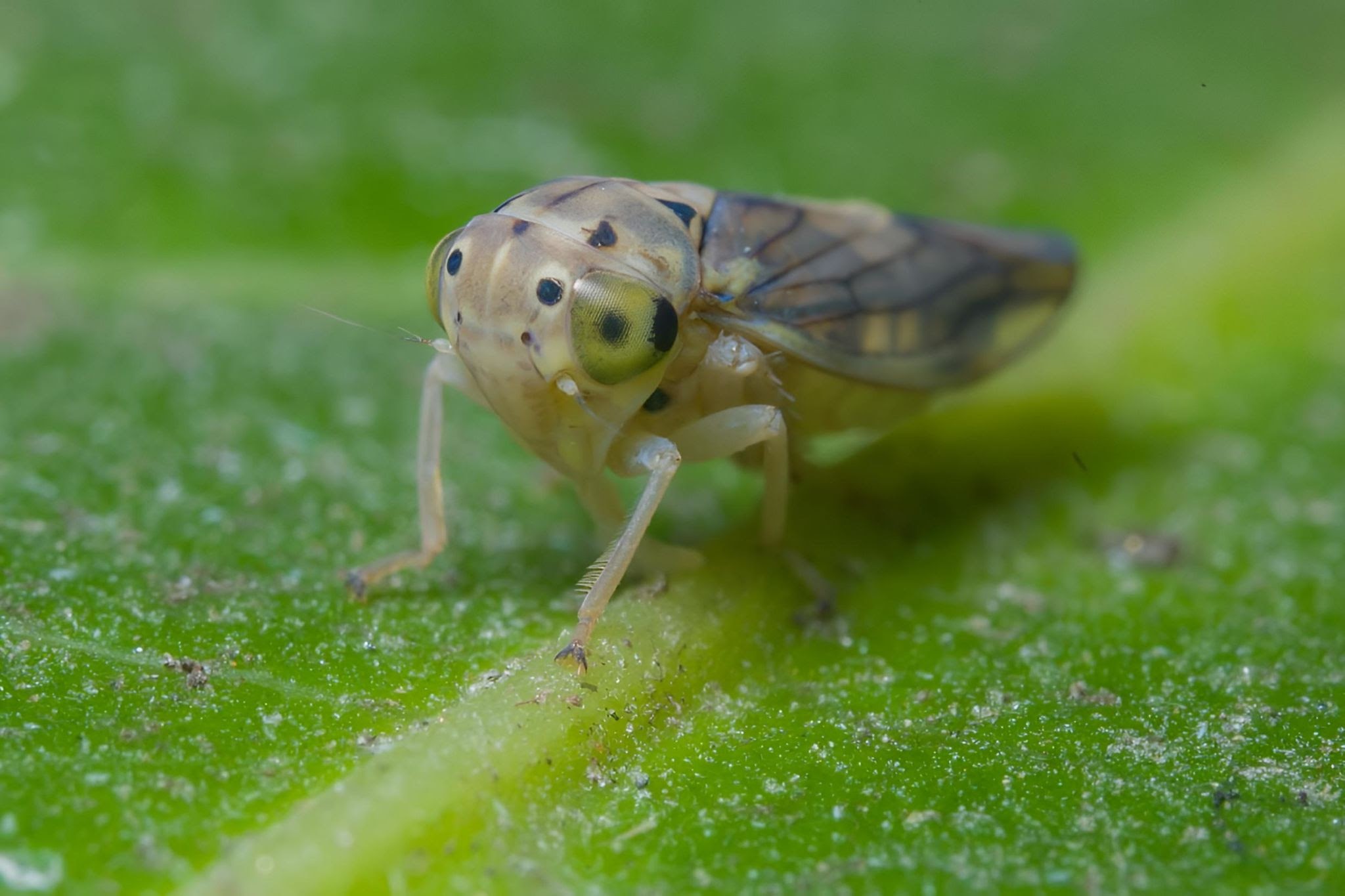
Vineyard Leafhoppers are small sap-feeding insects that represent some of the most common and economically important pests of grapevines worldwide. Species such as the Grape Leafhopper (Erythroneura comes) and related leafhoppers feed on grape foliage by piercing leaf tissues and extracting cell contents. Their feeding causes characteristic stippling damage that reduces photosynthetic efficiency and can negatively impact grape quality and yield.
Beyond direct feeding injury, certain vineyard leafhopper species are important vectors of plant pathogens, including phytoplasmas responsible for serious grapevine diseases. Because of their ability to reproduce rapidly and move easily throughout vineyards, leafhoppers remain a major concern for commercial grape growers and home vineyard managers alike.
Taxonomy and Classification
- Kingdom: Animalia
- Phylum: Arthropoda
- Class: Insecta
- Order: Hemiptera
- Family: Cicadellidae
Leafhoppers belong to one of the largest families of true bugs. Thousands of species exist worldwide, many of which feed on agricultural crops, ornamental plants, and native vegetation.
Physical Description
Adult vineyard leafhoppers typically measure between 3 and 5 millimeters in length.
Adult Characteristics
- Shape: Wedge-shaped body that narrows toward the head.
- Color: Usually pale yellow, cream, greenish-yellow, or marked with red patterns.
- Wings: Transparent wings held roof-like over the body.
- Movement: Quick jumpers and strong flyers when disturbed.
Nymph Characteristics
- Color: Pale yellow or whitish.
- Wingless: Immature stages lack fully developed wings.
- Movement: Often move sideways or backward in a crab-like fashion.
Nymphs are commonly found on the undersides of grape leaves where they feed and develop.
Distribution and Habitat
Vineyard leafhoppers occur throughout grape-growing regions worldwide and are especially common in temperate climates where commercial vineyards are concentrated.
Common habitats include:
- Commercial vineyards
- Home grape arbors
- Wineries
- Backyard gardens
- Wild grape habitats
Most feeding activity occurs on the undersides of leaves where insects are protected from weather and predators.
Life Cycle
Egg Stage
Females insert eggs directly into leaf tissue where they remain protected until hatching.
Nymph Stage
Nymphs emerge and begin feeding immediately. They pass through several developmental stages called instars.
Adult Stage
After completing development, adults emerge and continue feeding, mating, and laying eggs.
Depending on climate and species, multiple generations may occur during a single growing season.
Behavior and Feeding Habits
Unlike aphids and other sap-feeding insects that feed directly from vascular tissues, vineyard leafhoppers feed primarily on leaf mesophyll cells.
Using specialized piercing-sucking mouthparts, they puncture individual cells and extract their contents. This feeding behavior destroys chlorophyll-containing tissues and produces the characteristic stippled appearance associated with infestations.
Leafhoppers are highly mobile insects and can quickly move throughout a vineyard, making infestations difficult to contain once populations become established.
Damage and Economic Importance
Leaf Stippling
The earliest symptom of infestation is the appearance of tiny white or yellow spots on leaves.
- White speckling
- Yellow discoloration
- Bronzing of foliage
- Premature leaf aging
As feeding continues, stippling becomes more extensive and entire leaves may appear faded or scorched.
Reduced Photosynthesis
Heavy infestations reduce the vine’s ability to produce energy through photosynthesis.
This can result in:
- Reduced vine vigor
- Lower sugar accumulation in grapes
- Reduced fruit quality
- Decreased yields
- Poor winter hardiness
Premature Leaf Drop
Severely damaged leaves may drop before the growing season ends, further weakening vines.
Disease Transmission
One of the most serious concerns associated with certain vineyard leafhoppers is their ability to transmit plant diseases.
Several species serve as vectors for phytoplasmas and other pathogens that cause:
- Flavescence Dorée
- Grapevine yellows diseases
- Reduced vine productivity
- Vine decline and death
Infected insects acquire pathogens while feeding on diseased vines and subsequently spread them to healthy plants.
Signs of Infestation
- White or yellow stippling on leaves
- Nymphs on leaf undersides
- Rapidly jumping adults when foliage is disturbed
- Tiny shed skins attached to leaves
- Premature yellowing or browning of foliage
- Reduced vine vigor
Management and Control (IPM)
Monitoring
Regular scouting is essential for detecting populations before damage becomes severe.
- Inspect leaf undersides weekly.
- Monitor nymph populations.
- Use yellow sticky traps when appropriate.
- Track population trends throughout the season.
Biological Control
Numerous natural enemies help suppress vineyard leafhopper populations.
- Parasitic wasps
- Lacewings
- Minute pirate bugs
- Predatory spiders
- Lady beetles
Preserving beneficial insects is a critical component of successful vineyard IPM programs.
Cultural Control
- Remove infected vines when disease is present.
- Control alternate host plants and weeds.
- Maintain proper vineyard sanitation.
- Promote airflow through pruning and canopy management.
Chemical Control
When populations exceed economic thresholds, targeted insecticides may be necessary.
Treatments are generally most effective against immature nymph stages, which are less mobile and more susceptible than adults.
Applications should be timed carefully to minimize impacts on beneficial insects and pollinators.
Natural Enemies
Healthy vineyard ecosystems often contain numerous predators and parasitoids that naturally regulate leafhopper populations.
Conserving these beneficial organisms can significantly reduce the need for chemical intervention.
Economic Impact
Leafhopper infestations can reduce grape quality, lower sugar content, delay ripening, and increase management costs. In regions where vector-borne grapevine diseases occur, economic losses can become substantial due to vine removal, reduced productivity, and long-term vineyard decline.
Conclusion
Vineyard Leafhoppers are important grape pests that damage vines through direct feeding and, in some cases, disease transmission. Their characteristic stippling damage reduces photosynthetic efficiency and can affect fruit quality and yield. Effective management relies on regular monitoring, conservation of beneficial insects, cultural practices, and carefully timed interventions when necessary. An integrated pest management approach remains the most effective strategy for protecting vineyard health and productivity.