Overview
Vineleaf Skeletonizers most commonly refer to the Grapeleaf Skeletonizer (Harrisina americana), a destructive moth pest that attacks grapevines and related plants. The larvae are notorious for feeding in groups and consuming leaf tissue while leaving the network of veins intact, a feeding pattern known as skeletonization. Heavy infestations can significantly reduce vine vigor, diminish fruit quality, and lower grape production.
These caterpillars are important pests in vineyards, backyard grape plantings, and ornamental landscapes where grapevines or Virginia creeper are grown. Because larvae feed gregariously and can rapidly defoliate vines, early detection is essential for effective management.
Taxonomy and Classification
Grapeleaf Skeletonizers belong to a family of moths known for their narrow wings and often metallic coloration.
- Kingdom: Animalia
- Phylum: Arthropoda
- Class: Insecta
- Order: Lepidoptera
- Family: Zygaenidae
- Genus: Harrisina
- Species: Harrisina americana
Like all moths, Grapeleaf Skeletonizers undergo complete metamorphosis consisting of egg, larva, pupa, and adult stages.
Physical Description
Adult Moth
Adult Grapeleaf Skeletonizers are attractive but often overlooked insects.
- Wingspan: 25–35 mm
- Color: Bluish-black with metallic reflections
- Body: Slender and elongated
- Wings: Narrow and dark-colored
- Activity: Most active during warm months
The metallic sheen and streamlined appearance distinguish them from many common vineyard moth species.
Larval Stage
The caterpillar stage causes all significant damage.
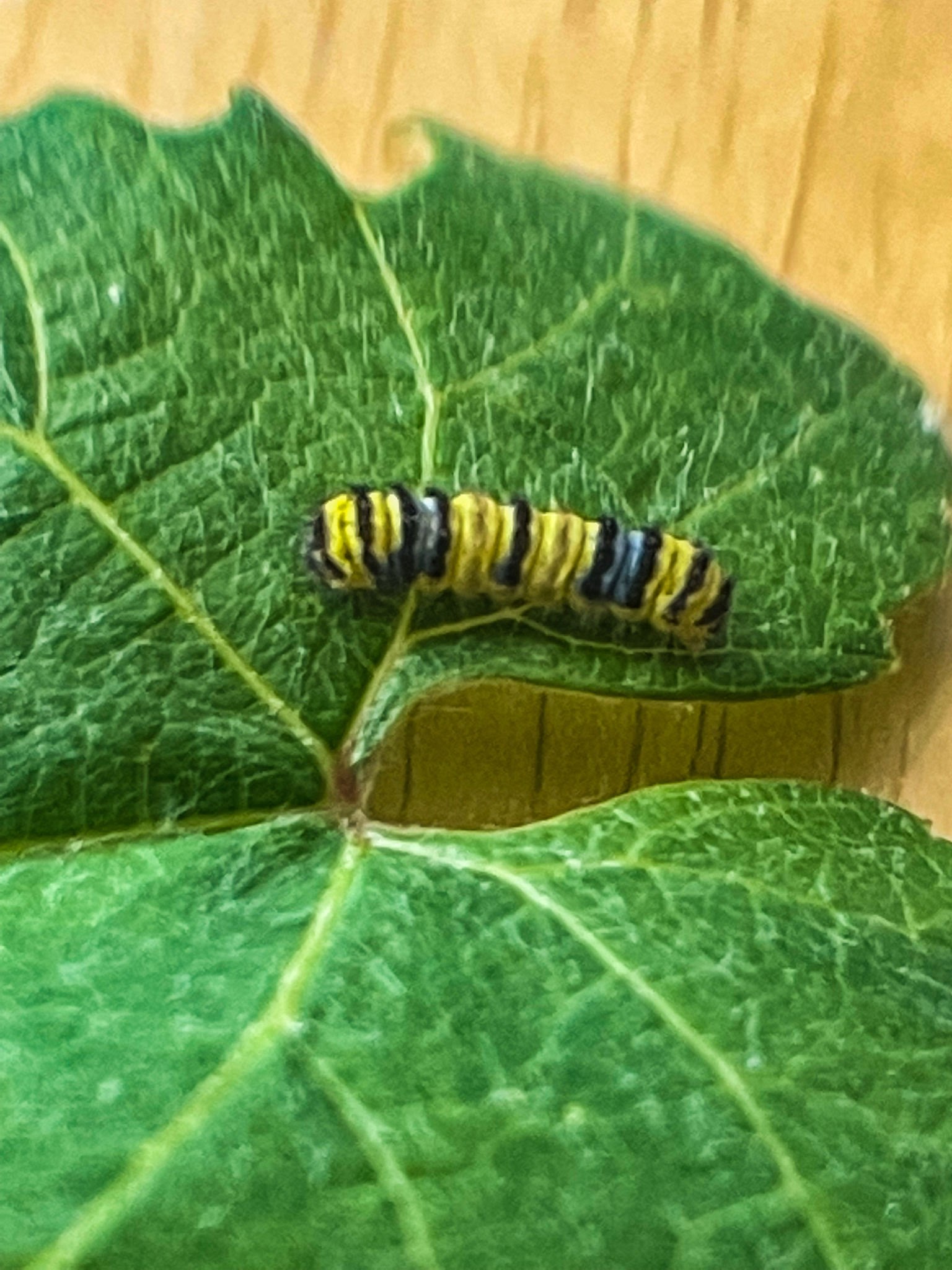
- Length: Up to 20 mm
- Color: Yellowish with dark transverse bands
- Body: Covered with short dark hairs
- Behavior: Feeds in groups
- Location: Primarily on leaf undersides
The striped appearance and synchronized feeding behavior make infestations relatively easy to recognize.
Distribution and Habitat
Vineleaf Skeletonizers are found throughout parts of North America where grape hosts are available.
Common habitats include:
- Commercial vineyards
- Backyard grape plantings
- Home gardens
- Ornamental landscapes
- Virginia creeper plantings
- Arbors and trellises
- Wild grape habitats
Warm climates generally support larger populations and multiple generations per year.
Life Cycle
Egg Stage
Female moths deposit eggs on grape leaves, usually on the undersides where developing larvae are protected from environmental exposure.
Larval Stage
After hatching, caterpillars begin feeding immediately. Young larvae remain together and consume leaf tissue in organized groups.
This gregarious feeding pattern allows rapid destruction of foliage.
Pupal Stage
When mature, larvae pupate in protective cocoons found in leaf litter, bark crevices, or sheltered locations around the vine.
Adult Stage
Adults emerge, mate, and begin a new generation. Several generations may occur annually in favorable climates.
Behavior and Feeding Habits
One of the most distinctive features of Grapeleaf Skeletonizers is their cooperative feeding behavior.
Group Feeding
Young larvae feed side-by-side on leaf undersides, consuming soft green tissue while leaving veins untouched.
The result is a lace-like leaf structure that eventually dries and turns brown.
Host Plants
Preferred hosts include:
- Cultivated grapes (Vitis spp.)
- Wild grapes
- Virginia creeper
- Related members of the grape family
Heavy infestations often spread rapidly from one vine to adjacent plants.
Defensive Adaptations
The larvae contain compounds that make them distasteful to many predators. Their coloration may serve as a warning signal to potential enemies.
Damage and Economic Importance
Leaf Skeletonization
The most obvious symptom is skeletonized foliage.
Damaged leaves often appear:
- Brown or translucent
- Lace-like in appearance
- Covered with feeding caterpillars
- Reduced to veins and leaf framework
Reduced Photosynthesis
Loss of leaf tissue dramatically reduces photosynthetic capacity.
Consequences include:
- Reduced vine vigor
- Slower growth
- Poor fruit development
- Lower sugar accumulation in grapes
- Reduced winter hardiness
Defoliation
Large infestations can strip substantial portions of a vine’s canopy.
Repeated defoliation weakens vines and increases susceptibility to environmental stress.
Economic Impact
Commercial vineyards can experience significant losses when infestations occur near fruit maturation. Reduced leaf area directly affects fruit quality and yield.
Signs of Infestation
Common indicators include:
- Skeletonized grape leaves
- Groups of striped caterpillars
- Brown, papery foliage
- Visible feeding lines on leaves
- Defoliated vines
- Clusters of larvae on leaf undersides
Early detection greatly improves management success.
Natural Enemies
Numerous beneficial organisms help suppress Grapeleaf Skeletonizer populations.
- Parasitic wasps
- Tachinid flies
- Predatory insects
- Spiders
- Birds
- Beneficial microbial pathogens
Conserving these natural enemies can significantly reduce outbreak potential.
Management and Control (IPM)
Monitoring
Inspect grape leaves regularly during the growing season.
- Check undersides of leaves
- Look for feeding groups
- Watch for early skeletonization
- Record infestation levels
Physical Control
Small infestations can often be controlled through manual removal.
- Remove infested leaves
- Destroy larvae and cocoons
- Dispose of heavily damaged foliage
- Remove overwintering debris
Biological Control
Bacillus thuringiensis (Bt) remains one of the most effective biological treatments.
- Targets caterpillars specifically
- Safe for most beneficial insects
- Works best on young larvae
- Compatible with IPM programs
Cultural Control
- Maintain vineyard sanitation
- Remove leaf litter after harvest
- Prune for improved air circulation
- Monitor host plants regularly
- Encourage beneficial insects
Chemical Control
When populations exceed economic thresholds, targeted insecticides may be used. Treatments are most effective against young larvae before extensive damage occurs.
Research and Conservation
Current research focuses on enhancing biological control programs and reducing pesticide dependence in vineyards. Scientists continue to study natural enemy complexes that provide long-term suppression of Grapeleaf Skeletonizer populations.
Sustainable vineyard management practices increasingly emphasize conservation of parasitoids and predators that naturally regulate these pests.
Conclusion
Vineleaf Skeletonizers, particularly the Grapeleaf Skeletonizer (Harrisina americana), are important vineyard pests capable of causing severe foliage damage through their distinctive skeletonizing feeding behavior. Early detection, regular monitoring, biological controls such as Bt, and conservation of natural enemies provide effective management while supporting sustainable grape production. Maintaining healthy vines and implementing integrated pest management practices remain the most reliable strategies for preventing significant losses.