Overview
Vinegar Flies (Drosophila spp.), commonly known as fruit flies, are small flies that thrive around fermenting fruits, vegetables, beverages, and other decaying organic materials. These insects are among the most common nuisance pests found in homes, restaurants, grocery stores, food-processing facilities, and commercial kitchens.
While most vinegar flies primarily infest overripe or damaged produce, certain species such as the Spotted Wing Drosophila (Drosophila suzukii) have become major agricultural pests because they attack healthy, ripening fruits before harvest.
Their rapid reproductive rate, ability to exploit tiny food sources, and tendency to appear in large numbers make vinegar flies a persistent nuisance and an important pest management concern worldwide.
Taxonomy and Classification
Vinegar flies belong to the order Diptera, the group that includes all true flies. The family Drosophilidae contains thousands of species distributed across nearly every continent.
- Kingdom: Animalia
- Phylum: Arthropoda
- Class: Insecta
- Order: Diptera
- Family: Drosophilidae
- Genus: Drosophila
The best-known species is Drosophila melanogaster, which is widely used in genetics and biological research. Another important species, Drosophila suzukii, has become a significant pest of berries and orchard fruits.
Physical Description
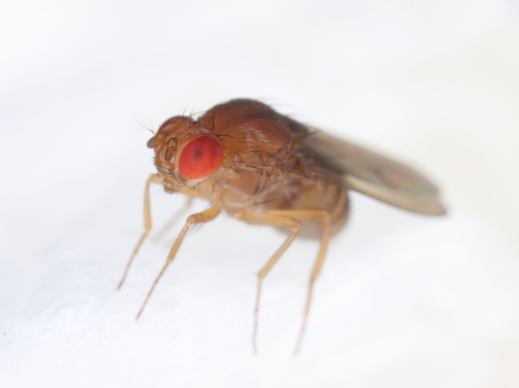
Adult vinegar flies are tiny insects measuring approximately 2 to 4 millimeters in length.
Adult Flies
- Size: 2–4 mm long
- Color: Yellowish-brown, tan, or light brown
- Eyes: Bright red or reddish-orange
- Body: Compact with clear wings
- Movement: Slow flying and hovering behavior
Adults are commonly seen hovering around fruit bowls, garbage containers, drains, recycling bins, and beverage containers.
Spotted Wing Drosophila
Male spotted wing drosophila possess a distinctive dark spot near the tip of each wing, making identification easier.
Larvae
- Small white maggots
- Legless and cylindrical
- Usually found beneath fruit skins
- Feed within fermenting or damaged produce
Distribution and Habitat
Vinegar flies are found worldwide and occur anywhere fermenting organic matter is present.
Common habitats include:
- Kitchens
- Restaurants
- Bars and breweries
- Garbage areas
- Recycling bins
- Compost piles
- Fruit markets
- Food warehouses
- Wineries
- Orchards and berry fields
Even small amounts of fermenting residue can support large populations.
Life Cycle
One reason vinegar flies become problematic is their extremely rapid life cycle.
Egg Stage
Females lay eggs directly on fermenting fruits, vegetables, liquids, or organic debris.
A single female may lay hundreds of eggs during her lifetime.
Larval Stage
Eggs hatch into tiny white larvae that immediately begin feeding on yeasts, microorganisms, and decaying plant material.
This stage lasts only a few days under warm conditions.
Pupal Stage
Larvae pupate on nearby surfaces or within the food source.
Adult Stage
Adults emerge ready to reproduce quickly, often within 8 to 10 days from egg to adult during favorable conditions.
Because generations overlap continuously, populations can explode in a short period.
Behavior and Conflict
The primary conflict associated with vinegar flies involves food contamination, nuisance activity, and rapid population growth.
Fermentation Attraction
Vinegar flies are strongly attracted to:
- Acetic acid
- Alcohols
- Yeasts
- Fermenting sugars
- Overripe fruit odors
These chemical cues help flies locate breeding sites quickly.
Rapid Reproduction
Short generation times allow populations to increase dramatically within days.
A small overlooked food source can support hundreds or even thousands of flies.
Food Contamination
Although vinegar flies do not bite or sting, they frequently land on food preparation surfaces and organic waste, potentially spreading spoilage organisms throughout kitchens and food facilities.
Damage and Economic Importance
Residential Impact
In homes, vinegar flies are primarily nuisance pests.
Problems include:
- Infestation of fruit bowls
- Contamination of beverages
- Kitchen nuisance activity
- Breeding in drains and garbage containers
Commercial Impact
Food businesses may experience:
- Customer complaints
- Food contamination concerns
- Sanitation violations
- Product spoilage
Agricultural Impact
Spotted Wing Drosophila presents a much greater threat than ordinary vinegar flies.
Unlike most species that attack damaged fruit, this invasive pest lays eggs in healthy ripening fruit such as:
- Strawberries
- Blueberries
- Raspberries
- Blackberries
- Cherries
- Grapes
Larval feeding renders fruit unmarketable and can result in significant economic losses.
Signs of Infestation
Common indicators include:
- Small flies hovering around fruit
- Flies emerging from garbage areas
- Maggots inside overripe produce
- Activity around drains
- Large numbers near recycling bins
- Presence around alcoholic beverages
Because breeding sources may be hidden, infestations often persist until the source is located and eliminated.
Management and Control (IPM)
Sanitation
Sanitation is the most important component of vinegar fly control.
- Remove overripe fruit immediately
- Clean spills promptly
- Empty garbage regularly
- Wash recycling containers
- Clean floor drains
- Eliminate standing organic residues
Source Elimination
Finding and removing breeding sites is essential.
Common overlooked sources include:
- Forgotten produce
- Drain sludge
- Garbage disposals
- Recycling bins
- Beer or wine residues
- Compost containers
Trapping
Simple vinegar traps can significantly reduce adult populations.
A common trap consists of:
- Apple cider vinegar
- A small container
- A few drops of dish soap
The vinegar attracts flies while the soap breaks surface tension, causing them to drown.
Commercial Control
Restaurants, food-processing facilities, and warehouses may utilize:
- Professional monitoring programs
- Residual insecticide applications
- Drain treatments
- Targeted sanitation protocols
Scientific Importance
Drosophila melanogaster is one of the most important organisms in scientific history.
For more than a century, researchers have used fruit flies to study:
- Genetics
- Inheritance
- Development
- Aging
- Disease mechanisms
- Evolution
Many discoveries in modern biology originated from research involving vinegar flies.
Conclusion
Vinegar Flies are common nuisance pests associated with fermenting fruits, vegetables, and organic materials. Their rapid reproduction and attraction to food sources allow infestations to develop quickly in homes and commercial settings. While most species primarily affect overripe produce, invasive species such as the Spotted Wing Drosophila can cause major agricultural losses. Effective management depends on sanitation, source elimination, monitoring, and prompt removal of breeding sites.