Overview
Vine Weevils (Otiorhynchus sulcatus) are among the most destructive pests of ornamental plants, nursery crops, and soft fruits. While the adult beetles cause recognizable damage by feeding on leaves, the greatest threat comes from their larvae, which feed on roots and crowns beneath the soil surface.
Vine weevils are particularly notorious in container gardens, greenhouses, nurseries, and landscaped settings where they can rapidly build large populations. Because much of their life cycle occurs hidden within the soil, infestations often go unnoticed until plants suddenly wilt, decline, or collapse.
The combination of hidden root damage and visible leaf feeding makes vine weevils one of the most important pests affecting ornamental horticulture worldwide.
Taxonomy and Classification
Vine weevils belong to the large weevil family Curculionidae, a group known for their distinctive snouts and plant-feeding habits.
- Kingdom: Animalia
- Phylum: Arthropoda
- Class: Insecta
- Order: Coleoptera
- Family: Curculionidae
- Species: Otiorhynchus sulcatus
One of the most remarkable characteristics of vine weevils is their ability to reproduce through parthenogenesis. In many populations, females produce viable eggs without mating, meaning every adult can contribute to population growth.
Physical Description
Adult Vine Weevil
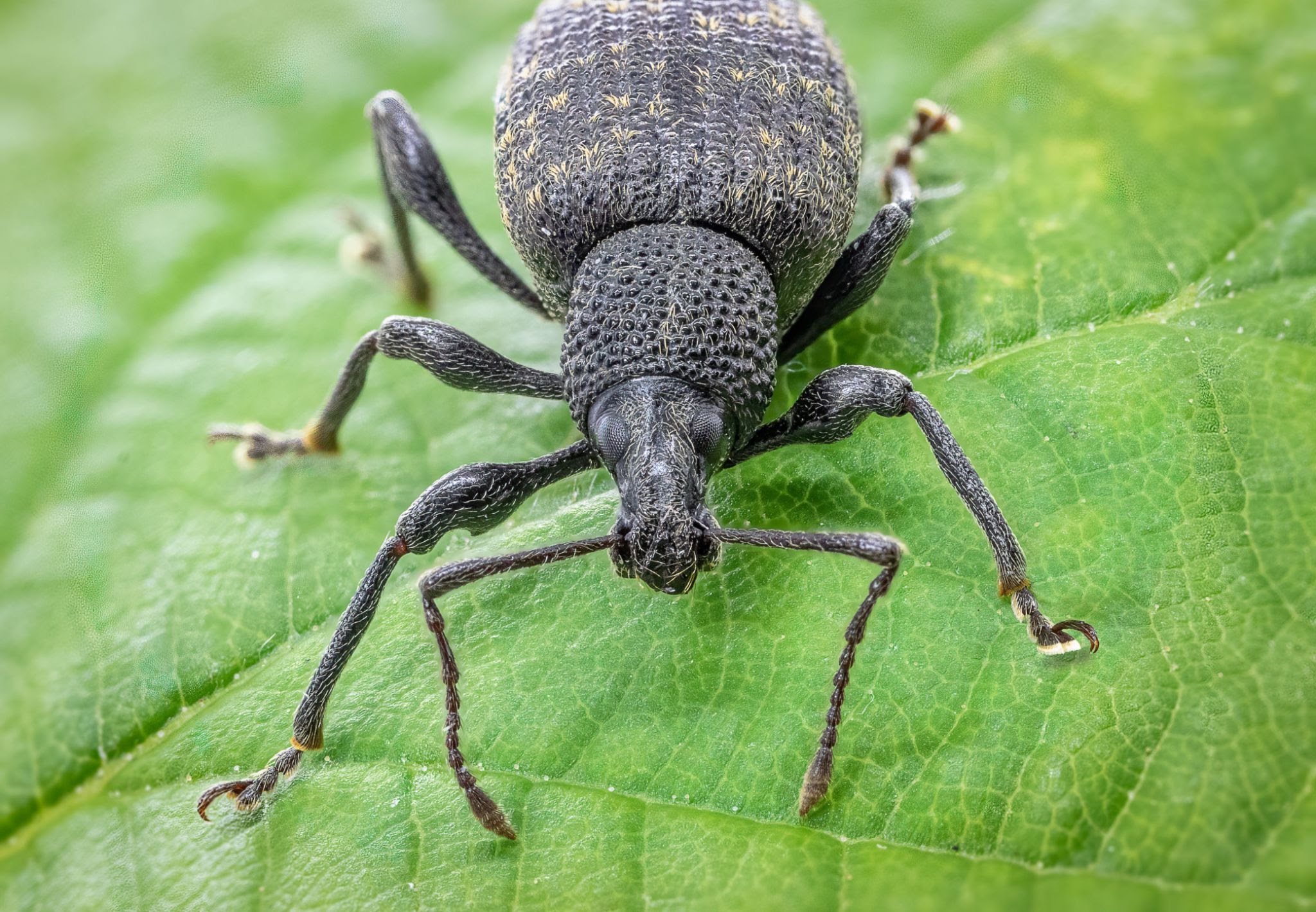
Adult beetles typically measure between 8 and 10 millimeters in length.
- Color: Dull black to dark brown
- Body Shape: Oval and robust
- Snout: Short, broad snout typical of weevils
- Wings: Flightless
- Surface: Covered with tiny hairs and scales that create a dusty appearance
Adults are primarily nocturnal and spend daylight hours hidden beneath mulch, containers, debris, or within cracks in the soil.
Larvae
The larval stage is responsible for the most severe damage.
- Color: Creamy white
- Shape: Legless, C-shaped grub
- Head: Distinct brown head capsule
- Location: Soil surrounding roots and crowns
Larvae can be found feeding directly on roots, root collars, and underground stems.
Distribution and Habitat
Vine weevils are widespread throughout temperate regions and have become established in many parts of North America, Europe, and other horticultural regions.
Common habitats include:
- Garden beds
- Landscape plantings
- Nurseries
- Greenhouses
- Container gardens
- Soft fruit fields
- Groundcover plantings
They thrive in environments that provide moist soil and abundant host plants.
Host Plants
Vine weevils feed on a wide variety of ornamental and edible plants.
Common hosts include:
- Strawberries
- Raspberries
- Grapes
- Rhododendrons
- Azaleas
- Heuchera
- Primrose
- Cyclamen
- Begonias
- Yew
- Euonymus
- Hydrangeas
Container-grown ornamentals are especially vulnerable because larvae can quickly consume the entire root system within confined soil volumes.
Life Cycle
Vine weevils undergo complete metamorphosis consisting of egg, larva, pupa, and adult stages.
Egg Stage
Females lay hundreds of eggs in soil or growing media during spring and summer.
The eggs are tiny, round, and initially pale before darkening as they mature.
Larval Stage
After hatching, larvae immediately begin feeding on roots.
This stage often lasts throughout autumn and winter, making it the longest and most damaging phase of the life cycle.
Pupal Stage
Pupation occurs within the soil during spring. Developing pupae remain protected underground until adult emergence.
Adult Stage
Adults emerge in late spring and summer and begin feeding on foliage at night.
Because adults are flightless, infestations often spread through movement of infested plants, soil, or nursery stock.
Damage and Economic Importance
Adult Feeding Damage
Adult vine weevils create one of the most recognizable feeding patterns among garden pests.
Typical symptoms include:
- Distinctive scalloped leaf margins
- Notches along leaf edges
- Cosmetic foliage damage
- Reduced ornamental appearance
Although unsightly, adult feeding alone rarely kills plants.
Larval Root Damage
The larval stage causes the most serious economic losses.
- Root pruning
- Crown girdling
- Reduced nutrient uptake
- Water stress
- Plant collapse
Heavily infested plants may wilt suddenly despite adequate watering. In severe cases, entire plants can die within a short period.
Container-grown plants are especially vulnerable because larvae can consume nearly all available roots.
Signs of Infestation
Common indicators of vine weevil activity include:
- Scalloped leaf edges
- Missing sections along leaf margins
- Sudden wilting
- Poor plant growth
- Yellowing foliage
- Loose plants with damaged roots
- White grubs present in soil
Inspecting root balls often reveals larvae feeding directly on roots and crowns.
Management and Control (IPM)
Monitoring
Regular inspection is critical for early detection.
- Check leaves for notching damage
- Inspect container soil for larvae
- Monitor susceptible ornamentals
- Search for adults at night using a flashlight
Biological Control
Beneficial nematodes are among the most effective control options.
Species commonly used include:
- Heterorhabditis bacteriophora
- Steinernema kraussei
These microscopic organisms seek out and kill vine weevil larvae within the soil.
Nematode applications are most effective when soil temperatures and moisture levels are appropriate.
Cultural Controls
- Inspect nursery stock before planting
- Avoid moving infested containers
- Remove heavily infested plants
- Maintain healthy root systems
- Reduce unnecessary plant stress
Chemical Control
Targeted insecticides may be used against adults before significant egg laying occurs.
Professional growers may also utilize soil treatments when larval populations exceed economic thresholds.
Economic Impact
Vine weevils cause substantial losses in ornamental horticulture and nursery production. Damaged plants often become unsalable due to root destruction and visible foliage injury.
Commercial losses may include:
- Plant replacement costs
- Reduced nursery value
- Lower crop yields
- Increased pest management expenses
- Landscape maintenance costs
Because infestations are frequently discovered only after severe root damage has occurred, economic impacts can be significant.
Research and Future Management
Current research focuses on improving biological control methods, refining nematode application timing, and developing more sustainable management programs.
Scientists are also exploring enhanced monitoring systems and plant varieties that exhibit greater resistance to vine weevil feeding.
Conclusion
Vine Weevils are highly destructive pests that attack a wide range of ornamental plants and soft fruits. While adults create distinctive notched leaves, the hidden larval stage poses the greatest threat through extensive root feeding and crown damage. Early detection, biological controls such as beneficial nematodes, and integrated pest management practices remain the most effective strategies for preventing severe infestations and protecting valuable plants.