Overview
Vine Stalk Borers are a group of wood-boring insects whose larvae tunnel into the trunks, cordons, and permanent woody structures of grapevines. These pests may include clearwing moth larvae, longhorn beetle larvae, weevils, and other wood-boring insects that spend much of their lives hidden inside the vine. Unlike leaf-feeding pests that cause visible damage to foliage, vine stalk borers attack the structural framework of the plant, making them among the most destructive pests encountered in vineyards.
The primary threat posed by vine stalk borers is their ability to damage the vine’s vascular system. As larvae tunnel through woody tissue, they interfere with the movement of water and nutrients, weaken structural integrity, and create entry points for diseases. Severe infestations can result in declining vine health, reduced fruit production, broken cordons, and eventual vine death.
Taxonomy and Classification
The term “Vine Stalk Borer” does not refer to a single species but rather to several groups of insects capable of boring into grapevine trunks and stems.
- Kingdom: Animalia
- Phylum: Arthropoda
- Class: Insecta
- Order: Coleoptera (Beetles) and Lepidoptera (Moths)
- Common Groups: Clearwing Borers, Longhorn Beetles, Flatheaded Borers, and Cane Borers
Most species undergo complete metamorphosis with egg, larva, pupa, and adult stages.
Physical Description
Adult Stage
Adult appearance varies considerably depending on the species involved.
- Clearwing moths often resemble wasps.
- Longhorn beetles possess elongated bodies and long antennae.
- Wood-boring beetles are typically dark brown or black.
- Many adults are active during warm months.
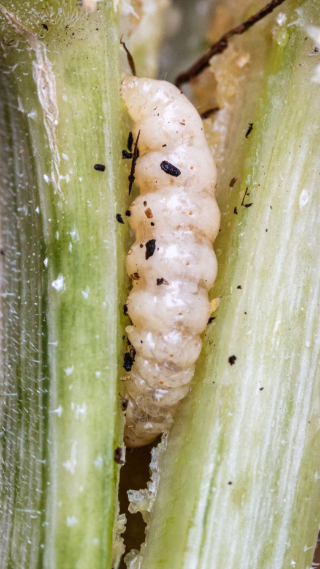
Larval Stage
The larval stage causes virtually all economic damage.
- Color: Creamy white or pale yellow.
- Shape: Soft-bodied grub.
- Head: Brown hardened head capsule.
- Length: Typically 10–50 millimeters depending on species.
Larvae remain hidden inside trunks and cordons where they are protected from predators and most pesticide applications.
Distribution and Habitat
Vine stalk borers are found throughout grape-growing regions worldwide. They occur in both commercial vineyards and backyard plantings.
Preferred habitats include:
- Older vineyards
- Weak or stressed vines
- Recently pruned grapevines
- Damaged trunks and cordons
- Areas with dead or decaying wood
Vines suffering from drought, disease, winter injury, or mechanical damage are particularly attractive to egg-laying females.
Life Cycle
Egg Stage
Adult females deposit eggs in bark crevices, wounds, pruning cuts, or damaged tissue.
Larval Stage
After hatching, larvae bore directly into the vine and begin feeding internally.
This stage may last from several months to multiple years depending on the species.
Pupal Stage
Pupation occurs within tunnels excavated in the wood.
Adult Emergence
Adults emerge through circular exit holes and begin the reproductive cycle again.
Many species complete one generation annually, although some require two or three years to develop fully.
Damage and Economic Importance
Vascular System Disruption
The most serious damage occurs when larvae tunnel through xylem and phloem tissues.
This can restrict:
- Water movement
- Nutrient transport
- Sugar distribution
- Overall vine vigor
Structural Weakening
As tunnels enlarge, trunks and cordons become weakened and prone to breakage.
Heavy fruit loads, wind, or vineyard operations may cause damaged sections to snap unexpectedly.
Cane and Cordon Dieback
Entire portions of the vine may gradually decline and die.
Symptoms often include:
- Wilting shoots
- Poor leaf growth
- Reduced fruit set
- Dead arms or cordons
- Uneven canopy development
Secondary Disease Problems
Borer tunnels create entry points for fungi and bacteria.
These infections can lead to:
- Wood decay
- Trunk diseases
- Cankers
- Accelerated vine decline
Yield Reduction
Infested vines often produce fewer and smaller grape clusters. Fruit quality may decline due to reduced vine vigor and impaired nutrient transport.
Signs of Infestation
Early detection is often difficult because larvae remain concealed inside wood.
Common signs include:
- Sawdust-like frass near the trunk.
- Small round entrance or exit holes.
- Weeping sap from damaged areas.
- Sunken or cracked bark.
- Cordons dying back unexpectedly.
- Reduced shoot growth.
- Unexplained vine decline.
Cutting open affected wood often reveals galleries and feeding tunnels containing larvae.
Behavior
Vine stalk borers are highly cryptic pests.
- Hidden Feeding: Most of their life is spent inside wood.
- Long Development: Damage accumulates slowly over time.
- Protected Habitat: Internal tunnels shield larvae from pesticides.
- Preference for Injured Tissue: Females often select damaged vines for egg laying.
Management and Control (IPM)
Regular Monitoring
Frequent inspections help identify problems before severe damage occurs.
- Check trunks and cordons for holes.
- Look for fresh frass deposits.
- Monitor declining vines.
- Inspect pruning wounds.
Pruning Wound Protection
Fresh wounds provide ideal egg-laying sites.
- Apply pruning sealants when appropriate.
- Avoid unnecessary trunk injuries.
- Prune during recommended periods.
Sanitation
Removing infested material helps reduce future populations.
- Prune out infested cordons.
- Remove dead wood.
- Destroy heavily infested vines.
- Dispose of debris away from vineyards.
Maintain Vine Health
Healthy vines are more resistant to attack.
- Provide proper irrigation.
- Maintain balanced fertility.
- Manage trunk diseases.
- Reduce environmental stress.
Chemical Control
Surface insecticide applications may help prevent newly hatched larvae from entering vines.
Once larvae are established inside the wood, chemical control becomes difficult and often ineffective.
Pheromone Monitoring
For clearwing moth species, pheromone traps can help monitor adult activity and determine optimal treatment timing.
Natural Enemies
Several natural enemies help suppress borer populations.
- Parasitic wasps
- Woodpeckers
- Predatory beetles
- Entomopathogenic fungi
Conserving beneficial organisms can improve long-term pest management outcomes.
Conclusion
Vine Stalk Borers are among the most damaging pests of grapevines because they attack the permanent woody structures that support vine growth and fruit production. Their hidden feeding habits, long development periods, and ability to weaken trunks and cordons make them difficult to manage once established. Successful control relies on early detection, wound protection, sanitation, and maintaining vigorous, healthy vines. A comprehensive integrated pest management program is essential for preventing long-term vineyard losses.