Overview
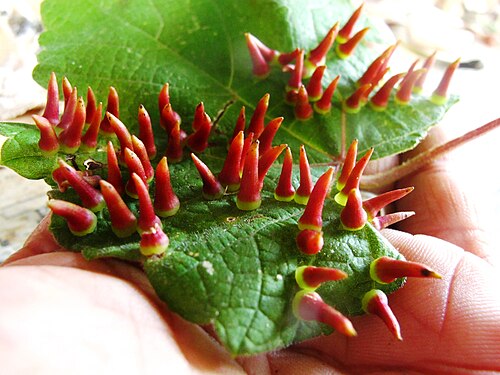
Vine-Pipe Gall Midges are tiny gall-forming flies in the family Cecidomyiidae that develop on grapevines, Virginia creeper, and other woody or climbing vine species. These insects are best known for causing unusual tubular, pipe-like, horn-like, or swollen galls on leaves, stems, petioles, or tender vine tissues. Although their damage is usually more cosmetic than fatal, heavy infestations can reduce plant vigor, distort growth, and make ornamental vines appear diseased or unhealthy.
Gall midges are highly specialized insects that manipulate plant growth. When females lay eggs or when larvae begin feeding, chemical signals stimulate the plant to produce abnormal tissue. This tissue becomes a gall, which shelters the developing larvae and provides them with a steady food source. Because the larvae live inside these protected structures, control is difficult once galls are fully formed.
Taxonomy and Classification
- Kingdom: Animalia
- Phylum: Arthropoda
- Class: Insecta
- Order: Diptera
- Family: Cecidomyiidae
- Common Group: Gall Midges
Members of the family Cecidomyiidae include many gall-forming species. Most are highly host-specific, meaning each species usually attacks a narrow group of related plants.
Identification
Adult Midges
Adult Vine-Pipe Gall Midges are very small and fragile flies, usually measuring only 1 to 3 millimeters long.
- Body: Slender and delicate.
- Legs: Long and thin.
- Wings: Clear, narrow, and lightly veined.
- Appearance: Mosquito-like but much smaller and non-biting.
Adults are rarely noticed because they are short-lived and often active for only a brief period during spring or early summer.
Larvae
The larvae are small, legless maggots found inside the gall chamber.
- Color: White, yellow, orange, or pale pink depending on species.
- Shape: Soft-bodied and elongated.
- Location: Hidden inside pipe-like galls.
Gall Symptoms
The gall is the easiest sign to identify.
- Tube-shaped or pipe-like projections.
- Green, reddish, yellow, or brown coloration.
- Swollen leaf veins, petioles, or stems.
- Curled or distorted leaves.
- Tiny exit holes after adult emergence.
Fresh galls are usually soft and green, while old galls may dry, darken, and remain attached for weeks or months.
Distribution and Habitat
Vine-Pipe Gall Midges may occur wherever suitable host vines grow.
Common habitats include:
- Vineyards
- Backyard grape arbors
- Virginia creeper plantings
- Ornamental vine trellises
- Woodland edges
- Hedgerows
- Nursery production areas
They are most noticeable during active vine growth when leaves and tender stems are expanding.
Host Plants
Host plants vary by species, but commonly affected vines may include:
- Grapevines
- Virginia Creeper
- Wild grape species
- Ornamental climbing vines
- Other woody vines depending on region
Gall midges are usually selective and may attack only certain vine species even when other plants are nearby.
Life Cycle
Egg Stage
Females lay eggs on tender vine tissue, often near young leaves, petioles, or expanding stems.
Larval Stage
After hatching, larvae begin feeding and stimulate gall formation. The plant tissue grows around the larva, creating a protected chamber.
Inside the gall, the larva feeds on nutrient-rich plant cells while being shielded from many predators and environmental stressors.
Pupal Stage
Depending on the species, pupation may occur inside the gall, in leaf litter, or in the soil beneath the host plant.
Adult Stage
Adults emerge, mate, and lay eggs to continue the cycle. Some species may have one generation per year, while others may produce multiple generations in warm climates.
Damage and Economic Importance
Leaf Distortion
Galls disrupt normal leaf growth and may cause curling, twisting, or puckering.
Reduced Photosynthesis
When many galls occur on a leaf, the leaf surface becomes distorted and less efficient at capturing sunlight.
Aesthetic Damage
In ornamental plantings, the strange pipe-like galls can make vines appear diseased, deformed, or neglected.
Plant Stress
Most healthy vines tolerate light galling. However, repeated heavy infestations can contribute to reduced vigor, poor growth, and increased susceptibility to drought or fungal disease.
Vineyard Importance
In commercial vineyards, gall midges are usually minor pests compared with leafhoppers, mealybugs, and grape berry moths. However, heavy localized infestations may require monitoring, especially in young vines or nursery stock.
Signs of Infestation
- Pipe-like galls on leaves or stems.
- Curled or distorted foliage.
- Small exit holes at gall tips.
- Orange or yellow larvae inside fresh galls.
- Clusters of abnormal growth on tender vine tissue.
- Reduced ornamental appearance.
Management and Control (IPM)
Prune Infested Tissue
Removing galled leaves or shoots early can reduce larval survival.
Infested material should be bagged and discarded rather than left beneath the plant.
Sanitation
Rake and remove fallen leaves where pupae may overwinter. This helps reduce next season’s population.
Maintain Vine Health
Healthy vines are better able to tolerate galling.
- Water during drought.
- Avoid excessive nitrogen fertilizer.
- Mulch appropriately.
- Prune for airflow.
Encourage Natural Enemies
Parasitic wasps, predatory insects, spiders, and birds may help suppress gall midge populations.
Avoid Broad-Spectrum Sprays
Once larvae are inside galls, contact insecticides have limited effectiveness. Broad-spectrum sprays may also kill beneficial insects that naturally regulate populations.
Early Monitoring
Check vines during spring growth. Removing the first galls before larvae mature is often the most effective management tactic.
Prevention
- Inspect vines regularly in spring.
- Remove galls before exit holes appear.
- Dispose of infested leaves and shoots.
- Clean leaf litter in fall.
- Promote plant health and airflow.
- Avoid unnecessary insecticide use.
Conclusion
Vine-Pipe Gall Midges are specialized gall-forming flies that create unusual tubular galls on grapevines and ornamental vines. Their larvae manipulate plant tissue to form protective chambers where they feed and develop. Although infestations are often cosmetic, heavy galling can distort foliage, reduce photosynthesis, and weaken young or stressed vines. Early detection, pruning of infested tissue, sanitation, and conservation of natural enemies provide the best long-term management approach.