Overview
Vine Mealybugs (Planococcus ficus) are among the most destructive pests of grapevines worldwide. These small, sap-feeding insects attack vines by extracting nutrients from plant tissues while simultaneously producing large amounts of sticky honeydew. More importantly, Vine Mealybugs are major vectors of Grapevine Leafroll-Associated Viruses (GLRaV), a group of diseases capable of significantly reducing vineyard productivity and fruit quality.
Although individual mealybugs are tiny, their populations can increase rapidly and remain hidden beneath bark, within fruit clusters, and in other protected areas of the vine. Heavy infestations can weaken vines, contaminate grapes with honeydew and sooty mold, and contribute to the spread of costly viral diseases throughout vineyards.
Taxonomy and Classification
Vine Mealybugs belong to a large group of sap-feeding insects that includes scales, aphids, and whiteflies.
- Kingdom: Animalia
- Phylum: Arthropoda
- Class: Insecta
- Order: Hemiptera
- Family: Pseudococcidae
- Genus: Planococcus
- Species: Planococcus ficus
They undergo incomplete metamorphosis, developing through egg, crawler, nymph, and adult stages.
Physical Description
Adult Females
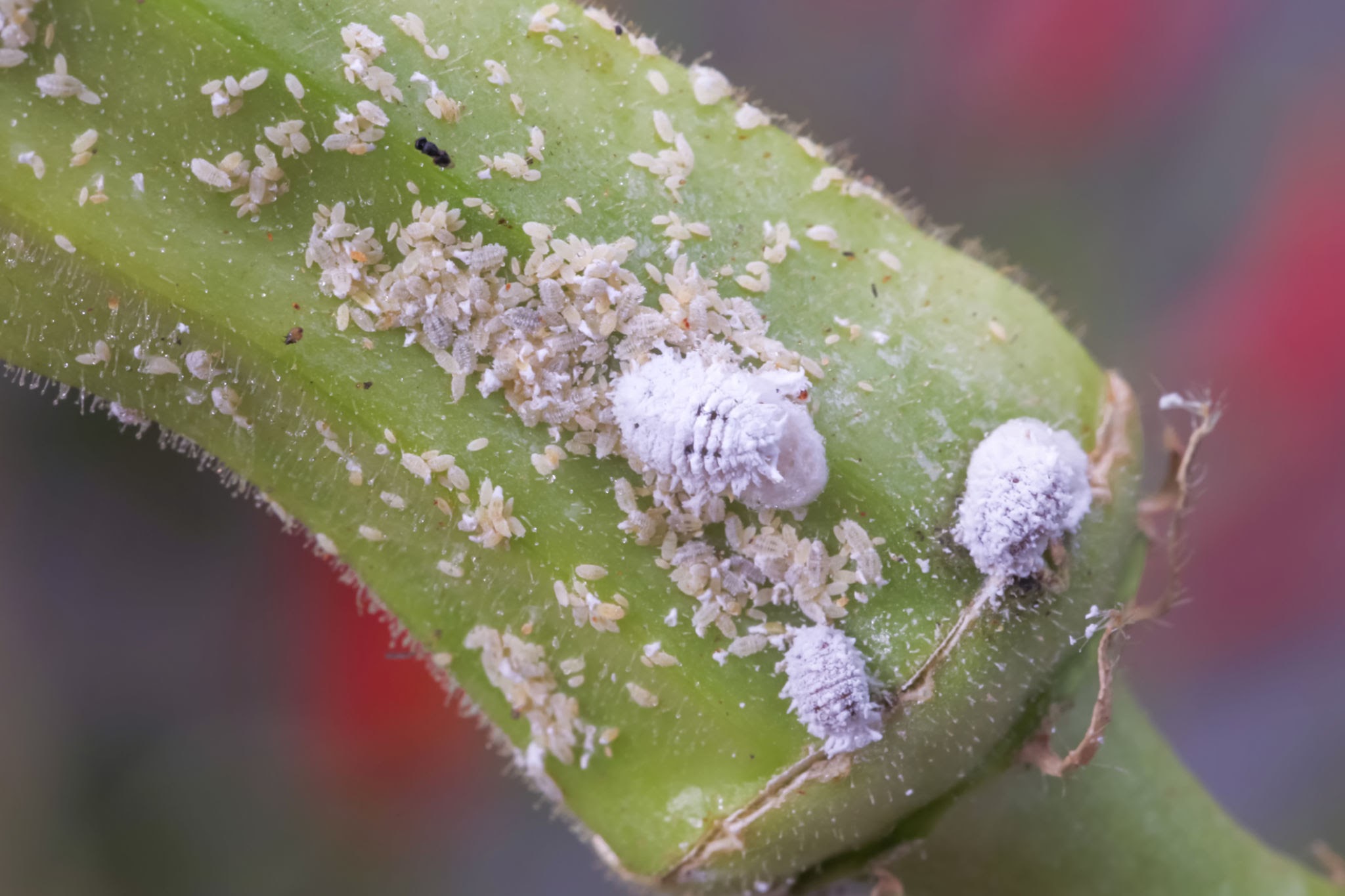
Adult female Vine Mealybugs are soft-bodied insects covered in a protective waxy coating.
- Length: 3–5 mm
- Shape: Oval and flattened
- Color: Pinkish-brown beneath wax
- Covering: White cottony wax
- Filaments: Short waxy projections around the body margin
They often cluster together in protected areas where they are difficult to detect.
Crawlers
The crawler stage is the primary dispersal stage.
- Size: Extremely small
- Color: Yellowish to pale pink
- Mobility: Highly active
- Importance: Responsible for spreading infestations and transmitting viruses
Crawlers can move between vines, be transported by equipment, or be carried by wind.
Distribution and Habitat
Vine Mealybugs occur in many grape-growing regions around the world and are considered one of the most serious vineyard pests.
Major areas affected include:
- California
- Australia
- South Africa
- Mediterranean countries
- South America
- Middle Eastern grape-growing regions
Within vineyards, they are commonly found:
- Under loose bark
- At cane bases
- Along trunks
- Inside fruit clusters
- On roots
- Near pruning wounds
Their preference for concealed locations makes detection and control challenging.
Life Cycle
Egg Stage
Females produce eggs within cottony wax masses that protect developing offspring from environmental stress and predators.
Crawler Stage
Newly hatched crawlers disperse throughout the vine searching for feeding sites.
This is the most vulnerable stage and the most important target for management programs.
Nymph Stage
Nymphs feed continuously on plant sap while gradually increasing in size.
Several molts occur before adulthood.
Adult Stage
Adult females remain relatively sedentary and continue feeding while producing offspring.
Multiple overlapping generations may occur annually in warm climates.
Behavior and Feeding Habits
Phloem Feeding
Vine Mealybugs feed by inserting specialized mouthparts into the phloem tissue of grapevines.
This feeding behavior removes:
- Plant sugars
- Nutrients
- Water
- Energy reserves
Large infestations can substantially weaken vines over time.
Honeydew Production
As they consume sap, mealybugs excrete excess sugars in the form of sticky honeydew.
Honeydew accumulation leads to:
- Sticky foliage
- Sticky fruit clusters
- Sooty mold growth
- Reduced fruit quality
- Harvest complications
Ant Associations
One of the most important aspects of Vine Mealybug biology is its relationship with ants.
Ants feed on honeydew and often protect mealybugs from natural enemies.
This protection can significantly reduce the effectiveness of biological control programs.
Damage and Economic Importance
Direct Feeding Damage
Heavy infestations may cause:
- Reduced vine vigor
- Stunted growth
- Delayed ripening
- Reduced fruit production
- Poor vine health
Sooty Mold Development
Honeydew serves as a growth medium for black sooty mold fungi.
Sooty mold can:
- Cover leaves
- Coat grape clusters
- Reduce photosynthesis
- Lower marketability
- Complicate harvesting operations
Virus Transmission
The most significant threat posed by Vine Mealybugs is their ability to spread Grapevine Leafroll-Associated Viruses.
Symptoms of infected vines may include:
- Red or purple leaf discoloration
- Leaf rolling
- Reduced sugar accumulation
- Poor fruit coloration
- Reduced yields
- Shortened vineyard lifespan
Virus transmission often causes far greater economic losses than direct feeding damage.
Signs of Infestation
Common indicators include:
- White cottony clusters under bark
- Sticky honeydew deposits
- Black sooty mold growth
- Ant activity on vines
- Reduced vine vigor
- Leafroll virus symptoms
- Mealybugs within grape clusters
Regular vineyard scouting is essential because populations often remain hidden until they become severe.
Natural Enemies
Numerous beneficial organisms help suppress Vine Mealybug populations.
- Parasitic wasps (Anagyrus spp.)
- Mealybug Destroyer beetles (Cryptolaemus montrouzieri)
- Lacewings
- Lady beetles
- Predatory bugs
- Spiders
Successful biological control often depends on minimizing ant interference.
Management and Control (IPM)
Monitoring
Routine scouting is critical for early detection.
- Inspect under bark
- Check fruit clusters
- Monitor crawler activity
- Use pheromone traps
- Track ant populations
Ant Management
Controlling ants is often essential for successful mealybug suppression.
- Use ant baits
- Reduce nesting sites
- Apply trunk barriers when appropriate
- Monitor ant activity regularly
Biological Control
Biological control remains one of the most sustainable long-term solutions.
- Release beneficial parasitoids
- Conserve natural predators
- Avoid unnecessary broad-spectrum insecticides
- Support vineyard biodiversity
Systemic Insecticides
Systemic treatments are frequently used because mealybugs feed directly from plant vascular tissue.
- Soil applications
- Trunk treatments
- Targeted timing for crawler emergence
- Integration with monitoring programs
Cultural Practices
- Use certified virus-free planting material
- Remove heavily infected vines
- Improve vineyard sanitation
- Inspect new plantings carefully
- Prevent movement of infested equipment
Research and Future Management
Research continues to focus on reducing virus transmission and improving sustainable mealybug management.
Current areas of study include:
- Enhanced biological control programs
- Improved pheromone monitoring
- Virus-resistant grape varieties
- Novel systemic treatments
- Ant-management strategies
- Integrated vineyard health programs
Preventing virus spread remains a major priority for vineyard managers worldwide.
Conclusion
Vine Mealybugs are among the most economically important pests of grapevines due to their ability to weaken vines, contaminate fruit with honeydew and sooty mold, and transmit Grapevine Leafroll-Associated Viruses. Their hidden habits, waxy protection, and close association with ants make management challenging. Effective control depends on integrated pest management strategies that combine monitoring, biological control, ant suppression, cultural practices, and targeted systemic treatments to protect vineyard productivity and fruit quality.