Overview
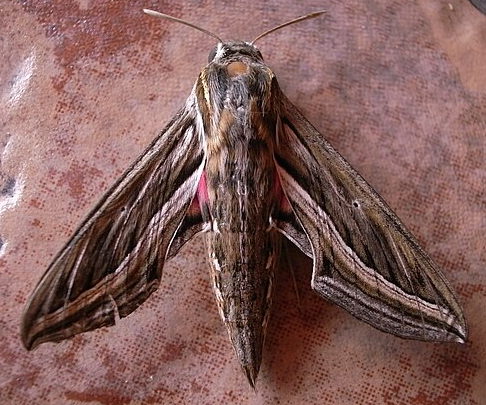
Vine Hawk Moths are large, fast-flying moths belonging to the family Sphingidae. The name is commonly applied to several species associated with grapevines and related plants, including the Grapevine Hawk Moth (Hippotion celerio) and the Elephant Hawk Moth (Deilephila elpenor). While the adult moths are admired for their beauty and pollination value, their caterpillars, often called hornworms, can become significant defoliators of grapevines and ornamental plants.
These caterpillars are among the largest leaf-feeding larvae found in gardens and vineyards. Their rapid growth and enormous appetite allow them to consume substantial amounts of foliage in a short period. Although healthy mature vines can often tolerate moderate feeding, young plants and heavy infestations may suffer reduced vigor, slower growth, and lower fruit production.
Taxonomy and Classification
Vine Hawk Moths belong to one of the most recognizable groups of moths.
- Kingdom: Animalia
- Phylum: Arthropoda
- Class: Insecta
- Order: Lepidoptera
- Family: Sphingidae
The Sphingidae family contains more than 1,400 species worldwide and includes many well-known hawk moths, sphinx moths, and hornworms.
Physical Description
Adult Moths
Adult Vine Hawk Moths are powerful fliers with streamlined bodies and narrow wings.
- Wingspan: 50–80 mm depending on species
- Color: Brown, olive, tan, pink, or gray
- Body Shape: Aerodynamic and robust
- Flight: Rapid, hovering, and highly maneuverable
Many species resemble hummingbirds while feeding and can hover in front of flowers while extending their long proboscis to reach nectar.
Caterpillars (Hornworms)
The larval stage is the most damaging phase.
- Length: 50–80 mm
- Color: Green, brown, or olive
- Eyespots: Large false eye markings on the thorax
- Horn: Distinct spine near the rear of the body
- Texture: Smooth and hairless
When disturbed, the caterpillars often retract their head and inflate the front body segments, making the eyespots appear larger and more intimidating to predators.
Distribution and Habitat
Vine Hawk Moths occur across Europe, Asia, Africa, Australia, and parts of North America depending on the species involved.
Common habitats include:
- Vineyards
- Home gardens
- Ornamental landscapes
- Parks
- Agricultural fields
- Urban green spaces
They are most abundant where grapevines and related host plants are readily available.
Host Plants
Vine Hawk Moth caterpillars feed on a variety of plants.
Common hosts include:
- Grapevines (Vitis spp.)
- Virginia Creeper
- Fuchsia
- Willowherb
- Evening Primrose
- Parthenocissus species
- Other ornamental vines
Host preferences vary among species and geographic regions.
Life Cycle
Egg Stage
Females deposit small eggs individually on suitable host plants.
Eggs typically hatch within several days under warm conditions.
Larval Stage
Newly emerged caterpillars begin feeding immediately on foliage.
As they grow through several molts, their food consumption increases dramatically.
The final larval stage is responsible for the majority of plant damage.
Pupal Stage
Mature caterpillars leave the plant and pupate in soil, leaf litter, or sheltered debris.
The pupal stage may last several weeks or overwinter depending on climate.
Adult Stage
Adults emerge and focus primarily on reproduction and nectar feeding.
Many species are active at dusk and during nighttime hours.
Damage and Economic Importance
The primary concern associated with Vine Hawk Moths is larval feeding.
Defoliation
Hornworms consume large quantities of leaf tissue.
Damage symptoms include:
- Large irregular holes
- Missing leaf sections
- Skeletonized foliage
- Complete leaf removal
Reduced Plant Growth
Young grapevines can become severely stressed when significant foliage is removed.
Loss of leaves reduces photosynthesis and slows plant development.
Yield Reduction
In vineyards, severe infestations can reduce fruit production by limiting the plant’s ability to support developing grape clusters.
Ornamental Damage
Landscape plants may lose much of their aesthetic value when heavily defoliated.
Behavior and Ecology
Voracious Feeding
A single mature caterpillar can consume several leaves each day.
Large populations can rapidly strip young vines and ornamental plants.
Defensive Eyespots
The false eyes located on the thoracic segments help deter predators.
When threatened, the caterpillar adopts a snake-like posture that startles birds and small mammals.
Excellent Flight Ability
Adult hawk moths are among the strongest fliers in the insect world.
Some species migrate long distances and can travel hundreds of miles.
Natural Predators
Numerous natural enemies help suppress Vine Hawk Moth populations.
- Parasitic wasps
- Tachinid flies
- Birds
- Spiders
- Predatory beetles
- Lizards
- Small mammals
Biological control often prevents outbreaks from reaching damaging levels.
Parasitic Wasps
One of the most important natural controls involves parasitic wasps.
Parasitized caterpillars may carry clusters of small white cocoons attached to their bodies.
These cocoons should be left undisturbed, as they represent beneficial insects actively reducing pest populations.
Management and Control (IPM)
Monitoring
Regular inspection of vines and ornamentals allows early detection of larvae.
Look for:
- Chewed leaves
- Large caterpillars
- Dark droppings (frass)
- Defoliated stems
Hand Removal
Because hornworms are large and easy to spot, hand-picking remains one of the most effective control methods for home gardens.
Remove caterpillars and place them in soapy water.
Biological Control
Protecting beneficial insects is often sufficient to maintain populations below damaging levels.
Avoid unnecessary broad-spectrum insecticide applications that may harm natural enemies.
Bacillus thuringiensis (Bt)
Bt products can effectively control young caterpillars while minimizing impacts on beneficial insects and pollinators.
Applications are most effective when larvae are small.
Cultural Practices
- Remove heavily infested foliage
- Maintain vine health
- Encourage beneficial insects
- Monitor regularly during warm months
Ecological Importance
Although the caterpillars can be damaging, adult Vine Hawk Moths are important pollinators.
Their long tongues allow them to pollinate deep, tubular flowers that many other insects cannot access.
In natural ecosystems, they contribute significantly to plant reproduction and biodiversity.
Conclusion
Vine Hawk Moths are impressive members of the hawk moth family whose large hornworm caterpillars can cause significant defoliation of grapevines and ornamental plants. Their rapid growth, enormous appetite, and distinctive eyespots make them easily recognizable in gardens and vineyards. While severe infestations may reduce plant vigor and crop production, natural predators, hand removal, and biological controls usually provide effective management. At the same time, adult moths serve valuable ecological roles as important nighttime pollinators.