Overview
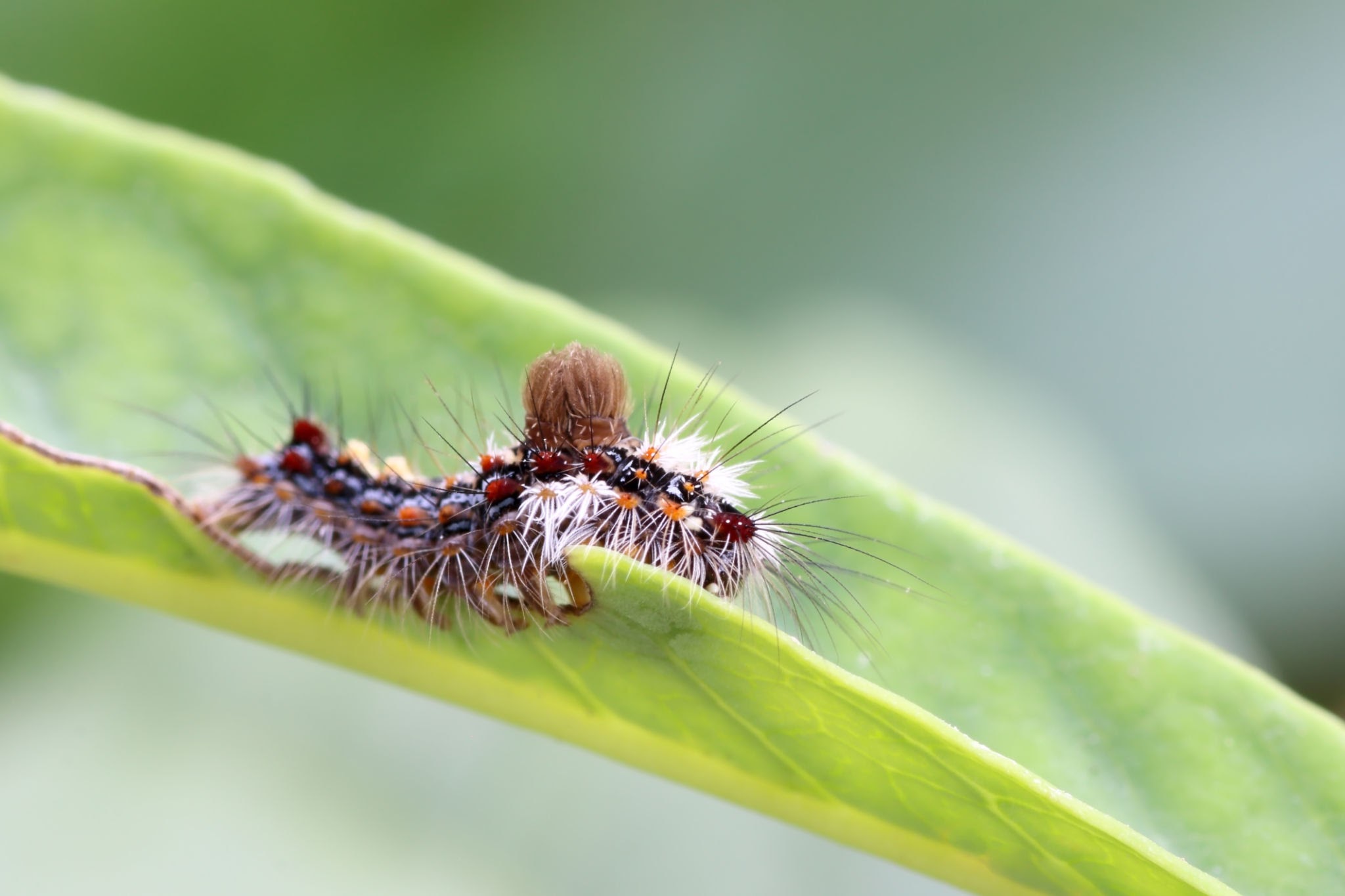
Velvet Bean Caterpillars (Anticarsia gemmatalis) are among the most important defoliating pests of soybean crops throughout the Americas. These caterpillars are the larval stage of a nocturnal moth and are well known for their ability to rapidly consume large amounts of foliage. While they primarily attack soybeans, they also feed on peanuts, velvet beans, cowpeas, and other leguminous plants.
Velvet Bean Caterpillars can develop into serious agricultural pests when environmental conditions favor population growth. Large infestations may strip fields of foliage during critical reproductive stages, resulting in reduced pod development, lower seed quality, and significant yield losses. Their ability to migrate long distances and reproduce rapidly makes them a recurring concern for growers across much of the southern United States, Central America, and South America.
Taxonomy and Classification
Velvet Bean Caterpillars belong to a group of moths that includes numerous agricultural pests.
- Kingdom: Animalia
- Phylum: Arthropoda
- Class: Insecta
- Order: Lepidoptera
- Family: Erebidae
- Genus: Anticarsia
- Species: Anticarsia gemmatalis
Like all moths, they undergo complete metamorphosis consisting of egg, larval, pupal, and adult stages.
Physical Description
Adult Moth
Adult Velvet Bean Caterpillar moths are relatively inconspicuous and often overlooked in agricultural settings.
- Wingspan: 30–40 mm
- Color: Brown, gray, or tan
- Markings: Distinct diagonal line across the forewing
- Activity: Nocturnal
- Behavior: Attracted to lights at night
The adults primarily serve as reproductive stages and cause no direct crop damage.
Larval Stage
The caterpillar stage is responsible for all economically significant injury.
- Length: Up to 40 mm
- Color: Green, olive, brown, or black
- Markings: Pale longitudinal stripes running along the body
- Prolegs: Five pairs of abdominal prolegs
- Behavior: Extremely active and twitchy when disturbed
Unlike many caterpillars that remain relatively motionless, Velvet Bean Caterpillars often thrash, wiggle, or drop from plants when disturbed.
Distribution and Habitat
Velvet Bean Caterpillars are widespread throughout tropical and subtropical regions of the Western Hemisphere.
They occur in:
- Southern United States
- Mexico
- Central America
- South America
- Caribbean regions
Important habitats include:
- Soybean fields
- Peanut fields
- Velvet bean plantings
- Cowpea fields
- Legume cover crops
- Agricultural research plots
In northern portions of their range, populations typically develop from annual migrations originating in warmer southern regions.
Life Cycle
Egg Stage
Females lay eggs individually on host plant foliage. Eggs are small, pale, and difficult to detect without close inspection.
Larval Stage
After hatching, larvae immediately begin feeding on leaves. Several growth stages, known as instars, occur before maturity.
Older larvae consume significantly more foliage than younger stages and are responsible for most crop damage.
Pupal Stage
Mature caterpillars pupate in soil, leaf litter, or plant debris. This stage allows transformation into the adult moth.
Adult Stage
Adults emerge, mate, and lay eggs on suitable host plants. Multiple generations may develop each year in warm climates.
Behavior and Feeding Habits
Defoliation Specialists
Velvet Bean Caterpillars are among the most efficient foliage feeders found in soybean production systems.
They consume:
- Leaf blades
- Leaf margins
- Tender foliage
- Young plant tissue
Heavy infestations can rapidly remove large percentages of a plant’s photosynthetic capacity.
Migration
Unlike some agricultural pests that overwinter locally, Velvet Bean Caterpillars often migrate northward from tropical regions each year.
This annual migration contributes to recurring infestations in many soybean-growing areas.
Rapid Consumption
Late-instar larvae consume dramatically more foliage than younger caterpillars.
A field that appears relatively healthy one week can experience severe defoliation shortly thereafter if populations are not monitored.
Damage and Economic Importance
Leaf Feeding
The most visible symptom is defoliation.
Early feeding creates:
- Small holes in leaves
- Chewed leaf margins
- Irregular feeding scars
As populations increase, damage progresses to widespread foliage loss.
Yield Reduction
Soybeans are particularly vulnerable during flowering and pod-filling stages.
Heavy defoliation may result in:
- Reduced pod production
- Smaller seeds
- Lower seed quality
- Reduced oil content
- Significant yield losses
Agricultural Impact
Velvet Bean Caterpillars have historically been among the most economically important soybean pests in parts of the United States and South America.
Their ability to rapidly reach damaging levels requires careful monitoring throughout the growing season.
Signs of Infestation
Growers should watch for:
- Ragged feeding damage
- Missing leaf tissue
- Defoliated plants
- Green or dark-striped caterpillars
- Thrashing larvae when disturbed
- Reduced canopy density
Regular scouting is critical because damage can escalate quickly.
Natural Enemies
Numerous beneficial organisms help regulate Velvet Bean Caterpillar populations.
- Parasitic wasps
- Tachinid flies
- Predatory stink bugs
- Spiders
- Ground beetles
- Entomopathogenic fungi
- Birds
These natural enemies often suppress outbreaks when broad-spectrum insecticide use is minimized.
Management and Control (IPM)
Monitoring
Scouting remains the foundation of effective management.
- Inspect fields regularly
- Use sweep nets
- Estimate defoliation levels
- Compare populations to economic thresholds
- Record infestation trends
Economic Thresholds
Modern IPM programs recommend treatment only when populations exceed established economic thresholds.
This approach reduces unnecessary insecticide applications and preserves beneficial insects.
Biological Control
Natural enemies play a major role in suppressing populations.
- Conserve beneficial insects
- Protect parasitic wasps
- Encourage fungal pathogens
- Reduce broad-spectrum pesticide use
Bt Technologies
Genetically engineered soybean varieties expressing Bt proteins can provide protection against caterpillar feeding.
These technologies have become important tools in integrated pest management programs.
Chemical Control
When economic thresholds are exceeded, selective insecticides may be applied.
- Treat early infestations
- Target younger larvae when possible
- Rotate modes of action
- Follow label recommendations
Research and Future Management
Research continues to focus on sustainable management approaches that reduce reliance on chemical insecticides.
Areas of active study include:
- Biological control enhancement
- Bt crop development
- Insecticide resistance management
- Precision agriculture monitoring
- Population forecasting systems
These advances aim to provide effective control while preserving beneficial insects and environmental quality.
Conclusion
Velvet Bean Caterpillars are serious defoliating pests of soybeans, peanuts, and other legumes throughout the Americas. Their rapid feeding, migratory behavior, and ability to cause substantial yield losses make them important agricultural pests. Effective management relies on field scouting, economic thresholds, conservation of natural enemies, biological controls, and targeted insecticide applications when necessary. Integrated pest management remains the most effective strategy for minimizing damage while maintaining sustainable crop production.