Overview
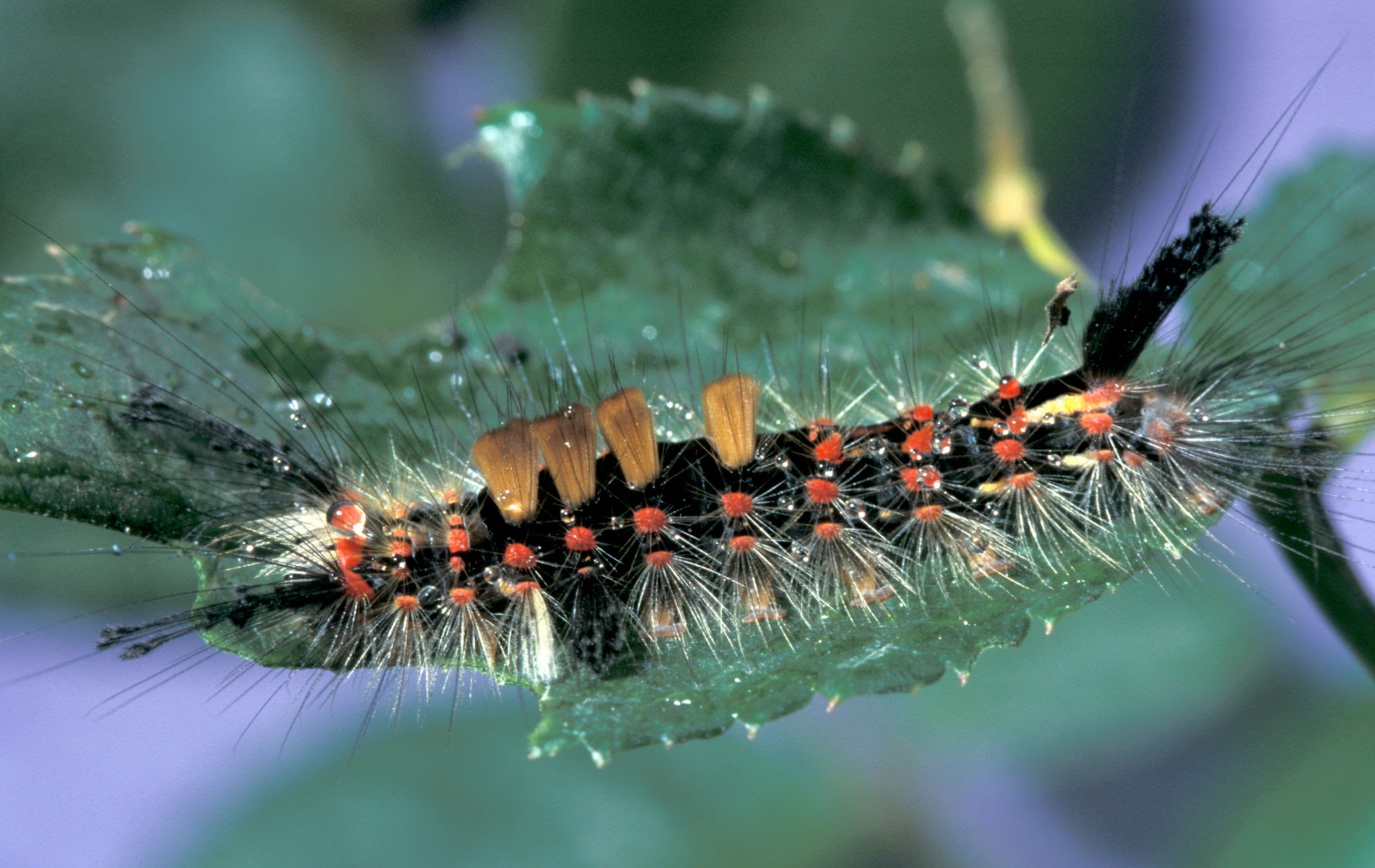
Vapourer Moths (Orgyia antiqua), also known as Rusty Tussock Moths, are distinctive defoliating moths recognized for their colorful, hairy caterpillars and unusual adult females. Unlike the winged males, female Vapourer Moths are wingless and remain near the cocoon where they emerged. This unusual biology makes infestations highly localized, but when populations increase, the caterpillars can heavily defoliate trees, shrubs, hedges, orchard plants, and ornamentals.
The caterpillars are the damaging stage. They feed on a wide range of deciduous and coniferous hosts, including oak, apple, rose, birch, willow, spruce, and Douglas fir. Their striking appearance makes them easy to notice, but their hairs can irritate skin, so they should not be handled with bare hands.
Taxonomy and Classification
- Kingdom: Animalia
- Phylum: Arthropoda
- Class: Insecta
- Order: Lepidoptera
- Family: Erebidae
- Subfamily: Lymantriinae
- Genus: Orgyia
- Species: Orgyia antiqua
Vapourer Moths are closely related to other tussock moths, a group known for hairy larvae and periodic defoliation of trees and shrubs.
Identification
Caterpillars
The caterpillar is the most recognizable stage. Mature larvae are usually dark-bodied with several prominent tufts of hair.
- Back Tufts: Four toothbrush-like tufts of yellow, cream, or white hairs.
- Hair Pencils: Long black tufts near the head and rear.
- Body Color: Dark gray, black, or brown with red, yellow, or orange markings.
- Texture: Hairy and visually striking.
- Warning: Hairs may cause itching, rash, or irritation in sensitive people.
Adult Males
Male Vapourer Moths are winged and active fliers.
- Color: Rusty orange, reddish-brown, or chestnut-brown.
- Wingspan: About 25–35 mm.
- Wing Marking: Small pale or white comma-shaped spot on each forewing.
- Behavior: Day-flying and strongly attracted to female pheromones.
Adult Females
Females are wingless, plump, and grub-like. They remain on or near the cocoon and lay eggs directly on it.
Distribution and Habitat
Vapourer Moths occur across Europe, Asia, and parts of North America. They are adaptable insects that can live in both natural and human-modified environments.
Common habitats include:
- Woodlands
- Hedgerows
- Orchards
- Urban parks
- Residential gardens
- Nurseries
- Forest edges
- Conifer plantings
Because females do not fly, populations often remain concentrated on the same trees or shrubs for several seasons.
Host Plants
Vapourer Moth larvae are polyphagous, meaning they feed on many plant species.
Common hosts include:
- Oak
- Apple
- Birch
- Willow
- Rose
- Hawthorn
- Plum
- Spruce
- Douglas fir
- Other ornamental shrubs and trees
Life Cycle
Egg Stage
Females lay eggs in clusters on the outside of their cocoons. These eggs often overwinter and hatch in spring when new foliage becomes available.
Larval Stage
Young caterpillars disperse and begin feeding on leaves and needles. Early feeding may appear as small windowpane marks or skeletonized areas. Older larvae consume larger sections of leaves and can cause heavy defoliation.
Pupal Stage
Mature caterpillars spin silken cocoons on bark, fences, buildings, branches, or other sheltered surfaces.
Adult Stage
Males emerge as flying moths and search for wingless females. Females mate near the cocoon and then lay eggs without traveling far.
Most regions have one generation per year, although warmer climates may allow more activity.
Damage and Economic Importance
Defoliation
The primary damage is leaf and needle loss. Feeding symptoms include:
- Skeletonized leaves
- Irregular chewing damage
- Missing foliage
- Brown branch tips on conifers
- Reduced plant vigor
Ornamental Damage
In landscapes, defoliation can make shrubs and trees look thin, scorched, or unhealthy. Repeated feeding may reduce flowering, fruiting, and overall appearance.
Tree Stress
Healthy mature trees usually recover from a single defoliation event. Young, stressed, drought-weakened, or repeatedly defoliated plants are more likely to suffer long-term decline.
Human Irritation
The caterpillar hairs can cause skin irritation. Old cocoons may also contain irritating hairs, so they should be handled carefully.
Signs of Infestation
- Colorful hairy caterpillars on trees or shrubs
- Chewed or skeletonized leaves
- Cocoons on bark, fences, walls, or eaves
- Egg masses attached to old cocoons
- Localized defoliation on the same plants each year
- Rusty-brown male moths flying in search of females
Management and Control (IPM)
Winter Egg and Cocoon Removal
Because females lay eggs on their cocoons, winter inspection is very useful. Scrape off cocoons and egg masses from trunks, fences, walls, and branches.
Dispose of them in sealed bags or soak them in soapy water.
Wear Protection
Use gloves, long sleeves, and eye protection when removing caterpillars, cocoons, or egg masses. The hairs may remain irritating even after the insect has pupated.
Biological Control
Natural enemies help reduce populations.
- Birds
- Parasitic wasps
- Tachinid flies
- Predatory beetles
- Spiders
Bacillus thuringiensis (Bt)
Bacillus thuringiensis var. kurstaki is effective against young caterpillars when applied while larvae are small and actively feeding.
Manual Removal
Small infestations can be managed by removing larvae from accessible plants. Avoid touching them directly.
Reduce Plant Stress
Watering during drought, mulching properly, and avoiding root damage help plants recover from defoliation.
Prevention
- Inspect host plants during winter for cocoons and egg masses
- Remove localized colonies early
- Encourage birds and beneficial insects
- Avoid unnecessary broad-spectrum insecticides
- Monitor susceptible trees and shrubs in spring
Conclusion
Vapourer Moths, or Rusty Tussock Moths, are distinctive defoliators with ornate caterpillars and wingless adult females. Their larvae feed on many trees and shrubs, sometimes causing heavy localized defoliation. While healthy plants often recover, repeated infestations can weaken ornamentals, fruit trees, and young landscape plants. Effective control depends on winter removal of egg masses and cocoons, early monitoring, protection from irritating hairs, and targeted biological controls such as Bt when larvae are young.