Overview
V-Pug Moths (Chloroclystis v-ata) are small geometrid moths found throughout Europe, Asia, and parts of North America. While the adults are harmless nectar-feeding insects, the caterpillars can occasionally become minor pests of ornamental plants, berry-producing shrubs, and flowering garden plants. Their larvae are inchworms that feed on flowers, buds, developing fruits, and foliage, sometimes reducing flowering and fruit production when populations are high.
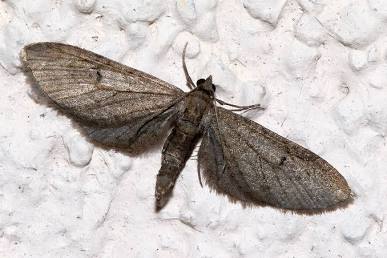
The common name “V-Pug” comes from the distinctive dark V-shaped marking visible on the forewings of the adult moth. Although they are generally considered minor pests, localized infestations can cause noticeable damage in gardens, nurseries, and ornamental landscapes.
Taxonomy and Classification
- Kingdom: Animalia
- Phylum: Arthropoda
- Class: Insecta
- Order: Lepidoptera
- Family: Geometridae
- Genus: Chloroclystis
- Species: Chloroclystis v-ata
V-Pug Moths belong to the Geometridae family, whose larvae are commonly known as inchworms, loopers, or measuring worms due to their distinctive looping movement.
Identification
Adult Moths
Adult V-Pug Moths are small and often overlooked due to their camouflage.
- Wingspan: Approximately 12–18 mm.
- Color: Grayish-brown, olive-gray, or greenish-gray.
- Key Marking: Distinct dark V-shaped pattern across the forewings.
- Resting Position: Wings held flat against surfaces.
- Activity: Mostly nocturnal and attracted to lights.
Larvae
The caterpillars are slender inchworms that blend remarkably well with stems, buds, and flowers.
- Length: Up to 16 mm.
- Color: Green, brown, yellow-green, or reddish depending on host plant.
- Markings: Often display darker triangular or diamond-shaped markings along the back.
- Movement: Characteristic looping or inchworm motion.
Distribution and Habitat
V-Pug Moths are widely distributed across temperate regions and are commonly found in:
- Gardens
- Nurseries
- Woodland edges
- Meadows
- Hedgerows
- Berry patches
- Parks and landscaped areas
They thrive wherever flowering plants provide food for both larvae and adults.
Host Plants
Unlike many specialized moths, V-Pug larvae feed on a broad range of plants.
Common hosts include:
- Blackberries
- Raspberries
- Elderberries
- Roses
- Goldenrod
- Yarrow
- Various wildflowers
- Ornamental flowering shrubs
- Nursery stock plants
The larvae are especially attracted to flower buds and developing fruit structures.
Life Cycle
Egg Stage
Females deposit eggs on flower buds, stems, or host plant foliage. Eggs are tiny and difficult to detect.
Larval Stage
After hatching, the caterpillars begin feeding on flowers, buds, leaves, and developing fruit. Their excellent camouflage allows them to remain hidden while feeding.
This stage causes nearly all plant damage associated with the species.
Pupal Stage
Mature larvae pupate within leaf litter, soil, or protected plant debris near host plants.
Adult Stage
Adults emerge and mate shortly after emergence. Depending on climate, multiple generations may occur annually.
Warmer regions may support several generations per year, while cooler climates generally produce one or two.
Damage and Economic Importance
Flower Feeding
The most significant damage occurs when larvae consume floral structures.
- Chewed petals
- Destroyed stamens
- Damaged pistils
- Reduced pollination success
Heavy infestations can reduce flowering and fruit production.
Fruit Damage
Larvae sometimes feed on developing berries and soft fruits.
- Surface scarring
- Small entry holes
- Premature fruit drop
- Reduced marketability
Foliage Damage
Leaf feeding is usually minor but may become noticeable when populations are high.
Symptoms include:
- Small irregular holes
- Chewed leaf margins
- Reduced ornamental quality
Nursery Concerns
Even minor feeding damage can affect the saleability of ornamental plants in commercial nursery production.
Signs of Infestation
- Damaged flower buds
- Missing flower parts
- Small holes in berries or fruits
- Fine silk webbing around blossoms
- Presence of green or brown inchworms
- Dark frass around flowers and fruit clusters
Management and Control (IPM)
Regular Monitoring
Frequent inspection of flower buds and developing fruit allows early detection before populations increase.
Hand Removal
Small infestations can be managed by removing caterpillars by hand.
Shaking branches over a white sheet can help expose hidden larvae.
Bacillus thuringiensis (Bt)
Bacillus thuringiensis var. kurstaki is highly effective against young caterpillars.
- Targets caterpillars specifically
- Safe for pollinators when used properly
- Best applied while larvae are small
Biological Control
Numerous natural enemies help suppress V-Pug populations.
- Parasitic wasps
- Predatory beetles
- Spiders
- Birds
- Beneficial insects
Garden Sanitation
Removing damaged flowers, fallen fruit, and plant debris reduces breeding sites and pupation locations.
Maintain Plant Health
Healthy plants are more tolerant of minor feeding damage and recover more quickly from infestations.
Prevention
- Inspect flowering plants regularly
- Encourage beneficial insects
- Remove heavily infested blossoms
- Avoid excessive nitrogen fertilization
- Maintain proper plant spacing and airflow
- Monitor berry crops during flowering and fruit development
Conclusion
V-Pug Moths are small geometrid moths whose inchworm larvae occasionally become pests of ornamental plants, berries, and flowering shrubs. While usually considered minor pests, localized populations can damage flowers, buds, and developing fruit, reducing both ornamental value and crop quality. Regular monitoring, biological controls, sanitation, and targeted applications of Bt provide effective and environmentally responsible management when intervention becomes necessary.