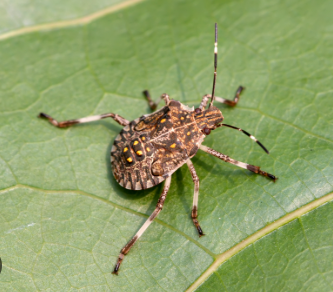
Overview
Urostylid Stink Bugs are plant-feeding insects belonging to the family Urostylididae, a group of true bugs closely related to the more familiar shield bugs and stink bugs. Although less well known than species in the family Pentatomidae, Urostylid stink bugs share many of the same feeding habits and biological characteristics. They use specialized piercing-sucking mouthparts to feed on plant sap, seeds, fruits, and developing plant tissues.
These insects are found primarily in Asia, where several species are considered agricultural and forestry pests. Feeding activity can reduce plant vigor, deform fruits and seeds, and lower the quality of agricultural products. In landscapes and forests, large populations may contribute to leaf damage and overall plant stress.
Like other stink bugs, Urostylids possess scent glands that release defensive odors when disturbed. This characteristic helps protect them from predators but can make them a nuisance when large numbers gather on vegetation or structures.
Taxonomy and Classification
Urostylid stink bugs belong to the order Hemiptera, which includes aphids, cicadas, leafhoppers, and other true bugs.
- Kingdom: Animalia
- Phylum: Arthropoda
- Class: Insecta
- Order: Hemiptera
- Suborder: Heteroptera
- Family: Urostylididae
The family contains several genera and species, many of which are associated with deciduous trees, shrubs, and agricultural crops. Their evolutionary relationship places them among the primitive lineages of stink bug-like insects.
Identification
Urostylid stink bugs differ from typical shield-shaped stink bugs in several important ways.
- Length: Approximately 10–20 mm depending on species.
- Shape: More elongated and slender than common stink bugs.
- Color: Usually green, yellow-green, brown, or tan.
- Antennae: Long and conspicuous, often extending beyond half the body length.
- Abdomen: Often pointed or extended at the rear.
- Mouthparts: Piercing-sucking beak used for feeding on plant fluids.
Nymphs resemble smaller versions of adults but lack fully developed wings. Their coloration often changes throughout development.
Distribution and Habitat
Most Urostylid species are native to Asia, including China, Japan, Korea, and neighboring regions. They are commonly associated with forests, orchards, parks, and agricultural landscapes.
Preferred habitats include:
- Oak forests
- Elm woodlands
- Fruit orchards
- Agricultural fields
- Urban landscapes
- Tree-lined parks
Adults are frequently found resting on leaves, stems, and developing fruits where feeding resources are abundant.
Life Cycle
Urostylid stink bugs undergo incomplete metamorphosis, developing through egg, nymph, and adult stages.
Egg Stage
Females deposit clusters of eggs on leaves, stems, or bark surfaces. Egg masses are often arranged in orderly rows.
Nymph Stage
Nymphs hatch and immediately begin feeding on plant tissues. They pass through several developmental stages known as instars.
During each molt, the insects become larger and gradually develop wing pads.
Adult Stage
Fully developed adults continue feeding, mating, and dispersing to new host plants. Depending on climate and species, one or multiple generations may occur annually.
Behavior and Feeding Habits
Urostylid stink bugs feed by inserting their needle-like mouthparts into plant tissues and extracting fluids.
Common feeding sites include:
- Leaves
- Young shoots
- Flower buds
- Developing fruits
- Seeds
- Acorns and nuts
Their feeding introduces saliva into plant tissues, which may cause discoloration, distortion, or localized tissue death.
Adults are often active during warm weather and may aggregate in large numbers on preferred host plants.
Damage and Economic Importance
The economic impact of Urostylid stink bugs varies depending on species, host plant, and population density.
Leaf Damage
Feeding causes small chlorotic spots that may eventually merge into larger discolored areas.
- Yellow stippling
- Bronzing
- Premature leaf aging
- Reduced photosynthesis
Fruit and Seed Injury
When feeding on developing fruits and seeds, damage may include:
- Pitting
- Deformation
- Poor seed development
- Reduced market quality
Tree Stress
Repeated heavy infestations can weaken trees by reducing nutrient reserves and increasing vulnerability to drought, disease, and other environmental stresses.
Nuisance Issues
Like many stink bugs, Urostylids release defensive odors when handled or crushed. Large populations may become nuisance pests around homes and recreational areas.
Signs of Infestation
Indicators of Urostylid stink bug activity include:
- Clusters of bugs on leaves or branches
- Yellow or brown feeding spots
- Distorted fruit or seeds
- Premature leaf discoloration
- Noticeable defensive odor when disturbed
Monitoring is particularly important during periods of rapid plant growth when feeding damage can be most significant.
Management and Control (IPM)
Integrated Pest Management (IPM) provides the most effective long-term strategy for managing Urostylid stink bugs.
Monitoring
- Inspect host plants regularly.
- Use beating sheets to detect hidden populations.
- Monitor nymph populations early in the season.
Cultural Controls
- Maintain healthy trees and crops.
- Reduce plant stress through proper watering.
- Remove heavily infested plant material when practical.
Biological Control
Numerous natural enemies help regulate stink bug populations:
- Predatory stink bugs
- Assassin bugs
- Parasitic wasps
- Spiders
- Birds
Conserving beneficial insects often reduces the need for chemical intervention.
Chemical Control
When populations exceed acceptable thresholds, targeted insecticide applications may be used.
- Insecticidal soaps
- Neem-based products
- Pyrethroid insecticides
- Systemic treatments for high-value trees
Applications are generally most effective against young nymphs rather than adults.
Research and Future Concerns
Researchers continue studying Urostylid stink bugs to better understand their host preferences, population dynamics, and potential impacts on forestry and agriculture.
Current areas of interest include:
- Host plant relationships
- Climate-related population changes
- Biological control opportunities
- Monitoring methods
- Forest ecosystem impacts
As global trade increases, monitoring these insects remains important for preventing the movement of potentially invasive species.
Conclusion
Urostylid Stink Bugs are specialized plant-feeding insects that can affect trees, crops, and ornamental plants through their piercing-sucking feeding habits. While generally less well known than common stink bugs, they can cause significant damage when populations become large, particularly on fruits, seeds, and developing foliage.
Regular monitoring, conservation of natural enemies, and sound plant management practices provide effective tools for minimizing damage while maintaining healthy agricultural and landscape ecosystems.