Overview
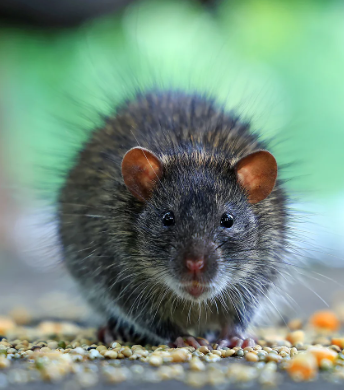
Urban Rodents are among the most significant vertebrate pests affecting cities, towns, businesses, and homes worldwide. The term primarily refers to the Norway Rat (Rattus norvegicus), Roof Rat (Rattus rattus), and House Mouse (Mus musculus). These highly adaptable mammals thrive in human environments where food, water, shelter, and warmth are readily available.
Urban rodents are responsible for extensive economic losses, structural damage, food contamination, and public health concerns. Their ability to reproduce rapidly, exploit small entry points, and survive in diverse environments has made them some of the most successful pest species on Earth. In addition to damaging buildings and infrastructure, rodents can transmit diseases directly through bites, droppings, urine, and contaminated food, as well as indirectly through fleas, mites, and ticks.
From residential neighborhoods to warehouses, restaurants, food-processing facilities, farms, and municipal sewer systems, urban rodents create ongoing challenges for property owners and pest management professionals. Effective control requires a combination of exclusion, sanitation, monitoring, and population reduction strategies.
Because of their close association with humans and their ability to spread disease, urban rodents remain one of the most important public health pests globally.
Taxonomy and Classification
- Kingdom: Animalia
- Phylum: Chordata
- Class: Mammalia
- Order: Rodentia
Rodents belong to the order Rodentia, which contains more than 2,000 species worldwide. The defining characteristic of all rodents is a single pair of continuously growing incisors in both the upper and lower jaws.
The three most important urban pest rodents are:
- Norway Rat (Rattus norvegicus)
- Roof Rat (Rattus rattus)
- House Mouse (Mus musculus)
These species have successfully adapted to human environments and are now found in virtually every major city around the world.
Physical Description
Urban rodents vary considerably in size and appearance depending on the species.
House Mouse
- Body length: 8 to 10 centimeters.
- Pointed nose.
- Large ears relative to body size.
- Light gray to brown coloration.
- Long, thin tail.
Norway Rat
- Body length: 18 to 25 centimeters.
- Stocky body.
- Blunt nose.
- Small ears.
- Brown or gray fur.
- Shorter tail relative to body length.
Roof Rat
- Body length: 16 to 22 centimeters.
- Slender body.
- Pointed nose.
- Large ears.
- Black or dark brown coloration.
- Tail longer than body length.
All urban rodents possess powerful incisors that continuously grow throughout their lives, requiring constant gnawing to keep them worn down.
Distribution and Habitat
Urban rodents occur worldwide and have established populations in nearly every city, town, and developed region.
Preferred habitats vary by species:
Norway Rats
- Burrows in soil.
- Sewers and drainage systems.
- Building foundations.
- Basements and crawlspaces.
- Garbage collection areas.
Roof Rats
- Attics and roof spaces.
- Trees and dense vegetation.
- Wall voids.
- Upper stories of buildings.
- Storage facilities.
House Mice
- Wall voids.
- Cabinets and kitchens.
- Storage rooms.
- Warehouses.
- Commercial buildings.
These rodents seek protected, dark areas close to food and water sources.
Life Cycle and Reproduction
One reason urban rodents are such successful pests is their extraordinary reproductive capacity.
Female mice and rats can produce multiple litters annually, often resulting in rapid population growth when food and shelter are abundant.
Typical reproductive characteristics include:
- Short gestation periods.
- Large litter sizes.
- Rapid sexual maturity.
- Multiple breeding cycles per year.
A single pair of rodents can potentially produce dozens or even hundreds of offspring within a year under favorable conditions.
Behavior and Feeding
Urban rodents are omnivorous and highly opportunistic feeders. They consume a wide variety of foods including grains, seeds, fruits, meats, pet food, garbage, and stored products.
Behavioral traits vary by species:
- Norway Rats: Often cautious and suspicious of new objects.
- Roof Rats: Excellent climbers that frequently travel overhead.
- House Mice: Curious and exploratory.
Most rodents are primarily nocturnal and remain hidden during daylight hours.
Damage and Identification
Urban rodent infestations often leave several recognizable signs.
Gnaw Marks
Continuous gnawing produces characteristic parallel grooves on wood, plastic, wiring, pipes, and packaging materials.
Droppings
- Mouse droppings are small and rice-shaped.
- Rat droppings are larger and capsule-shaped.
Rub Marks
Greasy smudges may appear along walls, pipes, and travel routes where rodents repeatedly move.
Nests
Nesting materials often include shredded paper, insulation, fabric, cardboard, and plant materials.
Urine Odor
Heavy infestations may produce a strong ammonia-like smell from accumulated urine.
Structural Damage
Urban rodents are responsible for extensive property damage due to their constant gnawing behavior.
Common targets include:
- Electrical wiring.
- Water pipes.
- Insulation.
- Wood framing.
- Plastic components.
- Stored goods.
- Packaging materials.
Rodent damage to electrical systems can create fire hazards, while damage to plumbing may result in costly water leaks.
Public Health Risks
Urban rodents are associated with numerous diseases and health concerns.
Diseases linked to rodents include:
- Hantavirus.
- Leptospirosis.
- Salmonellosis.
- Rat-Bite Fever.
- Lymphocytic Choriomeningitis (LCMV).
- Plague (through infected fleas).
Contamination of food and water supplies can occur through droppings, urine, saliva, and direct contact with surfaces.
Management and Prevention
Successful rodent management relies on Integrated Pest Management (IPM) principles that focus on exclusion, sanitation, monitoring, and population reduction.
Exclusion
Rodent-proofing is the most important long-term control measure.
- Seal openings larger than 1/4 inch for mice.
- Seal openings larger than 1/2 inch for rats.
- Use metal mesh, concrete, or sheet metal.
- Repair damaged doors and screens.
- Seal utility penetrations.
Sanitation
- Store food in rodent-proof containers.
- Clean food spills promptly.
- Remove clutter and debris.
- Maintain proper waste management.
- Eliminate standing water sources.
Population Control
- Snap traps.
- Multi-catch traps.
- Live traps where appropriate.
- Tamper-resistant bait stations.
- Professional rodent management programs.
Monitoring activity and adjusting control strategies based on infestation levels improves long-term success.
Research and Future Developments
Researchers continue studying urban rodent biology, behavior, and population dynamics to develop more effective management methods.
Current areas of research include:
- Genetic population control techniques.
- Improved bait technologies.
- Resistance management.
- Rodent ecology in urban sewer systems.
- Disease transmission patterns.
- Smart monitoring systems.
Advances in rodent detection technology and integrated pest management continue to improve the ability of pest professionals to manage infestations efficiently.
Conclusion
Urban rodents remain among the most significant structural and public health pests worldwide. Their ability to contaminate food, spread disease, damage infrastructure, and reproduce rapidly makes them a constant challenge in both residential and commercial environments.
Effective rodent management requires a comprehensive approach that combines exclusion, sanitation, monitoring, and population control. By understanding rodent behavior and addressing the conditions that support infestations, property owners can significantly reduce risks associated with these destructive and highly adaptable pests.