Overview
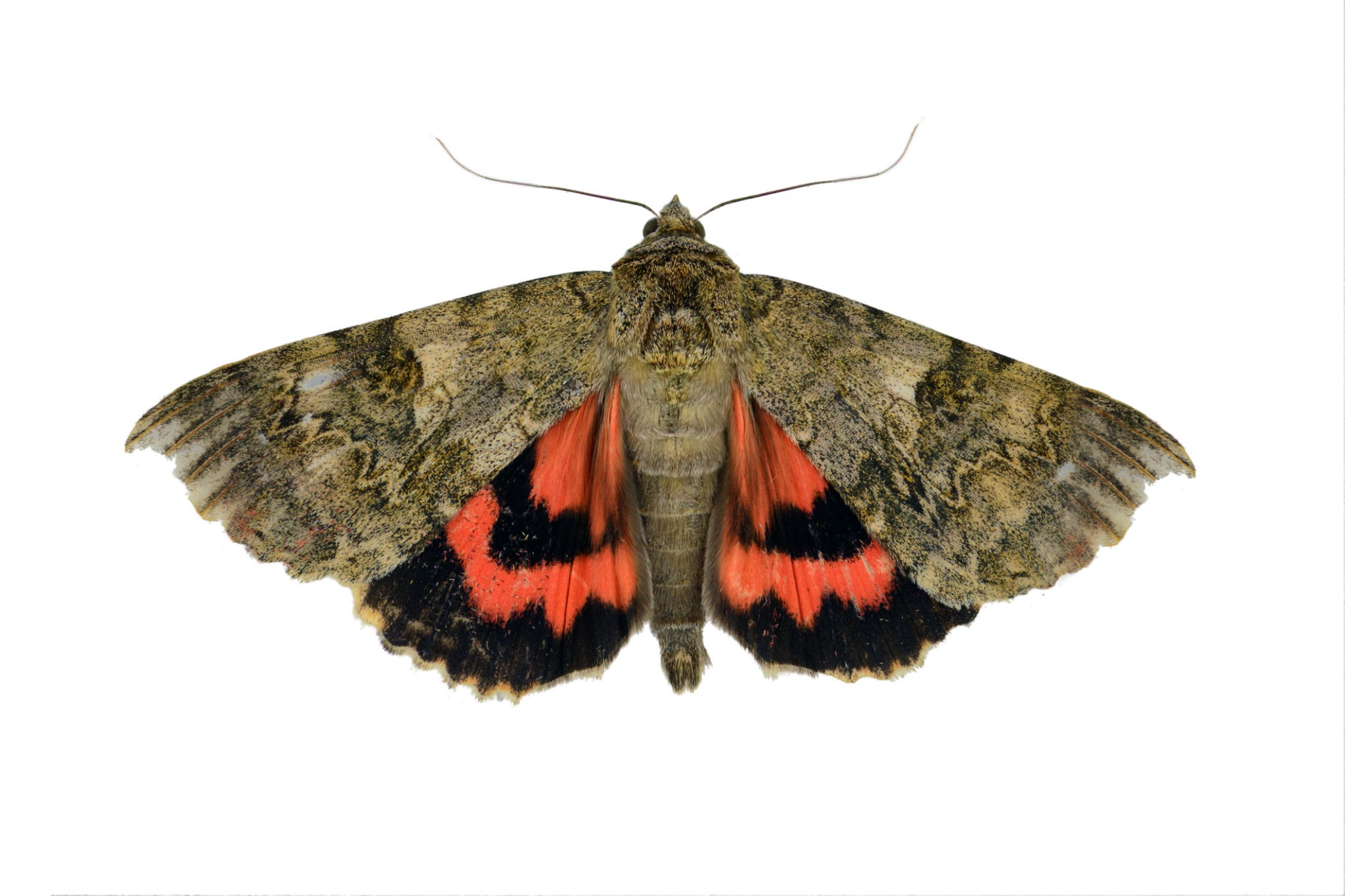
Underwing Moths (Catocala spp.) are large, attractive moths best known for the colorful markings hidden beneath their camouflaged forewings. When at rest, most species blend closely with tree bark, logs, and shaded surfaces. When disturbed, they suddenly expose brightly colored hindwings marked with red, orange, yellow, pink, or black bands. This flash of color can startle birds and other predators long enough for the moth to escape.
Underwing Moths belong to the family Erebidae and are especially diverse in North America. Many species are associated with deciduous forests, wooded yards, parks, riparian areas, and landscapes with mature shade trees. Their caterpillars feed on the leaves of trees such as oak, hickory, walnut, willow, poplar, birch, and maple. In most cases, feeding damage is light and does not seriously harm healthy trees.
While Underwing Moths are not major household pests, their larvae may occasionally cause noticeable defoliation on ornamental or shade trees. This is most likely to occur when caterpillar populations are unusually high or when trees are already stressed by drought, disease, root damage, or other insect pests. Because these moths are also valuable members of forest ecosystems, management usually focuses on monitoring rather than broad control.
For homeowners, gardeners, and tree managers, Underwing Moths are best understood as mostly beneficial or neutral native moths with occasional minor pest potential. Their camouflage, nocturnal habits, and striking warning display make them some of the most interesting moths encountered around trees and wooded properties.
Taxonomy and Classification
- Kingdom: Animalia
- Phylum: Arthropoda
- Class: Insecta
- Order: Lepidoptera
- Family: Erebidae
- Genus: Catocala
Underwing Moths are members of the order Lepidoptera, which includes moths and butterflies. Like all moths in this order, they undergo complete metamorphosis with egg, larval, pupal, and adult stages. The genus Catocala is one of the largest and most diverse moth groups, with many species named for their colors, host plants, or distinctive hindwing patterns.
Physical Description
Adult Underwing Moths vary in size, but many are medium to large moths with wingspans ranging from about 50 millimeters to more than 100 millimeters. Their forewings are usually gray, brown, tan, or blackish with bark-like patterns. This camouflage allows them to rest on tree trunks during the day without being easily noticed.
The hindwings provide the most recognizable feature. Depending on the species, the hindwings may display bold bands or patches of red, orange, yellow, pink, white, or black. These markings are hidden beneath the forewings when the moth is at rest.
- Adult Key ID: Camouflaged forewings with brightly colored hindwings hidden underneath.
- Larva Key ID: Large, twig-like caterpillars that flatten against bark or branches during the day.
- Behavior Key ID: Sudden flashing of colorful hindwings when disturbed.
- Main Conflict: Occasional defoliation of deciduous shade trees.
The caterpillars are often elongated, grayish, brown, or mottled, helping them resemble twigs, bark, or rough branches. Some have small irregular projections, filaments, or uneven body shapes that improve camouflage. Because they feed mainly at night and hide during the day, they are not always noticed until leaf damage appears.
Distribution and Habitat
Underwing Moths are found across North America, Europe, and Asia, with especially high diversity in wooded regions. In the United States and Canada, many species inhabit deciduous forests, river bottoms, suburban landscapes, parks, and areas with mature hardwood trees.
Common habitats include:
- Oak and hickory forests
- Wooded neighborhoods
- Urban parks
- Riparian corridors
- Orchards and shelterbelts
- Backyards with mature shade trees
- Forest edges and woodland trails
Adults often rest on tree trunks, fence posts, walls, and other vertical surfaces during the day. Their bark-colored forewings make them difficult to detect unless they are disturbed.
Life Cycle
Underwing Moths undergo complete metamorphosis. Females lay eggs on or near host trees, often in bark crevices or sheltered areas. The eggs usually overwinter and hatch in spring when new leaves are available.
Young caterpillars feed on tender foliage and grow through several stages. As they mature, they become larger and more cryptic. Many species feed primarily at night and hide on bark or branches during daylight hours.
When fully grown, larvae pupate in leaf litter, loose soil, or sheltered debris. Adults usually emerge later in summer or early fall, depending on the species and local climate. Many species are most active as adults from midsummer into autumn.
Behavior and Feeding
Adult Underwing Moths are nocturnal and are often attracted to lights, tree sap, fermenting fruit, and sugar baits. They may visit porch lights, windows, and outdoor fixtures at night, but they do not infest homes or damage household materials.
The caterpillars feed on deciduous trees and shrubs. Host plants vary by species, but common hosts include:
- Oak
- Hickory
- Walnut
- Willow
- Poplar
- Birch
- Maple
- Apple
- Cherry
Their feeding usually causes scattered leaf chewing rather than complete defoliation. However, localized outbreaks may result in noticeable thinning of foliage on individual trees.
Damage and Conflict
The main pest concern associated with Underwing Moths is minor to moderate defoliation caused by the caterpillars. Damage is most likely to appear in spring or early summer when larvae are actively feeding.
Healthy mature trees can usually tolerate some leaf loss without long-term harm. Trees have natural reserves and often recover quickly after limited feeding. Concern increases when trees are young, newly planted, drought-stressed, diseased, or already weakened by other pests.
Because Underwing Moths are native components of many forest ecosystems, unnecessary chemical control should be avoided. Their larvae and adults provide food for birds, bats, spiders, predatory insects, and small mammals.
Management and Prevention
Management of Underwing Moths is usually based on observation, tolerance, and conservation of natural enemies. Most populations are controlled naturally by birds, parasitic wasps, flies, spiders, and disease organisms.
Monitoring
- Inspect tree trunks and branches in spring for resting caterpillars.
- Look for irregular leaf chewing on oak, hickory, walnut, willow, and other host trees.
- Monitor young or stressed ornamental trees more closely than mature forest trees.
- Use nighttime inspections if caterpillars are suspected but not visible during the day.
Non-Chemical Control
- Hand-pick visible caterpillars from small trees when practical.
- Maintain tree health through proper watering and mulching.
- Avoid unnecessary pruning or soil disturbance around stressed trees.
- Encourage birds and beneficial insects by maintaining diverse plantings.
Targeted Intervention
Chemical treatment is rarely needed. If high populations threaten valuable young trees, targeted treatment may be considered while caterpillars are still small. Products containing Bacillus thuringiensis var. kurstaki may help control young caterpillars with less impact on many non-target organisms when applied correctly. Treatments should be limited to affected trees and used according to label directions.
Conservation and Research
Underwing Moths are important subjects of study for entomologists, naturalists, and moth enthusiasts. Their bark-like camouflage, vivid hindwing coloration, and predator-avoidance behavior make them excellent examples of insect adaptation.
Researchers study Underwing Moths to better understand biodiversity, forest food webs, host plant relationships, camouflage evolution, and the ecological role of moths in supporting birds, bats, and other wildlife. Because many species are associated with mature deciduous trees, they can also reflect the health and diversity of woodland habitats.
Conclusion
Underwing Moths are striking insects that combine excellent camouflage with dramatic hidden coloration. Their caterpillars feed on deciduous trees such as oak, hickory, walnut, and willow, but most feeding damage is minor and well tolerated by healthy trees. Adults do not damage homes, stored food, clothing, or structures.
In most landscapes, Underwing Moths should be appreciated as part of a healthy ecosystem rather than treated as serious pests. Monitoring young or stressed trees, encouraging natural predators, and using targeted controls only when necessary can help balance tree protection with moth conservation.