Overview
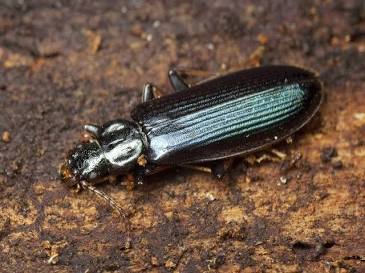
Underbark Beetles is a general term used to describe several groups of wood-boring beetles that spend much of their life cycle beneath the bark of trees. The most important members of this group are the Bark Beetles (Subfamily Scolytinae) and certain species of Flatheaded Borers (Family Buprestidae). These insects are among the most destructive forest and landscape pests in the world because they attack the living tissues that transport water and nutrients throughout a tree.
Unlike insects that feed on leaves or fruit, underbark beetles target the phloem and cambium layers located just beneath the bark. Adult beetles bore through the outer bark and create galleries where eggs are deposited. After hatching, larvae tunnel through the nutrient-rich tissues, disrupting the movement of water and carbohydrates. Severe infestations can effectively girdle a tree, causing decline, branch dieback, and eventual death.
Underbark beetles are responsible for the loss of millions of trees annually in forests, parks, urban landscapes, and commercial timber operations. Some species primarily attack weakened or dying trees, while others are capable of killing healthy trees through coordinated mass attacks. Their impact has become increasingly significant as drought, climate change, and forest stress create favorable conditions for outbreaks.
In addition to direct feeding damage, many species transmit fungi and other pathogens that accelerate tree decline. Because of their ability to cause widespread mortality, underbark beetles are considered some of the most economically important tree pests in North America and around the world.
Taxonomy and Classification
- Kingdom: Animalia
- Phylum: Arthropoda
- Class: Insecta
- Order: Coleoptera
Underbark beetles include numerous species from multiple beetle families, primarily:
- Scolytinae (Bark Beetles)
- Buprestidae (Flatheaded Borers)
- Cerambycidae (Certain Wood Borers)
Many species are highly specialized and attack only specific tree hosts. Examples include beetles that primarily infest pine, spruce, fir, ash, walnut, elm, oak, or other hardwood species.
Physical Description
Adult underbark beetles are generally small insects ranging from about 1 millimeter to 10 millimeters in length, although some borer species may be larger.
- Bark Beetles: Small, cylindrical beetles usually brown, black, or reddish-brown in color.
- Flatheaded Borers: Elongated beetles, often metallic green, bronze, blue, or black.
- Larvae: Cream-colored grubs that live beneath bark and feed within the tree.
- Exit Holes: Small round or D-shaped emergence holes may be visible on bark surfaces.
Bark beetle larvae are typically legless and curved, while flatheaded borer larvae have flattened, segmented bodies with enlarged thoracic regions that give them their common name.
Distribution and Habitat
Underbark beetles occur throughout North America, Europe, Asia, Africa, South America, and Australia. They are found wherever suitable host trees exist.
Their habitat consists primarily of:
- Forests
- Woodlands
- Urban landscapes
- Parks and recreational areas
- Commercial timberlands
- Shelterbelts and windbreaks
- Residential yards
Depending on the species, beetles may infest living trees, stressed trees, recently dead trees, storm-damaged trees, logging debris, fire-damaged trees, or freshly cut timber.
Life Cycle
Underbark beetles undergo complete metamorphosis consisting of egg, larva, pupa, and adult stages.
Adult females locate suitable host trees and tunnel beneath the bark. Eggs are deposited within galleries constructed in the cambium and phloem layers.
After hatching, larvae feed extensively beneath the bark, creating branching tunnels that disrupt nutrient transport. As they grow, the galleries expand and may eventually intersect with those of other larvae.
Once development is complete, larvae pupate beneath the bark before emerging as adults through exit holes. Depending on species and climate, one or more generations may occur annually.
Some species can complete their development within a single growing season, while others may require two years or longer.
Damage and Identification
The most important signs of underbark beetle infestation are found on the bark and beneath its surface.
- Gallery Patterns: Distinctive feeding tunnels beneath the bark.
- Frass: Fine sawdust-like material accumulating around bark crevices.
- Pitch Tubes: Resin masses on conifers where beetles entered the tree.
- Exit Holes: Small round or D-shaped openings created by emerging adults.
- Crown Decline: Yellowing, browning, or thinning foliage.
- Branch Dieback: Progressive death of branches and upper canopy.
Because larvae feed beneath the bark, significant damage may occur before symptoms become visible from a distance.
Behavior and Conflict
The primary conflict caused by underbark beetles is tree mortality. Once enough galleries are created beneath the bark, water and nutrient movement becomes severely restricted.
Mass Attack Strategy
Many bark beetle species use aggregation pheromones to coordinate attacks. When a suitable tree is located, pioneering beetles release chemical signals that attract hundreds or thousands of additional beetles.
This mass attack overwhelms the tree’s natural defenses. Healthy trees often produce resin to expel invading beetles, but coordinated attacks can exceed the tree’s ability to respond.
Disease Transmission
Several bark beetle species carry pathogenic fungi known as blue-stain fungi. These fungi colonize the tree’s vascular system, reducing water transport and accelerating decline.
The combination of fungal infection and beetle feeding often leads to rapid tree death.
Host Trees
Host preferences vary depending on species. Commonly affected trees include:
- Pine
- Spruce
- Fir
- Ash
- Walnut
- Oak
- Elm
- Willow
- Poplar
- Maple
Some species attack only one type of tree, while others utilize several related hosts.
Management and Prevention
Successful management focuses on prevention, sanitation, and maintaining tree health.
Sanitation
- Remove infested trees promptly.
- Chip, burn, or properly dispose of infested wood.
- Remove storm-damaged trees and branches.
- Avoid storing infested firewood near healthy trees.
Tree Health Management
- Provide adequate watering during drought.
- Avoid root damage and soil compaction.
- Protect trees from mechanical injuries.
- Maintain proper mulching practices.
- Monitor for early signs of stress.
Healthy trees are generally more resistant to beetle attack than stressed trees.
Chemical Control
Preventative bark sprays may protect high-value trees when applied before beetle activity begins. Once beetles have successfully colonized a tree, chemical treatments are often less effective because the insects are protected beneath the bark.
Professional arborists and pest management specialists may recommend preventative treatments during periods of elevated beetle pressure.
Conservation and Research
Research on underbark beetles has expanded significantly due to increasing outbreaks linked to climate change, drought, and changing forest conditions. Scientists study beetle population dynamics, pheromone communication, fungal associations, and tree resistance mechanisms.
Pheromone-based monitoring systems are increasingly used to detect outbreaks and predict infestation levels. Researchers are also investigating genetic traits that may improve resistance in susceptible tree species.
Although many underbark beetles are destructive pests, they also play ecological roles by helping recycle dead wood and creating habitat for other organisms. The challenge for forest managers is balancing natural ecosystem processes with the protection of valuable trees and timber resources.
Conclusion
Underbark beetles are among the most significant tree-killing insects in forests and landscapes worldwide. By tunneling beneath bark and feeding within the phloem and cambium layers, they can disrupt essential nutrient transport and cause rapid tree decline. Their ability to coordinate mass attacks and spread disease makes them particularly destructive.
Early detection, proper sanitation, and maintaining tree vigor remain the most effective tools for preventing severe infestations. Understanding these insects and their behavior is essential for protecting forests, urban trees, and valuable landscape plantings from potentially devastating damage.