Overview
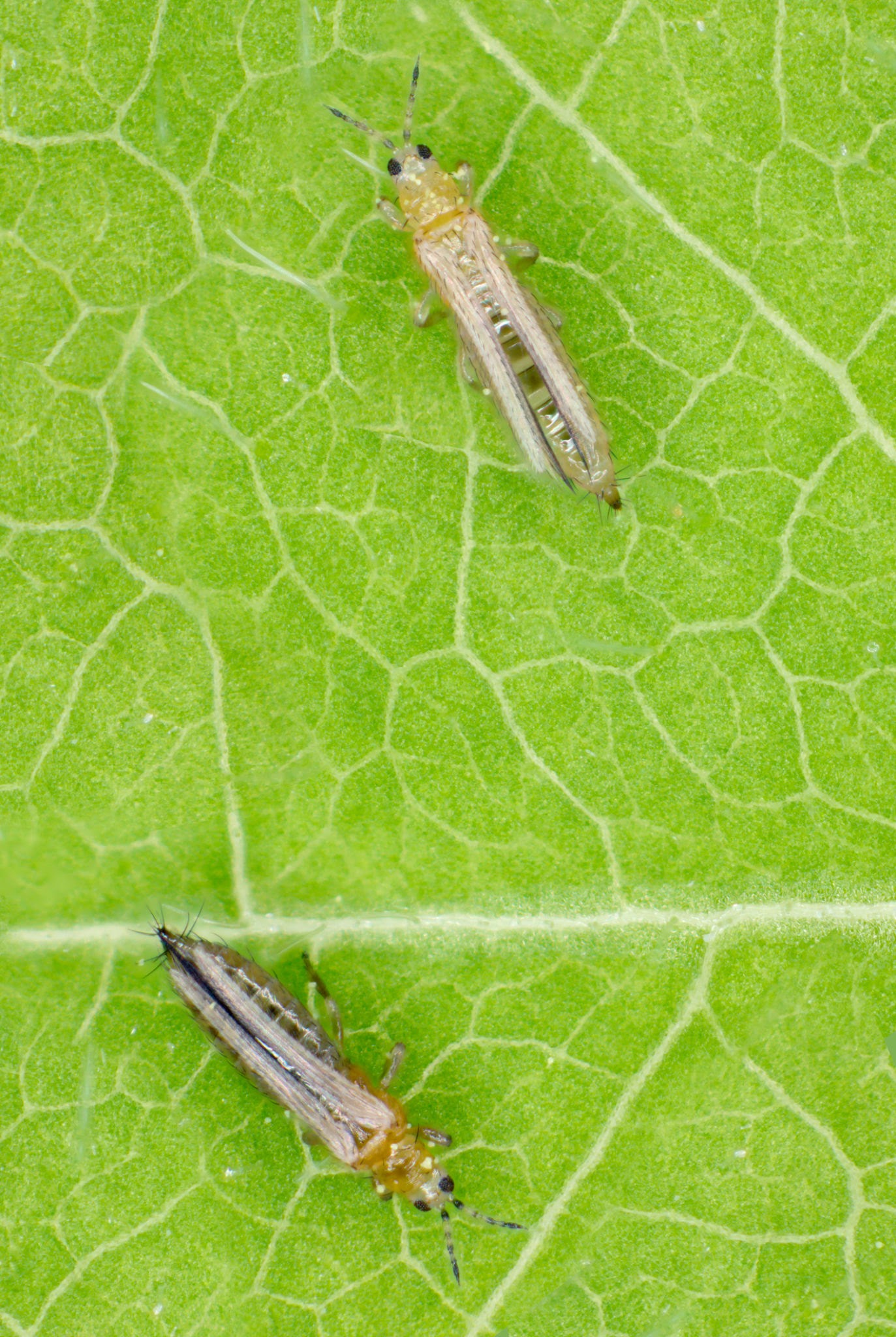
Under-leaf Thrips are a group of tiny plant-feeding insects belonging to the order Thysanoptera. They are among the most important pests of agricultural crops, greenhouse plants, ornamental flowers, fruit crops, and vegetables worldwide. Their common name comes from their tendency to feed and reproduce on the protected undersides of leaves, where they are shielded from predators, environmental conditions, and many pesticide applications.
Although extremely small, thrips can cause significant economic damage. They feed by puncturing plant cells and extracting their contents using specialized rasping-sucking mouthparts. This feeding behavior destroys plant tissue and results in characteristic silver, bronze, or stippled discoloration on leaves, flowers, and fruit.
Beyond direct feeding damage, many thrips species are notorious for transmitting destructive plant viruses. The most important of these is Tomato Spotted Wilt Virus (TSWV), a disease capable of causing severe crop losses in tomatoes, peppers, peanuts, ornamentals, and numerous other plants. Because of their ability to spread viruses rapidly, even small thrips populations can have major economic consequences.
Several species are considered major pests, including the Western Flower Thrips (Frankliniella occidentalis), Onion Thrips (Thrips tabaci), and various greenhouse thrips species. Their small size, hidden feeding locations, and increasing insecticide resistance make them one of the most challenging insect pests to manage.
Taxonomy and Classification
- Kingdom: Animalia
- Phylum: Arthropoda
- Class: Insecta
- Order: Thysanoptera
The order Thysanoptera contains more than 6,000 known species worldwide. While some species feed on fungi or pollen and are relatively harmless, many are serious agricultural pests.
Common pest species include:
- Western Flower Thrips (Frankliniella occidentalis)
- Onion Thrips (Thrips tabaci)
- Greenhouse Thrips (Heliothrips haemorrhoidalis)
- Chili Thrips (Scirtothrips dorsalis)
Thrips undergo a unique developmental process that includes non-feeding pupal-like stages, distinguishing them from many other plant-feeding insects.
Physical Description
Adult thrips are extremely small insects, usually measuring between 0.5 and 3 millimeters in length.
- Body Shape: Slender, elongated, and cylindrical.
- Coloration: Yellow, tan, brown, black, or pale orange depending on species.
- Wings: Narrow wings fringed with long hairs.
- Mouthparts: Specialized rasping-sucking feeding apparatus.
- Movement: Active crawlers capable of short flights or dispersal by wind.
The distinctive fringed wings give the order Thysanoptera its name, which roughly translates to “fringed wings.”
Immature thrips resemble smaller wingless versions of adults and are often pale yellow or cream-colored.
Distribution and Habitat
Under-leaf thrips occur worldwide and are found in virtually every agricultural and horticultural region. They thrive in both outdoor and protected growing environments.
Common habitats include:
- Vegetable fields
- Greenhouses
- Flower production facilities
- Fruit orchards
- Nurseries
- Landscape plantings
- Home gardens
- Agricultural fields
Thrips prefer sheltered locations on plants where humidity is slightly higher and exposure to predators is reduced. They commonly concentrate on:
- Leaf undersides
- Flower buds
- Open flowers
- Growing points
- Young foliage
- Developing fruit
Life Cycle
Thrips undergo a unique form of development that combines characteristics of simple and complete metamorphosis.
The life cycle includes:
- Egg
- Larval Stage I
- Larval Stage II
- Prepupal Stage
- Pupal Stage
- Adult
Females insert eggs directly into plant tissues where they remain protected until hatching.
Young larvae begin feeding immediately and cause much of the visible plant damage. After completing feeding stages, larvae enter quiescent prepupal and pupal stages, often in soil, leaf litter, growing media, or protected plant crevices.
Development is rapid under warm conditions, allowing multiple generations to occur annually. In greenhouses, populations may reproduce continuously throughout the year.
Feeding Behavior
Thrips feed using a unique rasping-sucking mechanism. They scrape the surface of plant tissues and then consume the released cellular contents.
This feeding method destroys individual plant cells and produces characteristic symptoms.
Common feeding sites include:
- Leaf tissue
- Flower petals
- Pollen-bearing structures
- Young shoots
- Fruit surfaces
Because they often feed on hidden plant surfaces, infestations may become established before growers notice symptoms.
Damage and Identification
Thrips damage can be recognized through several distinctive symptoms.
Silvering and Bronzing
The most common symptom is a silvery or bronze appearance on leaves. This occurs because feeding destroys plant cells, leaving tiny air-filled spaces that reflect light.
Stippling and Streaking
Heavily infested leaves may develop streaks, patches, or extensive areas of discoloration.
Black Fecal Spots
Tiny black specks of excrement are often visible near feeding sites and serve as an important diagnostic clue.
Flower Damage
Flowers may become distorted, discolored, scarred, or fail to develop properly.
Fruit Injury
Feeding can create scars, russeting, deformities, and cosmetic damage that reduce market value.
Virus Transmission
The most serious threat posed by many thrips species is their ability to transmit plant viruses.
Important viruses spread by thrips include:
- Tomato Spotted Wilt Virus (TSWV)
- Impatiens Necrotic Spot Virus (INSV)
- Groundnut Bud Necrosis Virus
- Various Tospoviruses
TSWV alone affects hundreds of plant species and can cause extensive losses in commercial agriculture.
Young thrips acquire the virus while feeding on infected plants. Once infected, they may transmit the virus for the remainder of their lives.
Management and Prevention
Successful thrips management requires an Integrated Pest Management (IPM) approach.
Monitoring
- Inspect leaf undersides regularly.
- Examine flowers and growing points.
- Use blue sticky traps.
- Use yellow sticky traps.
- Monitor for early feeding symptoms.
Sanitation
- Remove infested plant material.
- Control weeds that may harbor thrips.
- Clean greenhouse debris.
- Dispose of infected plants promptly.
Biological Control
Biological control plays a major role in greenhouse and ornamental production.
Important natural enemies include:
- Amblyseius predatory mites
- Orius minute pirate bugs
- Predatory lacewings
- Predatory thrips species
Chemical Control
Chemical control often requires careful product rotation because many thrips populations have developed significant insecticide resistance.
Systemic and targeted contact insecticides may be used when populations exceed economic thresholds. Thorough coverage is essential due to their protected feeding locations.
Research and Future Management
Thrips remain one of the most heavily studied agricultural pests. Researchers continue investigating virus transmission mechanisms, insecticide resistance, biological control strategies, and improved monitoring systems.
Significant effort is being directed toward understanding TSWV transmission at the molecular level and developing resistant crop varieties that can tolerate infection.
Advances in biological control, precision agriculture, and greenhouse management continue to improve long-term thrips suppression while reducing reliance on chemical treatments.
Conclusion
Under-leaf Thrips are tiny but highly destructive pests that affect crops, ornamentals, and greenhouse plants worldwide. Their feeding causes silvering, bronzing, and distortion of plant tissues, while their ability to spread devastating plant viruses makes them particularly dangerous.
Because they hide on leaf undersides and within flowers, early detection is essential. Integrated Pest Management programs that combine monitoring, sanitation, biological control, and carefully selected treatments offer the most effective and sustainable approach to managing these challenging pests.