Overview
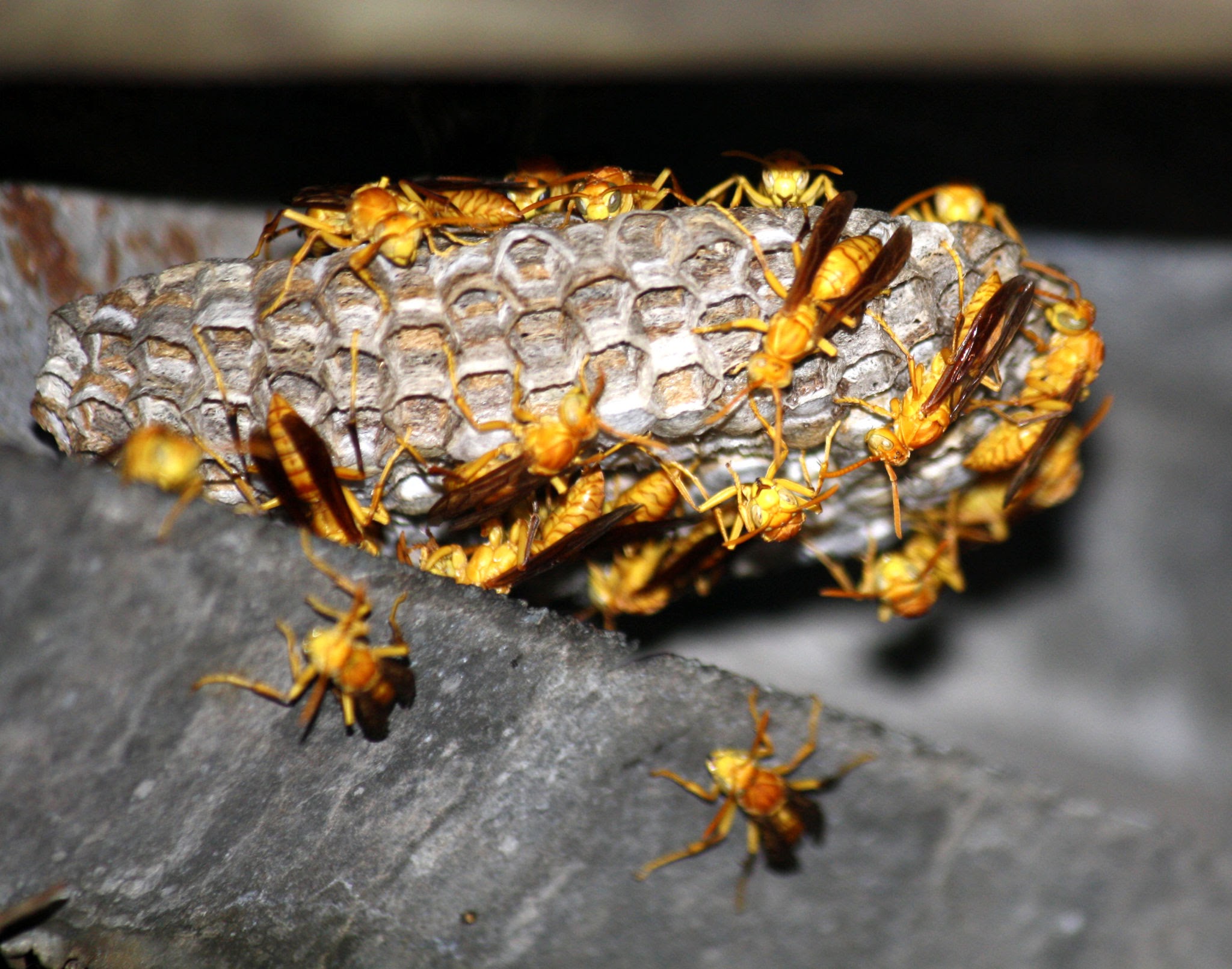
Umbrella Wasps are a common name for several species of paper wasps in the genus Polistes. They receive the name “umbrella wasps” because of the distinctive shape of their exposed paper nests. These nests often hang from a single central stalk and form an open comb that resembles a small upside-down umbrella.
Umbrella wasps are social insects that live in small annual colonies. They are frequently found around homes, sheds, barns, porches, decks, fences, garages, playground equipment, and other sheltered outdoor structures. Although they can be alarming when nesting near people, they are also beneficial predators that capture caterpillars and other soft-bodied insects to feed their larvae.
The main conflict with umbrella wasps is their defensive behavior near the nest. Unlike solitary wasps, social paper wasps actively protect their colony. If a person, pet, or piece of equipment gets too close, workers may sting repeatedly. Their sting is painful and can be dangerous for people with allergies to wasp venom.
Because of their beneficial role in natural pest control, umbrella wasps do not always need to be removed. Nests located away from doors, walkways, patios, windows, or high-traffic areas can often be left alone until the colony dies naturally at the end of the season. However, nests near human activity may require careful removal or professional treatment.
Taxonomy and Classification
- Kingdom: Animalia
- Phylum: Arthropoda
- Class: Insecta
- Order: Hymenoptera
- Family: Vespidae
- Genus: Polistes
Umbrella wasps belong to the same family as yellowjackets, hornets, and other social wasps. They are considered paper wasps because they create nests from chewed wood fibers mixed with saliva. The resulting material dries into a gray, paper-like structure.
Colonies are annual in most temperate climates. A single fertilized queen, also called a foundress, begins the nest in spring. Workers are produced later and help expand the colony, collect food, feed larvae, and defend the nest.
Physical Description
Adult umbrella wasps are slender insects measuring approximately 15 to 25 millimeters in length. Their bodies are narrow, with a distinct waist between the thorax and abdomen.
- Adult Appearance: Slender body with long legs and narrow wings.
- Coloration: Red, reddish-brown, yellow, black, or black-and-yellow depending on species.
- Legs: Long legs often dangle noticeably during flight.
- Wings: Fold lengthwise over the body when resting.
- Stinger: Females can sting multiple times.
Umbrella wasps are often confused with yellowjackets, but they are usually slimmer and less compact. Their slow, dangling-leg flight is also a helpful identification clue.
Nest Identification
The nest is one of the easiest ways to identify umbrella wasps. Unlike yellowjackets, which often build enclosed paper nests underground or inside wall voids, umbrella wasps usually build exposed combs.
Typical nest features include:
- Open gray paper comb.
- Visible hexagonal cells.
- Single central attachment stalk.
- No outer paper envelope.
- Usually located under protected surfaces.
Common nesting locations include:
- Under roof eaves.
- Under deck railings.
- Porch ceilings.
- Window frames.
- Fence posts.
- Outdoor furniture.
- Playground equipment.
- Sheds and garages.
Distribution and Habitat
Umbrella wasps are found worldwide, especially in warm and temperate regions. In North America, many Polistes species are common in residential neighborhoods, farms, gardens, orchards, parks, and urban landscapes.
They prefer sheltered outdoor locations protected from direct rain and strong wind. Buildings and human-made structures provide ideal nesting sites, which is why paper wasp nests are frequently found around homes.
Life Cycle
Umbrella wasps undergo complete metamorphosis with four life stages:
- Egg
- Larva
- Pupa
- Adult
In spring, a fertilized queen begins building a small paper comb and lays eggs in the first cells. She feeds the larvae until the first workers mature. Once workers emerge, they take over foraging, nest expansion, and larval care while the queen focuses on egg production.
Colonies grow throughout summer and may become more defensive as worker numbers increase. By late summer or fall, colonies produce new queens and males. After mating, fertilized queens seek sheltered overwintering sites, while workers, males, and the old queen die as cold weather arrives.
Behavior and Feeding
Adult umbrella wasps feed mainly on nectar, sugary liquids, and other carbohydrate sources. Workers hunt insects and chew them into soft food for developing larvae.
Common prey includes:
- Caterpillars
- Flies
- Beetle larvae
- Leaf-feeding insects
- Small soft-bodied arthropods
This predatory behavior makes umbrella wasps beneficial in gardens and landscapes because they help reduce populations of plant-feeding pests.
Stinging Risk and Conflict
The main concern with umbrella wasps is their ability to sting when nests are disturbed. Workers defend the nest aggressively if they perceive a threat.
Common disturbance situations include:
- Opening a shed door near a nest.
- Using outdoor furniture where a nest is hidden.
- Trimming shrubs or vines near a nest.
- Children playing near porch or deck nests.
- Pets investigating low-hanging nests.
A sting usually causes immediate pain, redness, swelling, and irritation. For allergic individuals, a sting may trigger a severe reaction requiring emergency medical attention.
Management and Prevention
Management depends on nest location and risk level. Not every nest needs removal.
When to Leave Nests Alone
Nests located far from people, pets, doors, windows, or walkways can often be left undisturbed. The colony will naturally die out at the end of the season in most climates.
Early Nest Removal
Small spring nests are easier to remove than mature summer nests. If a new nest contains only a queen and a few cells, it may be removed carefully when wasp activity is low.
Chemical Control
If treatment is needed, aerosol wasp sprays or insecticidal dusts are commonly applied directly to the nest. Treatments are usually most effective after dark or very early in the morning when most wasps are inside the nest.
Large nests, nests in difficult locations, or nests near sensitive areas should be handled by a pest control professional.
Prevention Tips
- Inspect eaves, decks, sheds, and porch ceilings in spring.
- Remove small starter nests early.
- Seal cracks and gaps around structures.
- Keep outdoor garbage tightly covered.
- Avoid leaving sugary drinks or food outside.
- Check outdoor furniture and playground equipment regularly.
Conservation and Research
Umbrella wasps are valuable predators and play an important role in regulating herbivorous insect populations. Researchers study their communication, colony organization, nest-building behavior, and predatory role in agricultural and garden ecosystems.
Because they help control caterpillars and other pests, unnecessary destruction of remote nests should be avoided whenever possible.
Conclusion
Umbrella wasps are social paper wasps known for their exposed, umbrella-shaped nests and long-legged flight. They are beneficial predators that help control caterpillars and other plant-feeding insects, but they can become a serious nuisance when nests are built near people.
The best management approach is risk-based. Nests in low-traffic areas can often be left alone, while nests near doors, patios, decks, playgrounds, or work areas may require careful removal. Understanding their behavior helps homeowners balance public safety with the ecological benefits these wasps provide.