Overview
Ulmus Aphids are specialized sap-feeding insects that attack elm trees (Ulmus species). These small insects belong to the aphid family and are commonly found in urban landscapes, residential neighborhoods, parks, campuses, and natural woodlands where elm trees grow. Although individual aphids cause little damage, large colonies can significantly affect tree appearance and health by removing plant sap, distorting foliage, and producing large amounts of sticky honeydew.
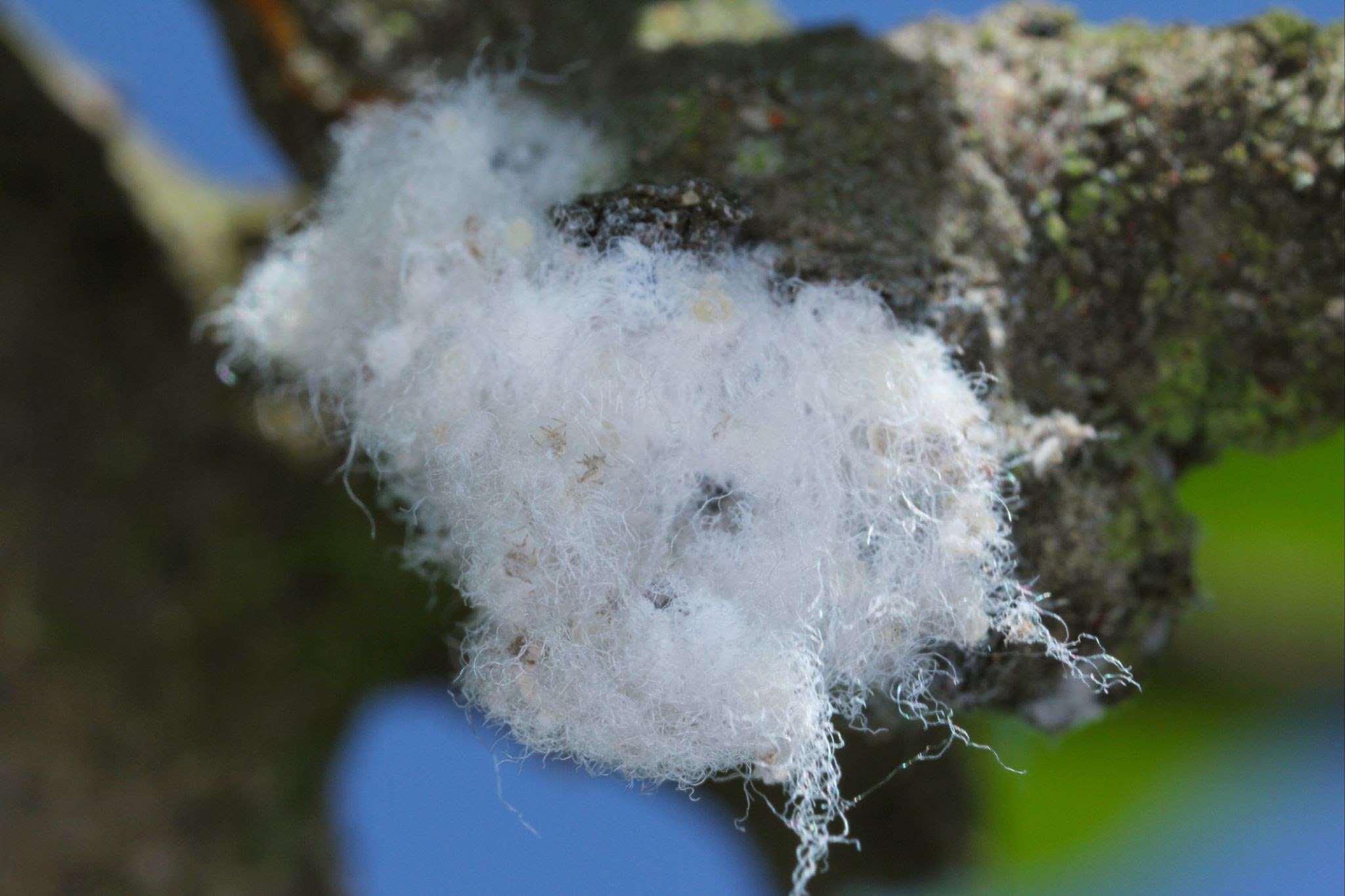
Several aphid species are associated with elm trees, including the Woolly Elm Aphid (Eriosoma americanum) and the Elm Cockscomb Gall Aphid (Colopha ulmicola). These insects are known for creating unusual leaf distortions, fuzzy wax-covered colonies, and distinctive galls on elm foliage.
Most infestations are considered nuisance problems rather than serious threats to mature trees. However, repeated heavy infestations can stress young trees, reduce photosynthetic capacity, and create messy conditions due to honeydew accumulation and sooty mold growth.
Because aphids reproduce rapidly and often have complex life cycles involving multiple host plants, populations can increase dramatically during favorable growing conditions.
Taxonomy and Classification
- Kingdom: Animalia
- Phylum: Arthropoda
- Class: Insecta
- Order: Hemiptera
- Family: Aphididae
Ulmus Aphids belong to a large group of plant-feeding insects known as aphids. Members of this family are characterized by their soft bodies, rapid reproduction, and ability to form dense colonies on host plants.
Important elm-associated species include:
- Eriosoma americanum (Woolly Elm Aphid)
- Colopha ulmicola (Elm Cockscomb Gall Aphid)
- Various leaf-curling elm aphids
- Several migratory elm-root aphid species
Physical Description
Ulmus Aphids are small, soft-bodied insects typically measuring between 1 and 4 millimeters in length.
Adult Aphids
- Pear-shaped body.
- Green, yellow, gray, brown, or pink coloration.
- Long antennae.
- Six slender legs.
- Paired cornicles extending from the abdomen.
Many species produce white, waxy secretions that cover their bodies and colonies, giving them a cottony or wool-like appearance.
Winged Forms
During certain times of the year, colonies produce winged adults known as alates.
- Capable of long-distance dispersal.
- Migrate between host plants.
- Responsible for establishing new colonies.
Distribution and Habitat
Ulmus Aphids occur throughout North America, Europe, and Asia wherever elm trees are present.
Common habitats include:
- Urban landscapes
- Street trees
- Parks
- Residential yards
- Woodlands
- Riparian forests
- Arboretums
- Commercial landscapes
Most colonies are found on:
- Young leaves
- Leaf undersides
- Tender shoots
- New growth
- Leaf petioles
Certain species spend part of their life cycle on alternate hosts such as apple, serviceberry, or other woody plants.
Life Cycle
Ulmus Aphids have complex life cycles that often involve multiple generations and host plants.
The life cycle generally includes:
- Overwintering egg stage.
- Spring stem mothers.
- Multiple asexual generations.
- Winged migratory forms.
- Sexual reproductive generation.
In spring, eggs hatch on elm trees and produce the first generation of females.
These females reproduce through parthenogenesis, giving birth to live offspring without mating.
As populations increase, winged forms develop and migrate to secondary host plants where additional generations occur.
In autumn, aphids return to elm trees and produce eggs that survive the winter.
This reproductive strategy allows populations to increase rapidly during favorable conditions.
Behavior and Feeding
Ulmus Aphids feed using specialized piercing-sucking mouthparts.
They insert these mouthparts into plant tissues and extract nutrient-rich sap from the tree’s vascular system.
Large colonies may contain hundreds or thousands of individuals feeding simultaneously.
Common feeding locations include:
- Leaf undersides.
- Young shoots.
- Leaf petioles.
- Developing buds.
As they feed, aphids remove water and nutrients that would otherwise support tree growth and leaf development.
Signs of Infestation
Several symptoms may indicate the presence of Ulmus Aphids.
Leaf Curling
One of the most common signs is curling or distortion of young leaves.
Leaves may fold tightly around aphid colonies, creating protective shelters.
Woolly Colonies
Woolly Elm Aphids produce white wax that resembles cotton or snow.
Branches and leaves may appear covered in fuzzy material.
Cockscomb Galls
The Elm Cockscomb Gall Aphid produces distinctive elongated galls that resemble a rooster’s comb.
These raised structures are often bright green or reddish and highly visible.
Honeydew
Aphids excrete excess sugar in the form of sticky honeydew.
Honeydew commonly accumulates on:
- Leaves.
- Sidewalks.
- Cars.
- Patio furniture.
- Outdoor structures.
Sooty Mold
Black fungal growth known as sooty mold often develops on honeydew-covered surfaces.
Although sooty mold does not directly infect plants, it can reduce photosynthesis and create unsightly conditions.
Damage and Economic Importance
Most mature elm trees tolerate moderate aphid populations without lasting injury.
However, heavy infestations may result in:
- Reduced photosynthesis.
- Premature leaf drop.
- Stunted growth.
- Decline of young trees.
- Reduced ornamental value.
- Honeydew-related nuisance problems.
Urban property owners often consider honeydew accumulation and sooty mold development the most troublesome consequences of infestation.
Relationship with Ants
Ulmus Aphids frequently maintain mutualistic relationships with ants.
Ants collect honeydew as a food source and, in return, protect aphid colonies from predators.
Signs of ant activity often include:
- Ant trails on trunks.
- Ants surrounding aphid colonies.
- Reduced predator activity.
This relationship can make aphid infestations more difficult to control naturally.
Management and Control
Integrated Pest Management (IPM) provides the most effective approach for controlling Ulmus Aphids.
Water Sprays
Strong streams of water can physically remove aphids from foliage.
- Safe and environmentally friendly.
- Most effective during early infestations.
- May require repeated applications.
Biological Control
Numerous beneficial insects naturally suppress aphid populations.
- Lady beetles.
- Lacewings.
- Hoverfly larvae.
- Parasitic wasps.
Protecting these natural enemies often prevents severe outbreaks.
Ant Management
Reducing ant activity can improve biological control success.
Sticky barriers placed around trunks can prevent ants from reaching aphid colonies.
Horticultural Oils
Dormant oil applications during winter can smother overwintering eggs before spring emergence.
Systemic Treatments
For valuable trees with severe infestations, systemic insecticides may be applied as:
- Soil drenches.
- Soil injections.
- Trunk injections.
These treatments provide extended protection by targeting aphids as they feed.
Research and Future Management
Researchers continue investigating environmentally responsible approaches for aphid management.
Current areas of study include:
- Biological control enhancement.
- Aphid-host plant interactions.
- Gall formation mechanisms.
- Ant-aphid relationships.
- Reduced-risk insecticides.
- Integrated pest management programs.
Improved understanding of aphid ecology is helping arborists and landscape managers develop more sustainable management strategies.
Conclusion
Ulmus Aphids are common elm tree pests that feed on sap and cause leaf distortion, gall formation, honeydew production, and sooty mold development. Although rarely fatal to mature trees, heavy infestations can weaken young trees and create significant nuisance problems in urban landscapes.
Early detection, conservation of natural predators, ant management, and appropriate cultural practices provide effective long-term control. Understanding the unique biology of these specialized aphids helps homeowners and arborists protect elm trees while minimizing unnecessary pesticide use.