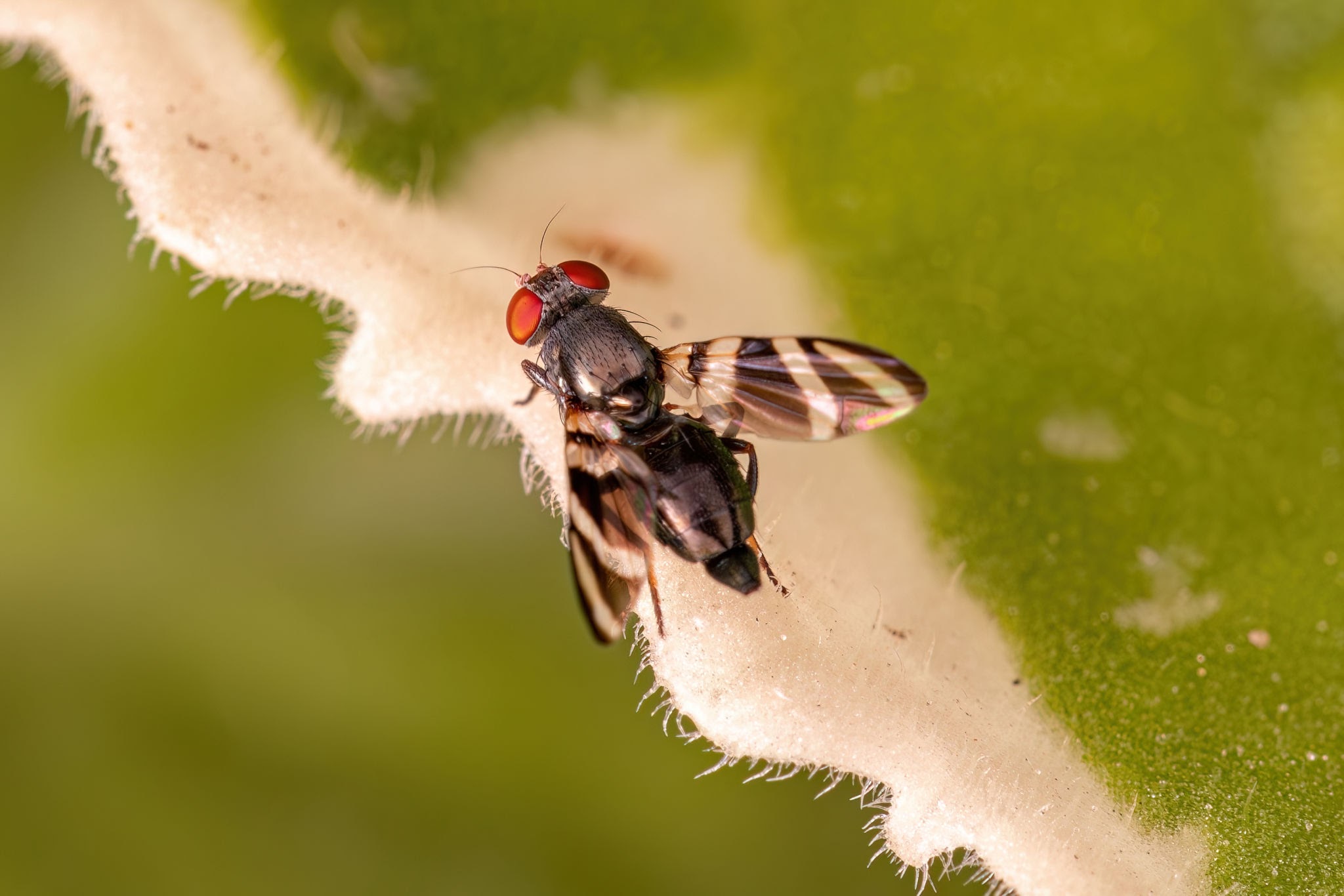
Ulidiid picture-winged flies (family Ulidiidae) are a group of small flies known for their distinctive patterned wings. While many species are harmless, some are agricultural pests that attack fruits, vegetables, and decaying plant matter.
These flies are often confused with fruit flies due to their appearance and behavior. However, ulidiid flies typically feed on decaying organic material or damaged crops rather than healthy fruit. In some agricultural systems, they can become secondary pests that exploit wounds caused by other insects.
3The “Masked” Scavenger: Ulidiid Picture-Winged Flies
Picture-Winged Flies (family Ulidiidae) are a “noxious” and highly recognizable group of “O” pests distributed across the United States. Often confused with the more destructive Fruit Flies (Tephritidae), Ulidiids are primarily scavengers that thrive on decaying organic matter. However, species like the Corn Silk Fly (Euxesta stigmatias) have evolved into primary agricultural threats, particularly in the Southern and Mid-Atlantic regions. These flies are famous for their intricate wing patterns and a unique “dancing” courtship behavior. For a national audience, they represent a transition pest—moving from beneficial decomposers in the compost pile to “O” status invaders of sweet corn and fruit crops.
Identification: The “Banded” Signalers
Identifying Ulidiids requires focusing on the wing pigmentation and the shape of the abdomen. For Pestipedia.com users, the dark wing bands and the “waving” motion are the primary diagnostic keys:
- The Wings: The most identifying feature is the dark brown or black patterns (spots, bands, or “windows”) on otherwise clear wings. Unlike Fruit Flies, their wings lack the tiny “subcostal break” (a microscopic gap in the wing vein).
- The Body: Small to medium-sized (3mm to 8mm). Many U.S. species have a metallic green, blue, or bronze sheen on their thorax and abdomen, giving them a “jewel-like” appearance.
- The “Waving” Habit: When at rest, these flies constantly row or wave their wings back and forth. This is a complex signaling behavior used to ward off competitors and attract mates.
- The Head: Often features large, vibrantly colored eyes (red or orange) and a “flat” face compared to the rounded profile of a common house fly.
The “Ear-Rot” and “Fruit-Fermentation” Damage
The “noxious” impact of Picture-Winged Flies is often secondary, though some species cause direct “O” status crop loss:
- Corn Silk Destruction: The Corn Silk Fly lays eggs in the tassels and silks. The larvae (maggots) tunnel down into the ear, feeding on the developing kernels and the cob. This creates moist, brown “mush” at the tip of the corn.
- Secondary Pathogen Entry: Their feeding behavior introduces yeasts and bacteria. In the United States, this leads to rapid fermentation and rot, making the produce smell like vinegar and rendering it unmarketable.
- “Ghost” Fruit Damage: While they typically prefer overripe or damaged fruit, they can worsen cracks in tomatoes or stone fruits. They are often found “cleaning up” after a Bird or Hail strike, but their presence accelerates the breakdown of the fruit.
U.S. Integrated and “Sanitation-First” Management
In the United States, managing Picture-Winged Flies is a game of Eliminating Breeding Sites and “Intercept” Trapping. Because they are drawn to fermentation, cleanliness is the most effective organic defense.
- The “Culled-Fruit” Audit: For Pestipedia.com users, the #1 U.S. defense is Sanitation. Never leave overripe fruit on the ground or “cull” piles near the garden. These flies can complete a life cycle in as little as 2 weeks; a single rotted melon can produce thousands of “O” status flies.
- The “Vinegar-Trap” Monitor: Use Yellow Sticky Traps or liquid traps baited with a mixture of Apple Cider Vinegar and Yeast. This mimics the fermentation scents they crave and allows you to track population surges before they move into your corn or fruit crops.
- Corn “Tip-Squeeze” Prevention: For home gardeners, applying a small amount of Mineral Oil to the silks once they have turned brown can deter the flies from laying eggs. For commercial U.S. growers, Pyrethroid sprays are often timed specifically to the “silking” stage to prevent the initial “O” strike.
- Compost Management: If your compost pile is “buzzing” with metallic flies, it is likely too wet or has too much exposed fruit. Cover fresh food scraps with 4 inches of “brown” material (dried leaves or straw) to block the flies from reaching the decaying matter.
- Spinosad Baits: In the U.S., Spinosad-based fruit fly baits (like GF-120) are effective. The flies are attracted to the bait, ingest the toxin, and die before they can reproduce.
Taxonomy
Order Diptera, family Ulidiidae.
Identification
Adults have distinctive spotted or banded wings, which they often wave in a display behavior. Larvae are maggots found in organic material.
Damage
Larvae feed on decaying plant tissue and sometimes on damaged fruits or vegetables. Their presence can accelerate rot and contamination.
Life Cycle
Eggs are laid in organic matter. Larvae feed and develop before pupating in soil or debris.
Control
- Sanitation and removal of decaying plant material
- Monitoring fruit damage
- Reducing moisture and organic waste
Economic Impact
Generally minor, but can contribute to crop losses when combined with other pests.
Related Articles